The mindset of “digital curation”: a substitute for physical exhibitions?
“Digital curation and physical curation are fundamentally different. There is no need to force digital exhibitions to simulate or imitate the appearance of physical exhibitions.”
As marketers, when creating sustainable and useful digital exhibitions for brands, we should consider things entirely from the perspective of internet users:
“How can we make people feel comfortable and at ease receiving the content we’ve refined?”
and “How can we use diverse content presentation methods and interactive engagement strategies to encourage viewers to actively seek deeper understanding of relevant information?”
More than two years into the pandemic, the trend of “digital curation” among brick-and-mortar retailers and event organizers has moved from an adaptation phase to a growth phase. We can clearly see increasingly sophisticated and user-friendly applications of online curation technology in many international online exhibitions, such as Innovex Online and CES in 2021. While it cannot provide 100% on-site experience, it allows an exhibition to remain online, transcending the limitations of time and geography to reach a wider audience. This alone is enough to make “digital curation” a rising force and a prominent field in marketing.
Based on our observations of various online exhibitions, the lack of real-world interaction with attendees (potential consumers) presents some drawbacks . Since there’s already a wealth of information available online about the benefits of digital curating, let’s discuss why these drawbacks exist and how we should examine our own curatorial thinking in light of them.
A shift in mindset: Digital curation should move from a supporting role to the “leading role.”
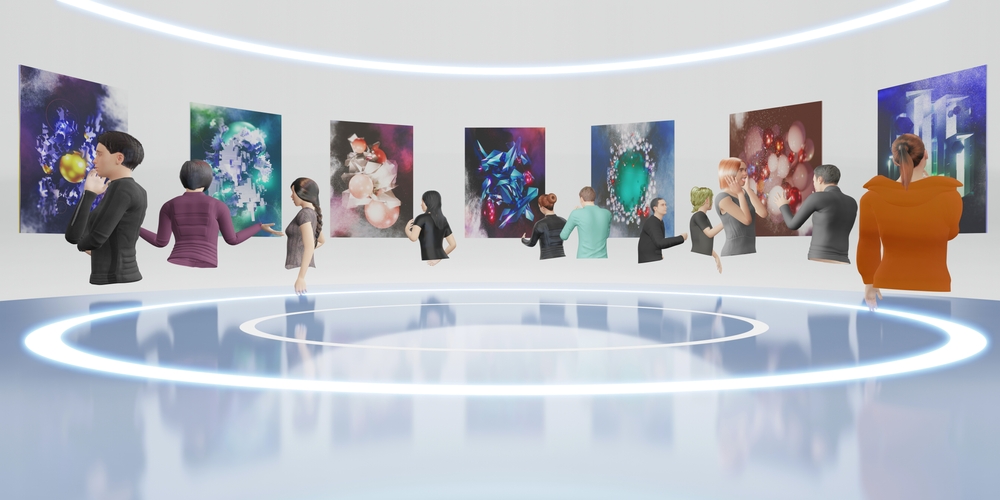
Currently, the primary motivation for companies to actively use “digital exhibitions” and “online exhibitions” is to cope with the predicament of not being able to hold physical exhibitions due to the pandemic . In other words, they are using digital curation as an “alternative” to physical events, creating an event website that looks like an exhibition venue.
This strategy temporarily alleviated the predicament, but because it applied the idea of ”creating a visual representation of the exhibition from a distance” to the actual exhibition, the creation of the portal and the guidance of visitors to the exhibition relied on the logic of “people walking, people stopping, people looking at exhibits” to produce the digital exhibition. The most common result was an RPG-like scene where the protagonist walked around the exhibition hall and clicked on the screen to open QR codes. Simulating the exhibition experience is a fun new approach, but it is insufficient to achieve sustainable brand exposure .
The following are unavoidable drawbacks of “analog” digital curation:
- In an effort to create a visual experience reminiscent of visiting an exhibition, many unnecessary details were added to the production, causing the website to become overloaded.
- Unstable network connection and large file size caused delays for viewers.
- The uncanny valley effect brought about by virtual characters causes psychological repulsion among viewers.
- Technical framework: In AR and VR modeling, it still cannot achieve the same level of detail as physical exhibits.
- Viewers can obtain partial information (and visual spectacle) from the website, but in-depth understanding still relies on significant follow-up communication.
To eliminate these shortcomings and foster truly user-friendly digital curation, we must abandon the starting point of “alternatives” and establish a mindset of “digital curation as the core”; creating “curatorial content,” “user experience,” and “curatorial goals” specifically suited for online platforms .
Digital curation and physical curation are two completely different fields.
Both are called curating, so what’s the difference?
From a theoretical perspective, professional curators who perform physical curating focus on the process of exhibition formation. To stimulate discussion among participants and audiences on art, politics, or social issues, curators select exhibits, plan an interaction between people and space , and guide artists and audiences to engage in intellectual exchange. Through exhibitions, people break free from their preconceived notions to see the world. Therefore, curators must constantly challenge their own subjective biases to avoid turning exhibitions into mere broadcasters of a single, dominant viewpoint.
The purpose of “Digital Curation” is to systematically disseminate information (for example, promoting the brand of food company A, where brand A is information, but not limited to commercial purposes) through online channels, achieving information popularization, interaction between information and the public, and sustained attention to the information. Digital curation also requires careful selection of exhibits: content . Content primarily consists of information circulating online; in today’s information-saturated world, relying on human wisdom to filter information is crucial . Irrelevant, redundant, and repetitive information is eliminated, and only meaningful information is selected as content for further dissemination and reshaping.
Digital curators analyze people and the internet, social media, and information exposure channels to systematically present content to the public. In this process, the “space” is unlimited and infinitely expandable; it all depends on how the curatorial approach guides the audience from one information point to many more . Furthermore, how to extend the audience’s attention to the offline physical world or encourage them to spontaneously take on the role of information dissemination is also a crucial aspect of digital curation. In short, it’s about sharing meaningful content to the best of its ability, ensuring it remains in the public eye .
“Digital curation and physical curation are fundamentally different. There is no need to force digital exhibitions to simulate or imitate the appearance of physical exhibitions.”
As marketers, when creating sustainable and useful digital showcases for brands, we should think entirely from the perspective of internet users :
“How can I make people feel comfortable and at ease receiving the content I’ve refined?”
“How can I use diverse content presentation methods and interactive participation strategies to encourage viewers to actively seek deeper insights into related information?”
Returning to the brand as the core, digital curation focuses on “extending business operations”.
Digital curation has no exhibition period; as long as people are paying attention to “the content of this exhibition,” the exhibition will continue . Therefore, in addition to ensuring that the content is comfortably received, digital curation must also ensure that its content is not overwhelmed by the massive amount of information in the world every day.
As marketers, it’s easier to understand this through the lens of brand curation. For example, seasonal commercial brand or popular IP exhibitions frequently generate discussion and attract online attention. The key to their success lies in treating the “brand” not only as an “exhibit” but also as a “media” to be managed. Each curation is like a promotional campaign, with one of the goals being to “strengthen the brand image.” Through interaction with the exhibition, viewers ultimately remember the brand’s unique charm . Whether in digital or physical formats, captivating and unforgettable content is the essence of digital curation.
Every internet user can be a viewer, and in creating any way we engage with our audience, we are already doing a small part of digital curation . The starting point and core of digital curation is the brand’s official website; regardless of whether the audience enters the brand’s world through external links such as social media, forum topics, physical events, or media platforms, what ultimately and eternally presents “exhibits = valuable content of the brand” is the official website.
Therefore, as we have always emphasized, a user-friendly, intuitive, aesthetically pleasing, and high-quality website is the foundation for a brand’s long-term success. An excellent website provides the most comfortable viewing experience, freeing visitors from the hassle of dealing with clutter. The quality of the viewing experience determines whether visitors are willing to continue learning about the brand . The content presented through social media, advertising, and other marketing channels doesn’t necessarily have to be identical to the website, but it should be considered an extension of the website’s content, a customized creation that ultimately aligns with the “brand spirit and values” conveyed on the website.

Digital curation extending from the official website can actually be understood and integrated using various marketing strategies. The methods include the interactive application of digital marketing, data marketing, and physical marketing to disseminate topics, generate attention and discussion, and call for action . A successful digital curation allows the brand’s selling points and value to ferment sustainably. In the future, Digit Spark will continue to discuss how to create useful digital curations with the goal of brand management. Stay tuned to our column to acquire the most practical marketing knowledge and make it your weapon.
Further Reading:
How Digital Curation Enhances the Value of Social Data
A Brief Discussion on Digital Curating and Marketing Techniques
[Data Application] A Brief Discussion on Digital Marketing & Data Marketing
Digit Spark, part of the Zhenhao Internet Media Group, integrates its six sub-brands offering data application services to provide enterprises with comprehensive and precise optimization services across five key areas: “Industry Customer Targeting,” “Performance Optimization Strategies,” “Digital Tool Integration,” “Online Voice Cultivation,” and “Brand Value Promotion.” It drives brand success through data technology.