How businesses and workers can coexist with the AI trend amidst the AIGC explosion.
#AIGC #DataLiteracy #DataTrends
Since the rise of AIGC in 2022, the phenomenon of ” deep learning being cheaply copied ” that people were most worried about has already occurred.
The speed at which technology is replacing human labor is unprecedented in history. The threats posed by AI and GC ( AI Generics and Technologies) include the Hollywood strike and the wave of layoffs triggered by AI in the US , with white-collar workers being particularly vulnerable. A growing number of people are arguing that “AI development is a threat!” and hoping to halt the continued development of AI, especially rapidly evolving AI and GC products. However, in reality, we can hardly stop AI development. What we can do is understand the trends and directions of AI development and find ways to coexist with AI in our work and lives; people need to continuously learn new skills to adapt to these global trends. Further reading: Goldman Sachs report: AI could impact 300 million jobs worldwide.
How should we, the “ordinary people,” coexist with the AIGC wave?
The first step is to stop creating fear. Human fear stems from uncertainty, and AI technology is a constantly evolving field. The public should strive to absorb as much basic knowledge about AI technology as possible and cultivate data literacy ; including:
-
Identify multiple, objective, and impartial information channels in order to understand current technological trends.
To avoid being held hostage by one-sided information from a single perspective, we need to maintain the ability to think independently, receive, understand, and filter new AI-related knowledge more rationally, and build our own understanding of AI technology.
-
Actively learn about new regulations
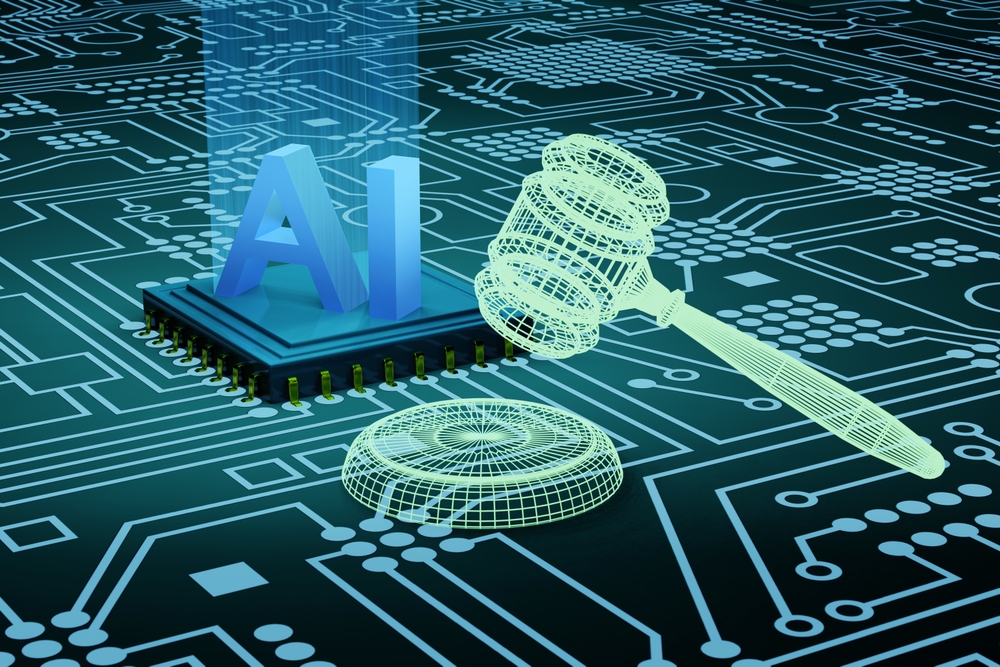
Taking AIGC as an example, legislation concerning AIGC is relatively new, with the EU’s Artificial Intelligence Act serving as a leading indicator globally. The impact of this legislation on the general public primarily lies in “protecting copyright” and “preventing the receipt of false and dangerous information.” The key is to understand the scope of AI’s use in both commercial and non-commercial settings. Besides ensuring we don’t overstep boundaries when using AI ourselves, we also need to be able to discern and avoid being scammed when others present us with information.
Further reading: The EU passes the world’s first draft Artificial Intelligence Law, bringing ChatGPT under its jurisdiction.
-
Transparency and openness in promoting various AI developments
AI research organizations should disclose their motivations, technological principles, and application scope to government regulatory agencies. Ideally, without harming the interests of the research organizations, this information should also be made public, educating the market on how to collaborate with AI tools, so that both the research companies/institutions and the public can benefit. In fact, EU legislation stipulates that content generated by AIGC should be clearly labeled “AI-generated” when publicly released, encouraging people to use interactive content with greater caution.
Additional note:
Data literacy is a skill that requires continuous and proactive absorption of knowledge, self-reflection, and self-optimization , which is especially important in the fields of technology and public society. By updating information through diverse sources and verifying information with various individuals, we can build our own mental treasure trove of technology and make informed decisions in this ever-changing world.
How should “enterprises” coexist with AIGC?
-
In response to the technological wave, new human resource needs and internal training are emerging.
The public’s fear of AI development stems primarily from AIGC (AI Generic Functions). Its applications are so widespread—writing copy, drawing design drafts, drafting contracts, and writing code can all be done by AIGC, replacing human labor. So what can employees in companies do? Some business managers choose to lay off employees. However, this simultaneously creates anxiety, internal operational instability, and damages the company’s external brand image.
In fact, businesses can identify new consumer demands (opportunities) in the market , creating corresponding new work tasks and providing employees with new job openings/opportunities. At the same time, businesses should actively organize educational training to improve the technological application knowledge of all employees, enabling them to flexibly use AI to collaborate in their work and ensuring everyone’s immediate operational capability.
Furthermore, AI currently struggles to replace the ” communication skills ,” ” observational skills ,” ” deep creativity ,” and ” physical service capabilities ” that businesses need when serving customers and consumers—qualities where humans excel. Positions within companies that emphasize these soft skills include: sales, project management, frontline service personnel, CRM experts, market researchers, and issue creators/promoters. These could represent new directions for managers to consider when allocating talent .

-
Incorporate “showcasing human strengths” into corporate functional planning
Furthermore, humans are most easily attracted to “human qualities.” For example, in marketing, when businesses need to build connections and emotional bonds with customers and target consumers, the ” corporate characteristics and brand personality ” displayed when interacting with them are key to leaving a lasting impression. This interaction extends beyond the way sales/service personnel speak and the feeling they project during in-person meetings; it also includes online content interactions with consumers. Moreover, content exposed online reaches a far greater number of people than each in-person encounter. Therefore, when planning content exposure, businesses need to proactively imbue their content with a unique personality.
This work requires genuinely passionate “people” to create and disseminate it. AIGC currently cannot fully imbue a corporate image with a soul; users familiar with software like ChatGPT should be able to notice that although it quickly generates copy based on user questions, the resulting copy tends to be “standardized and depersonalized.” For example, when posting a brand’s Instagram post, even if you input “please include OOO tone in your reply,” the copy generated by ChatGPT still feels somewhat stiff and mechanical.
AIGC’s rapid output can help people generate large quantities of content drafts and generate keywords, but these semi-finished products are not suitable for direct public release to the target audience. Companies need employees with the aforementioned soft skills to showcase their personal qualities, plan communication methods, content details, and the desired image, and integrate the large number of semi-finished products generated by AIGC to refactor them into content presentation, tone, and visual works that “convey the company’s personal characteristics” in order to truly persuade the target audience. Moreover, in this era saturated with AI-generated instant products, “human touch” has become more precious and attractive , and is key for companies to capture the emotional connection with their audience when building their image.
Further reading: AI drives new marketing trends; SEO expert shares: “Brand strategy integrating AIGC and data analysis”
Business decision-makers must recognize that while AI can replace many human jobs, it also disrupts traditional work patterns across industries and alters how consumers absorb and process information. Consequently, businesses must develop new work models and business strategies. The benefits of AI development extend beyond cost savings; it also includes creating demand: both market demand and the need for talent within companies.
Further reading: The impact of generative AI on producers? And its benefits and impacts on various industries.
How can “workers within enterprises” avoid being replaced by AIGC?
Let’s first discuss AI in the context of AIGC (which is what most people in the workplace are most familiar with!). With AIGC replacing a large number of computer-based jobs, we should enhance our own skills and focus on functions that AI cannot easily replace, making them our personal strengths . Below, we provide several examples of functions in typical companies (especially marketing-related jobs) where humans excel over AI:
-
Capable of handling complex communication
Humans excel at communication because they can handle “complex communication.” What constitutes complexity? Simple communication tasks like ordering food, making reservations, and buying tickets are now largely handled by POS machines. Complex communication includes consultations, sales pitches, negotiations, public relations presentations, customer service for special needs, and hosting events . These require strong logical thinking skills, combined with expressive techniques such as speaking, body language, tone of voice, and word choice. It also demands a high degree of empathy, the ability to anticipate the other party’s thoughts, synthesize and integrate various opinions, and ultimately guide the communication in a direction beneficial to the business .
This kind of function, which combines “professionalism and flexibility,” cannot be replaced by AI machines, nor will its value in the labor market decrease. This is because the current B2C consumer journey and B2B enterprise cooperation models are becoming increasingly diverse, and companies will need more talent who can solve complex communication problems at any time.

-
It can flexibly adapt to the audience and deepen and change the way information is exposed.
Businesses need to constantly “release things” to boost their market exposure, such as new products, new content, and new topics. In the past, companies could maintain brand popularity by holding regular new product launches; but now, with the explosion of information people receive every day and their preferences constantly changing, the content that companies release not only needs to be attractive but also needs to be tailored to how people receive information , such as condensing 3-minute commercials into short videos.
Enterprises need versatile talents with more flexible thinking and the ability to translate creative ideas into various forms of work. For example, while AI like DALL•E 2 can quickly generate images, it still cannot meet all the graphic design needs of a corporate brand. We can ask AI to create very eye-catching images, but to maintain the finished product’s consistency with the brand series, convey corporate values visually, and integrate customer pain points, we need more than just graphic design skills. It requires combining integrated marketing skills, communication skills, and design capabilities (such as CIS identity design), a comprehensive ability that humans currently perform better than AI in.
Furthermore, taking the content industry as an example, consumers (audiences) now have increasingly higher standards for content. In the past, content exposure, such as SEO, only required focusing on text and image exposure; however, this is no longer sufficient for consumers. The future content industry cannot remain at the level of simply “watching.” In addition to audio-visual content being fundamental, it needs more immersive experiences that engage all five senses , allowing for deep interaction with the brand. We need human integrative creative abilities to transform and utilize content materials into new forms to retain consumers’ attention.
Source: Interactive Programming Taiwan
-
Capable of customized, exquisite handcrafted techniques
Currently, AIGC’s powerful output capability lies in generating “virtual” things online. It cannot reach out and make exquisite physical objects, just like the difference between a picture on a computer and a physical oil painting.
The manual labor we’re discussing here differs from the mechanized operations of the industrial chain. It refers to more complex techniques such as construction, interior design, stage control, and even bomb disposal expertise. These require the ability to simultaneously ” judge situations on-site and create flexible solutions based on the current circumstances ,” ” predict the future impact of current work ,” ” integrate preventative measures into current work in response to future changes ,” ” combine multiple machine-produced items into a practically usable product/service ,” and ” achieve diverse customized needs from consumers through manual techniques .” These abilities are accumulated through long-term practical experience and a deep focus on each step of the process—abilities that AIGC cannot replicate.

Finding one’s place in the AI era is a new challenge for modern people.
With the rise of AIGC, the lives of the general public will become increasingly intertwined with AIGC, while both business owners and employees will be wary and fearful. Future workplace competition will become more elite-oriented , and everyone will need to have flexible and diverse functions . We will be forced to learn constantly to maintain our competitiveness.
While demanding, the AI explosion lowers the barriers to learning various skills, and extensive collaboration with AI saves time and energy, allowing us to focus more on self-optimization and self-exploration. This enables us to develop more potential and find our value in the changing environment, even amidst the AI wave. Simultaneously, businesses should adapt to this trend, updating their understanding of the market, industry, and consumers to uncover more functional needs, testing and adjusting their organizational structure while creating more diverse profit-generating strategies.
Further Reading:
Digit Spark leverages data science and combines it with business marketing logic to help businesses create digital content and service processes that are closer to the consumer market. At the same time, it utilizes AI to revitalize brand operations, helping to comprehensively improve a company’s digitalization, datafication, and brand performance.