How AI Changes Consumer Behavior (Part 2): As Time Becomes Scarce, Brands Need to “Keep It Short”
In the previous article, we talked about how the rise of AIGC and voice search is changing people’s habits: people want to get information in easier, more intuitive ways, and they expect a single search to bring a lot of extra useful insight. In this part, we continue the discussion: what other consumer habits are changing, how are they being directly or indirectly shaped by AI, and how should brands respond?
“Time” has become a scarce resource for consumers
As AI explodes in popularity, people’s lives are not only moving faster and filling up with more information; information anxiety and social comparison are also becoming more common. To avoid the stress of “What? How did I miss that?”, people spend huge amounts of time scrolling on their phones and social media, absorbing bits and pieces of information. At the same time, when they see something new, they want to understand the whole story within just a few seconds.
In the same way, consumers who have gotten used to AIGC expect a similar experience when they research products. They want to decide what to buy more quickly—not by randomly picking the cheapest option, but by really understanding the value, being able to explain the cost-performance, and saying, “This is why this choice is right for me.”
We also see that when consumers leave comments or messages for social media admins or customer service, their patience is getting shorter. Many people now expect a response within half a day, or even within one or two hours. If a brand only replies the next day, that consumer has probably already compared options and maybe even bought from another similar site.
Putting this together, it’s not hard to see that consumers care more and more about whether their “time cost” is being turned into real value. They expect search, customer service, and shopping to save them time wherever possible. Brands need to actively respond to this demand for time.
With limited patience, consumers need brands to show key value more directly
When brands design product names and descriptions, optimize their websites, or plan SEO content, they always need to think: “How can I help consumers quickly decide: is this for me or not?”
Use diverse content formats to increase exposure
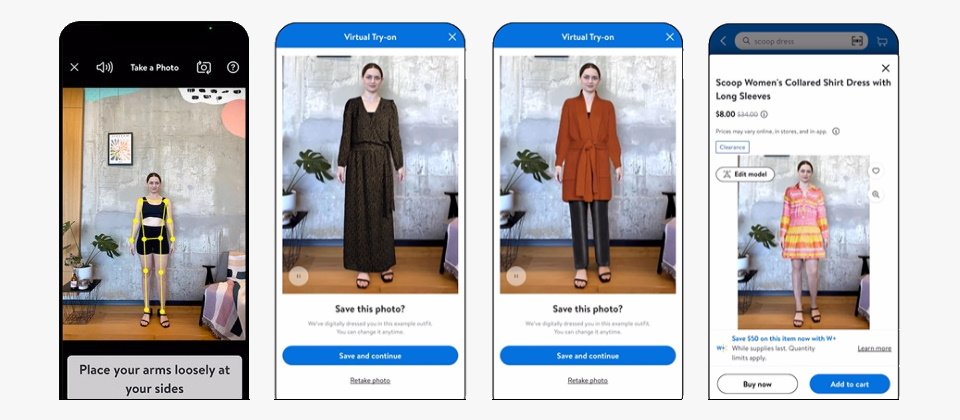
On a product page, the features and usage of the product should be presented clearly and precisely. Don’t sacrifice clarity just to create “vibes” or stuff in too many keywords. It’s better for brand marketers to provide more rich media such as video and AR to show the real store environment and service process—for example: in-store views of a café, a body-treatment procedure, furniture assembly tutorials, or app-usage walkthroughs. Almost any product or service can be shown to consumers in multiple ways, together with its value. This is also the direction brands are heading for diversified SEO optimization.
▼ Amazon’s AR shopping preview tool

▼ Walmart’s virtual try-on service
Content must connect to the consumer’s “core needs”
When you present products online, the way information appears also has to feel intuitive. For example, videos can be embedded directly on the page, or even show up directly as SEO results. From the consumer’s point of view, it’s visible in one second. But if you try to look “cool and advanced” by forcing people to jump to extra sites or download extra apps that don’t provide any real value, you’re just creating friction. In most cases, a single scrollable webpage is more than enough.
A diversified way of presenting products is not about making consumers read 100% of all the details. Sometimes the goal is simply to very quickly show a few key features—such as “available in kids’ sizes” or “complies with international entry–exit regulations.” Once these points align with the consumer’s needs, it’s much easier to spark their own interest. Afterwards, they’re more likely to dive into the brand’s detailed content. So, brands can plan information starting from consumers’ “core needs” as the content focus, and use diverse media formats as the communication method.
How do you find those “core needs”? You can start from research on intent-based targeting, looking at consumers’ life and shopping scenarios to dig into the motivations behind their searches and the keywords they type.
Extended reading: “Intent-based targeting” is becoming a Google trend—how can marketers build strategies that stay close to consumers?
Train AI to ask the right questions and give complete answers behind the question
Brand websites and e-commerce platforms usually deploy AI chatbots to handle most basic questions and collect consumer data (such as preferences and time spent on each page). This saves brands a lot of time and manpower. But when you design AI replies, you still have to follow a “user-friendly” principle—consumers should really feel the convenience of AI, instead of having their patience drained.
Make AI usage steps simple and take up as little of the consumer’s time as possible
Imagine yourself as the customer—which AI chatbot would you prefer?
▼ Scenario: A customer bought “Plan A” and wants to know how to pay
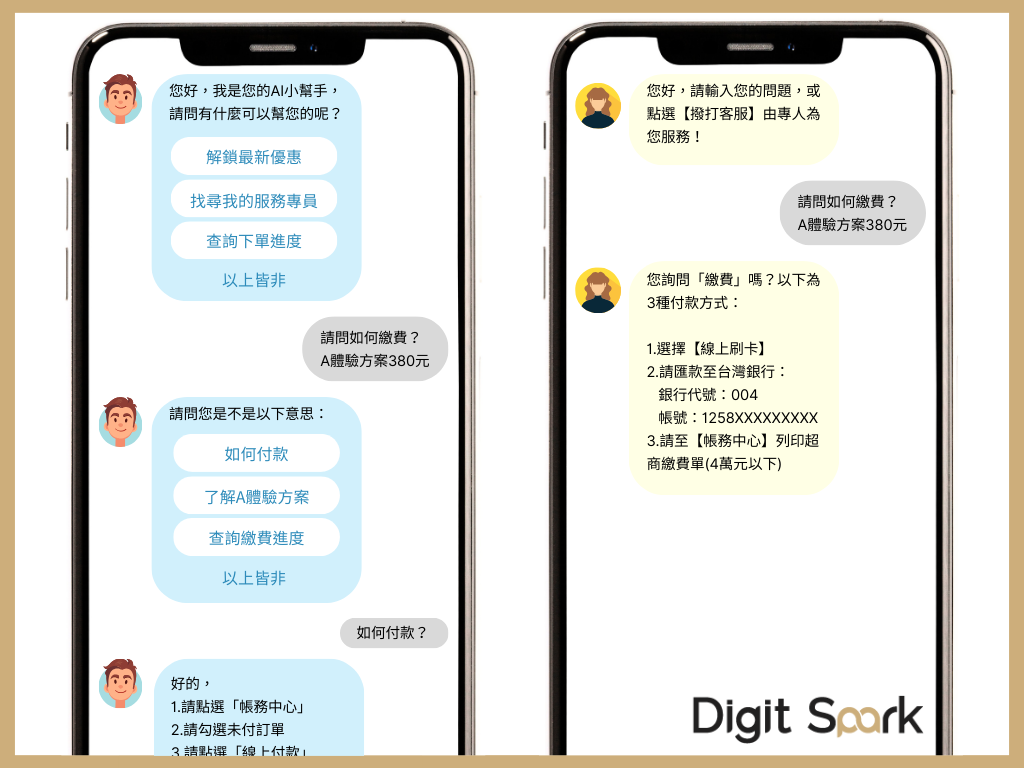
For most people, the chatbot on the right clearly feels more convenient. To make a commercial customer-service AI reach that level, you need a large amount of training with human-like language models such as MUM and LaMDA. Fortunately, tools like ChatGPT and other AIGC services are now widely used in Martech products. They deliver similar language capabilities and make it easy for businesses to choose from many different customer-service platforms.
When you introduce a customer-service AI, you can start from your product/service range and your past frequently asked questions. Strengthen how the AI recognizes different words and phrases, and prepare well-organized answers that match consumer needs. In the example above, when the customer asks about “payment,” the AI is able to interpret that as “how to pay” and return three payment methods that the brand has set up in advance.
Another important point when configuring AI is to stand in the consumer’s shoes. In the image above, the long list of blue options on the left is obviously too many and too wordy. You can tell it was designed to collect more behavioral data on the backend—but it makes things harder for the user. Customer-service AI should treat CRM as its core purpose and help consumers solve problems in the fastest, most convenient way.
Use video to share real cases and help consumers imagine themselves in the story
Case studies and experience-sharing articles have always been a basic part of SEO content marketing. Real examples help consumers immediately understand: How do I use this product? How long does it take? What makes it special?
But now, consumers’ available time and attention are shrinking fast. Traditional “text-only” articles are no longer enough to hold their patience. Brands need more diverse ways to present case content, such as short videos, live streams, or AR games.
Short videos that embed product introductions or tutorials can make explanations lively within a limited time. Video is also more intuitive than text, so viewers can easily picture the product in their own lives without much thinking. This boosts consumer engagement with brand information and makes it easier for them to form an emotional connection.

Image source: lifewarehouse
Today, consumers are willing to spend less and less time and energy on a single brand or a single piece of information. When brands market their products, they not only have to match consumer taste, but also their patience and daily habits.
In content strategy and CRM strategy, brands need smarter and more diversified ways to attract and keep people’s attention—helping consumers get answers with minimal effort and discover new desires at the same time. This is how you build brand loyalty and long-term customer relationships. At the same time, brands must stay alert to shifts in consumer behavior and actively adapt, in order to maintain close interaction with their audience and keep a strong hold on their hearts.
Extended reading:
Digit Spark leverages data science together with marketing logic to help businesses create digital content and service experiences that are closer to real consumer needs. At the same time, we make smart use of AI to energize brand operations, supporting companies in fully upgrading their digitalization, data-driven decision-making, and brand performance.