[Understanding Marketers] Are “Performance Growth Consultants” the same as Marketing Consultants? (Part 1) – Giving people fishing rods to cultivate the brand’s self-growth potential.
How to achieve excellent sales results?
Besides discounts and events, which are the most common ways people think of, there are also many sales and marketing consultants on the market who can help provide brand advice. In addition to general marketing consultants, Digit Spark Group also has a type of consultant: “Performance Growth Consultant,” who uses data to empower brands and guide them in making overall marketing and operational strategy plans.
Today we interviewed Gina , one of the consultants at Growth Strategy (hereinafter referred to as GS) , to find out what growth consultants usually do. What professional insights does she have on reviewing clients’ brand operations and marketing plans?
First, could you please briefly introduce what the role of a “Performance Growth Consultant” entails?
“Performance consultants” are different from marketing companies and agents that people are generally familiar with.
Typical marketing consulting firms focus on the execution of a single sales plan, such as “what activities and advertisements we plan for our clients for this Mother’s Day.” However, GS provides clients with more comprehensive and macro-level guidance on “marketing,” including business operations review, business goal planning, how to strengthen brand value, analysis of what advertisements and activities to run, how to manage memberships, and so on. All of these are included in our consulting services.
We play the role of “giving people fishing rods and teaching them how to fish”; helping clients build the fundamental strength of their brand, rather than simply achieving a small sales target.
For example, one of our clients is a newly established e-commerce platform for instant beverages, which is preparing to launch its newly developed, delicious products into the market.
After discussions with clients, GS consultants guide them by asking questions like, “How do I start my e-commerce business?” and “What tasks should I do each quarter and month to maximize brand revenue and ensure stable growth?” They help clients clarify their business goals, identify their differences from competitors, and so on. Then, they guide clients step-by-step on how to plan their operations, set timelines, and develop detailed sales strategies. Ultimately, clients can perform self-assessments, learn from experience, and identify effective strategies and future directions .
2. Under what circumstances would a company choose to hire an external marketing consultant?
What type of clients do you encounter most often?
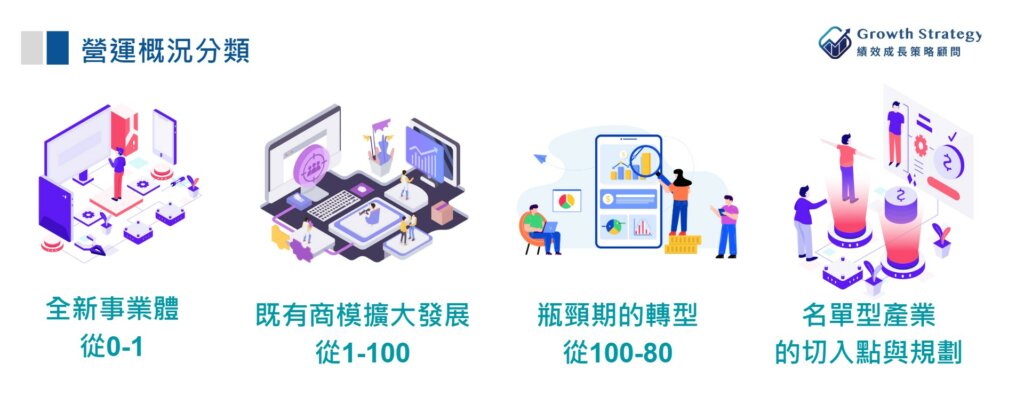
At present, GS mainly serves “growing retail brands” and has involvement in both B2B and B2C markets.
For example, companies selling their own self-developed health supplements, snacks, baby products, and skincare products under their own brands. In my experience, I frequently provide guidance to two types of clients:
A. Startup e-commerce brands
Although the client has products they plan to sell, the company team lacks anyone with experience in e-commerce operations. Therefore, they need a role similar to a “professional e-commerce marketing manager” to guide them into the e-commerce market.
B. E-commerce brands that are already operating stably, but are currently experiencing a performance bottleneck.
The brand has been operating in the e-commerce market for a while and has cultivated a loyal customer base. However, with the increasing number of competitors, it has become difficult to increase conversion rates and membership numbers. Therefore, they sought advice from GS to identify blind spots, devise countermeasures, and find ways to break through performance barriers.

3. Can a marketing consultant understand our brand better than the company’s internal staff by observing data?
The client company’s internal staff have a thorough understanding of the brand spirit and brand vision; this is something that consultants, as external personnel, certainly cannot match. However, on the other hand, our advantage as external consultants lies in our expertise in ” business operations ” and ” data analysis “.
Consultants, by observing data, can understand a company’s operations better than our clients do , such as how the company’s revenue and costs have been projected, allocated, and calculated in recent years. We can also professionally and objectively interpret the quality of each data point, whether it has achieved the expected value, and provide clients with operational strategy suggestions, which does not conflict with our corporate spirit .
For example, food company A has come up with four different advertising models, but doesn’t know how to allocate resources.
The GS consultant first guided Company A through the process: ” What is the purpose of this campaign? “
If the conclusion is to achieve a stable increase in orders and conversion rates in the second half of the year, then we’ll work together to align our goals. We’ll guide the client to identify the most effective order-generating model from the four promotional approaches, and compare past activities to determine which were useful and which were not. We’ll evaluate all of these, ultimately developing one or more truly constructive and effective plans, with defined timelines and performance standards. This ensures that every marketing strategy aligns with the company’s objectives and is not done simply for the sake of doing it.
Consultants use their expertise to interpret data and act as companions, working alongside clients to get closer to their ideal business state and achieve long-term healthy growth.
4. Compared to general marketers/other similar marketing consulting firms, what are GS’s unique strengths as a consultant? How do you apply them in serving clients?
For example, if the first-quarter goal is to double the number of members , what strategies can we try based on the current data? For example:
- What kind of discounts are available for first-time members? What percentage of the discount is offered?
- Should we try a marketing campaign where existing members attract new members?
- Collaborating on a joint brand can increase our brand awareness, but what are the projected results for converting that into memberships?
…and so on, checking each action one by one to see if it will achieve each small goal , and sometimes making timely adjustments to ultimately complete the year’s achievements.
Especially for novice e-commerce brands, the effectiveness of our meticulous breakdown of goals and formulation of each small plan is not only to help them achieve operational targets, but also to help their internal teams grow in a tangible way.
The approach shifted from simply identifying a vague, overarching goal like “achieving 10 million in revenue this year” and then pursuing various seemingly useful initiatives to logically breaking down that goal into concrete plans, developing and implementing effective strategies, and analyzing the cost-effectiveness of each plan for subsequent optimization.
For us, it’s not just about helping clients improve performance, but more importantly, about leveraging data to empower our clients’ internal staff and cultivate them into ” outstanding teams capable of autonomously optimizing operations .”
The above simplifies the daily routine of GS consultants into four key points. Moving forward, we will continue to analyze how GS helps its e-commerce clients, a type of brand they frequently work with, stand out and overcome performance hurdles in today’s highly competitive e-commerce market!
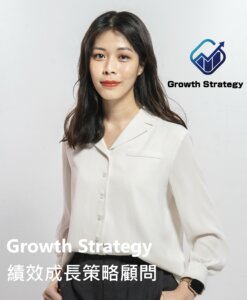
Acknowledgements: Gina Lü, E-commerce Development Manager, Growth Strategy Consultant
Serving and leading over 30+ clients, with total annual project budgets exceeding 5 million. Working with clients in industries including FMCG, beauty, skincare, and pet products. Accumulating experience as an e-commerce system provider and digital marketing agent. Possessing experience in executing projects across diverse industries. Skilled at using data to help clients solve business problems and able to plan marketing strategies for brands from a performance perspective.
Digit Spark, part of the Zhenhao Internet Media Group, integrates its six sub-brands offering data application services to provide enterprises with comprehensive and precise optimization services across five key areas: “Industry Customer Targeting,” “Performance Optimization Strategies,” “Digital Tool Integration,” “Online Voice Cultivation,” and “Brand Value Promotion.” It drives brand success through data technology.