Taking the biomedical industry as an example, marketing techniques to improve the effectiveness of B2B outreach.
Biomedical products differ from consumer goods. Due to the specialized work involved in pharmaceutical and medical device research and development, and clinical trials, every decision made by biomedical companies involves numerous stakeholders, from investors and employees to partner clinics and consumers. Furthermore, there are many advertising and sales regulations governing these processes. Financially, biomedical companies allocate almost entirely to R&D, leaving relatively little budget for other areas. Traditional thinking also holds that “product efficacy is king” for biomedical brands. These factors contribute to the slower pace of digitalization and data-driven marketing in the biomedical industry compared to other sectors.
A smart biomedical company is opening up new avenues! Emphasis is placed on pre- and post-exhibition marketing communication.
Biomedical companies typically acquire leads by attending B2B trade shows, such as MEDICA in Düsseldorf, Germany, and MEDICAL FAIR ASIA in Asia. This is a common practice for pharmaceutical and medical device companies: participating in these international exhibitions annually to build brand awareness, exchange business cards and samples in a fiercely competitive global market, and then actively maintain relationships back home. However, if biomedical companies incorporate digital and data-driven marketing strategies into their overall marketing strategy , they can significantly enhance the effectiveness of new customer acquisition and matchmaking with medical institutions .
Audience targeting technology significantly reduces the cost of acquiring lists.
Besides exchanging information one by one at trade shows, where do we get our cold calling lists? With current data marketing technology, we can scrape data from large, publicly available global databases, then filter them using “audience targeting” logic to select potential leads from millions of entries. What does this mean?
Take LeadsGeek’s self-developed Global Trade and Procurement Database as an example. This database collaborates with over 100 countries across five continents, acquiring daily import and export data from customs and establishing a data-driven search system. This allows access to contact information for decision-makers in relevant industries. This provides companies with a large, globally-reaching cold-calling list , enabling them to initially eliminate more than half of potential clients who are not interested. This allows biomedical businesses to focus their cold-calling efforts on developing and contacting potential clients.
Basic search functions, such as those for a B2B company manufacturing children’s cough syrup, allow them to use a trade procurement database to find information on which medical companies and infant product traders in a particular country have recently imported what goods, from which regions they mainly source them, and their order volumes. Simultaneously, they can learn about the export situation of that industry in that country: where are the popular export options for pharmaceutical manufacturers and medical device companies recently? Companies can use this information to decide on their current marketing strategies: should they follow trends and develop in popular countries, or should they explore regions with currently low trade volumes and become leaders?
For more advanced users, the trade procurement database also offers a “specific search” function. You can search for all recent import and export data for Company A; or enter a specific product to find out which companies worldwide have recently purchased that product, the quantity purchased, and whether it has been resold, among other information.
Information that is used effectively can become business opportunities. Mastering this information can make your cold calling strategy much more efficient! If you have information but don’t know how to use it, you can consult marketing companies such as LeadsGeek (cross-border customer acquisition ) and IBA (inbound customer data marketing ) to help you develop a suitable strategy.
Further Reading: 3 Essential Big Data Development Tools for the Internet Age
Analyze unfamiliar users and build Personas (user profiles) based on data.
By drawing inspiration from B2C marketing’s approach of “analyzing consumers,” we can also categorize potential new customers. The internet age offers B2B companies the advantage of making it much easier to understand people’s behavioral patterns and identify the pain points of different groups.
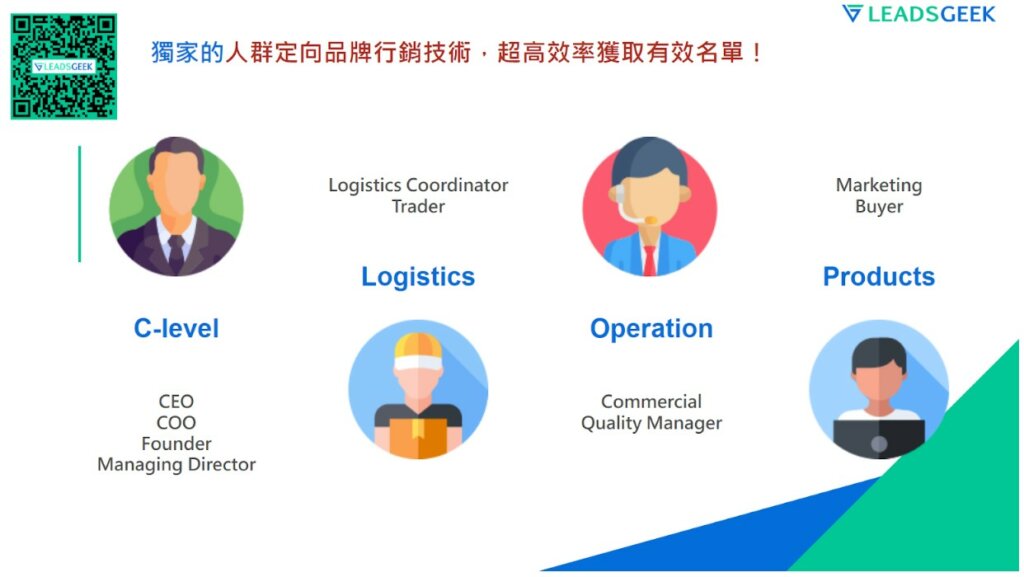
B2B outsourcing for biomedical products, such as promoting new drugs to chain pharmacies (outsourcing targets) ; biomedical companies need to secure orders from pharmacy companies, and this requires targeting specific outsourcing targets:
- Those who spend money: bosses, purchasing managers, etc.
- Personnel responsible for managing newly purchased items: General Affairs, Purchasing and Operations Managers, etc.
- Product users who influence the company’s decisions include pharmacists and physicians with decision-making power, clinics that cooperate with this pharmacy, etc.
Why are they categorized in this way when they are clearly the same pharmacy company?
Because people of different backgrounds have different focuses, considerations, and points of attraction when making decisions in the workplace. B2B companies that put more effort into thinking from a “people” perspective and providing customized communication will significantly increase their persuasiveness when starting a new relationship .
The same message can be extended into customized communication.
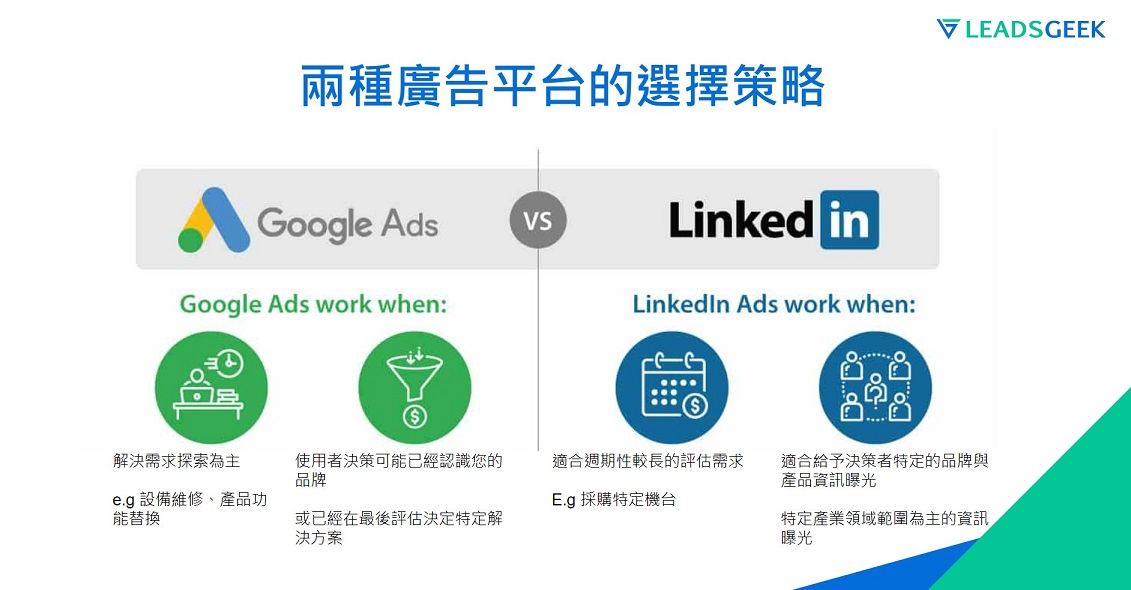
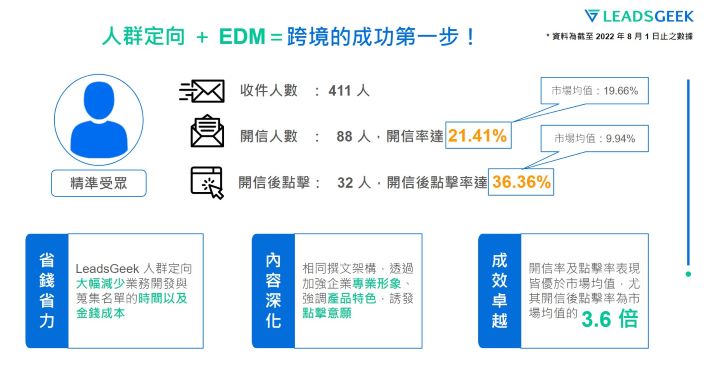
Compared to advertising, emails such as EDM and newsletters for biomedical products give recipients a sense of one-on-one connection and being valued (advertising is a relatively broad strategy; see this article for more details ).
Detailed EDM communication skills allow you to design personalized and engaging EDMs for the same product, targeting different audiences such as “bosses,” “purchasing and distribution personnel,” and “employees/product users .” Building on the earlier point that “the internet makes it easy to know what others are thinking,” we can analyze the pain points of different target audiences and determine how to address those pain points through effective communication.
In the simple example below, different objects require different key information:
- Product users should know: “What are the functions of this new product? How do I operate it? Is it easy to use?”
- Purchasers need to know: “How much does this product cost? Is it compatible with the company’s existing equipment? Is after-sales service convenient?”
- Decision-makers need to know: “Does this product align with my business philosophy? What results and benefits will it bring? How long will it take to see changes?”
In addition, sending a cold email before the exhibition can invite the recipient to “meet at the exhibition!” This kind of invitation has less cost to the recipient than a physical visit, and the chance of being rejected is lower. In addition, if the company has a beautiful booth, promotional materials, and free samples at the exhibition, it will further enhance the company’s image.
Incidentally, EDM is not just for cold calling; it is also a digital asset for businesses. It can be transformed into content such as advertisements and press releases to continuously expose and refresh others’ impressions of the company, gradually increasing public and customer goodwill towards the company.
Further Reading: 4 Key Points for the Main Body of a Sales Email, Teaching You How to Create a Great Headline
Combining “Biomedical expertise” with “marketing expertise” expands the strength of B2B enterprises.
To persuade a potential customer, biomedical professionals need to establish a reliable and positive image before presenting their products, thus convincing the customer to engage with the product.
In the biomedical industry, “effective and useful products” are indeed the foundation of a company. However, it is difficult for biomedical products to achieve success solely based on the product itself . For example, newly developed drugs cannot be tasted and tested like snacks; their efficacy requires long-term observation, and the effects vary from person to person and cannot be guaranteed.
While digital marketing and data marketing companies may not possess the same in-depth knowledge as biomedical professionals, marketers excel at translating knowledge across different industries into a way that outsiders can understand, facilitating two-way communication. Simultaneously, marketing professionals can observe trends across various industries, identify market opportunities, and provide industry experts with solutions that allow them to ” step out of their ivory towers and get closer to the market ,” establishing sales and collaborations between businesses and consumers, and between businesses themselves. Regardless of the industry, everyone should embrace the business model that combines data marketing and digital marketing as soon as possible to drive revenue and accelerate growth.
Digit Spark, part of the Zhenhao Internet Media Group, integrates its six sub-brands offering data application services to provide enterprises with comprehensive and precise optimization services across five key areas: “Industry Customer Targeting,” “Performance Optimization Strategies,” “Digital Tool Integration,” “Online Voice Cultivation,” and “Brand Value Promotion.” It drives brand success through data technology.