[Understanding Marketers] How to generate buzz in digital PR? Using technology to create the highest value exposure.
Euniece, consultant for *Digital PR*, is an AKA “Brand Favorability Building Expert.” She previously explained how PR can effectively communicate information to build brand rapport with the public. *Digital PR*’s strength lies not only in its empathetic communication but also in its ability to leverage Martech tools to plan PR initiatives and drive campaigns; hence, we call ourselves “Digital PR . “
Let’s revisit the previous article and see what a “brand favorability expert” is.
We see “digital PR” as “human PR pro Max,” but what are the key differences? We invited Euniece to discuss this with us. They will share their SOPs for working with clients and their practical experience to explain the subtle differences.
Furthermore, Digital PR has also begun exploring the increasingly prominent field of “digital curation” this year. In the future, when collaborating with clients, they can integrate content curation through online events to multiply PR exposure and persuasiveness. Let Euniece take us into the data technology aspects of Digital PR!
1. Digital PR emphasizes “digital public relations.” How does it differ from other public relations services? What are the advantages of digital public relations?
We combine “operational public relations” with “data”; for our clients’ public relations goals, we can use data tools to develop more practical and organized operational strategies to achieve the best exposure results .
The work of a typical PR firm is somewhat similar to that of an advertising agency, where people spend their days thinking about how to use memorable copywriting to grab consumers’ attention and generate buzz for the brand. However, our approach at “Digital PR” is to abandon wild speculation and instead create our stories based on “practical analysis: what ideas would our target audience respond to?” This saves us from the long and arduous process of blindly testing audience tastes in a broad market .
As before , let’s take contact lenses as an example:
Before planning an exposure strategy for a brand:
Initially, we also observed SOV volume, but the advantages of our data import tool are “efficiency”, “large sample size” and “objectivity”.
Directly search for keywords and related keywords, including: brands, products, competing products, recent related events, holidays, consumer pain points, etc. These factors, to varying degrees, will affect SOV , and it’s difficult to immediately compile such a massive workload manually; moreover, online trends change rapidly, and if you painstakingly analyze everything, the market trends will have already shifted, making the process endless.
Data tools can be used as a “quick filter” to observe a client’s market positioning in real time, while objectively filtering out reviews that raise suspicions of deliberate hype or content farms.
Use data as a tool when producing content for exposure:
When writing promotional copy, public relations professionals often incorporate techniques similar to Ranking SEO, analyzing consumers’ product search habits and strategically enriching a piece of copy, a reply, or an article by inserting keywords and long-tail keywords . When I discovered that consumers buying my contact lenses valued the brand’s established reputation and practical functionality, my public relations efforts shifted away from competing with trendy photochromic lenses. Instead, I focused on highlighting keywords like “high oxygen content, 24-hour non-drying, and non-allergenic,” creating content stories like “contact lenses suitable for allergy season.” This targeted and purposeful communication with consumers made the information easily accessible to the public.
In addition to content, we also use data to select and link channels for exposure information:
Consumers who use my contact lenses, on which information channels do they usually frequent? For example, forums, is it PTT or Mobile01, which discussion board? How do they react to the accompanying images and text? What kind of replies do people find most pleasing to the eye? …and so on. This supplementary information is very useful, but without data tools, searching through every discussion board one by one is simply too costly.
Finally, we will pair the exposure information with appropriate “external links” to drive its spread and fermentation ; this is a bit like YouTubers featuring each other, breaking into the public eye from unexpected places and capturing potential customers who are not yet familiar with the brand.
Second, in addition to digital public relations, Digital PR is also extending its reach to “digital curation”. Can you explain why you made this decision?
The rise of digital curation is a way of doing business online and organizing events simultaneously.
Online events are an integral part of digital curation and are highly beneficial for “building interaction and trust” in public relations strategies. We incorporate digital curation and online events into our public relations strategies to enhance our clients’ brand image and foster consumer interaction. For example, planning live streams is an excellent way for brand personnel to build trust online.
As everyone has clearly felt, our reliance on the internet has reached an unprecedented peak over the past two years, a trend that is irreversible. In response, we will serve our clients using different approaches: “digitalizing physical events simultaneously” and “purely online events,” catering to various brands, topics, budgets, and strategies. For example, to build trust with fans, both “KOC online live streams” and “course lectures” are online interactions, but their styles and suitable topics are completely different.
While moving events online, we also learn from our clients and work together to unlock insights such as: “What is digital curation?”, “What message do I want to convey through online events?”, and “How can I gain from integrating events into public relations and marketing?”
(▼Online activities are becoming increasingly diverse, and the competition is now about creativity and content.)

“Digital curation” and “digital public relations” will offer complementary benefits:
The activity is permanently preserved.
Digital PR’s decision to launch digital curation is also based on its “sustainability.” No matter how grand a physical event is, it’s over once it’s over, and the feelings you had at the time can easily be washed away by the stimuli of life that follow. This applies to “feelings,” and even more so to “information.” If you want to look back on what happened six months or a year later, all you can find are fragments.
For in-person events, we create highlight reel videos to rekindle happy memories; for online events, we simply copy the entire event and store it online for 10 or 20 years. We hope that the public relations strategies and exposure campaigns we create for our clients can be perfectly preserved; even after the exposure period has passed, they can still be viewed and shared.
The scope of exposure has been increased.
The advantages of in-person events are intimacy and a deep experiential impact; the disadvantage is that they are limited by time and space. Online events, on the other hand, are the opposite. We take advantage of the greater flexibility of online events in terms of time, space, and cost; making it easier for the public to “participate in the event” and making it easier for us to amplify the event’s reach, resulting in a significant increase in the number of people reached.
We have worked with many client brands and accumulated brand awareness. We need to promote the brand “broadly” and then “deeply”. If we are to build digital curatorial services for our clients in the future, we can first use online activities to spread the brand’s reputation widely, and then use other digital curation and public relations methods to conduct “deep content marketing” to retain the audience we reach.
3. What advantages does Digital PR itself have that you think can help when starting a digital curation journey?
A powerful partnership! Taiwan’s most popular event platform.
This year, Digital PR partnered with ACCUPASS , Taiwan’s largest event distribution platform . Given ACCUPASS’s position in the event platform market, it is not only a “sales channel” but also a “media” with significant influence.
By 2021, ACCUPASS had sold over 10 million event tickets and accumulated 2 million members . With such a large potential customer base, we can match clients with ACCUPASS to hold online events and expand our reach. This is perfect for achieving a public relations strategy of “first spreading the word, then exploring the depth through offline operations”.
This year, ACCUPASS is also integrating its resources, transforming from an “event sales channel” into a more comprehensive and influential digital curatorial platform. ACCUPASS’s traffic pool, combined with our Digital PR expertise in “content exposure” and “communication with the public,” creates a win-win situation where 1+1>2 for our clients’ exposure.
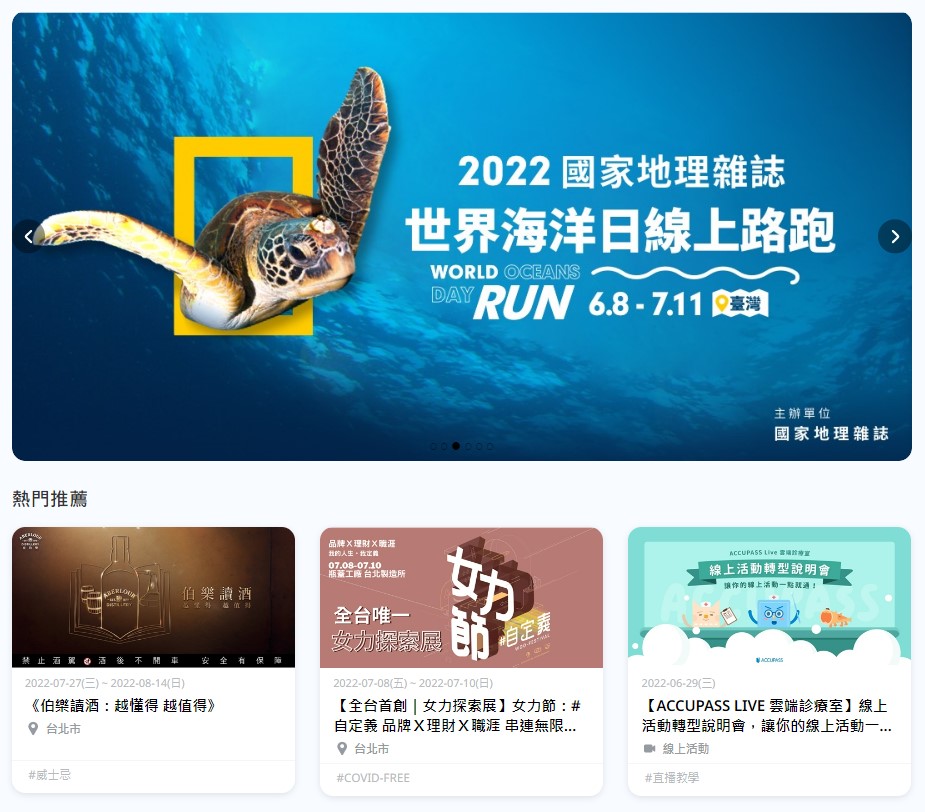
Further Reading: 12 Online Event Case Studies! Which types of events are suitable for online events?
Data-driven, “most practical” public relations: strategizing by working backward from results.
As we discussed earlier, the “issue operation keywords,” “issue interaction,” “exposure content,” and “exposure channels” we analyzed during project execution were all the result of rational thinking and data-driven planning . Moreover, public relations operations require a lot of creativity, and data tools can help us identify new strategies with experimental value at any time, helping us “maximize the effectiveness of our creativity . “
Digital PR Case Study: ITRI <AI, AMR Reputation Search Optimization>
In this project in collaboration with ITRI, our goal is to attract people interested in “AIoT, smart healthcare, and machine development” through insightful articles, and ultimately encourage them to enroll in smart technology-related courses on the ITRI-Industry Learning Network.
Why use “SEO-rich articles” as a strategy? This was the result of our initial analysis. The target audience of the ITRI-Industry Learning Network is mainly those who “have some knowledge of AIoT technology, aspire to further develop their expertise, or may transition into related industries.” These individuals have a habit of reading literature on AIoT topics and value the authority of knowledge; communicating with them through “articles” to establish “weight” in their minds will be the most effective approach.
Therefore, we planned three articles on different themes , focusing on the impact of “industry nature” and “readability” on the spread of the content:
This project at ITRI is rather unique, as we communicate with technical and research professionals. Therefore, the topics we tackled were all high-value areas such as “AIoT development trends,” “AMR autonomous mobile robots,” and “smart healthcare.” However, what these tech experts didn’t realize is that SEO articles, besides having high-quality “hard” content, also need to consider the “soft” aspects of human interest.
We incorporated the concept of “comfortably engaging with the public” into our high-quality articles, providing our clients with keyword and article guidance. Ultimately, all three articles reached the first page of Google search results for their respective keywords . A month after the articles were published, the SEO efforts further boosted their ranking, securing all three articles within the top three positions on the first page of search results .
Digital PR’s data-driven capabilities differentiate us from other PR firms. Extending this tool to the field of digital curation, we can simultaneously satisfy the reading habits of both humans and machines in planning topics, generating content, and disseminating exhibition information. This allows curatorial efforts to achieve optimal pre-launch exposure and subsequent buzz generation.
Another benefit of data is statistical analysis. Whether it’s daily digital curation or scheduled online events, Digital PR can track the effectiveness of every action at any time: “Which parts of the curatorial website content will make people stop and look? Which parts can be adjusted?” “On which days of the week will online events attract more participants?” These are all details of curation. Although each individual factor is small, it affects the exposure effect. We connect every curatorial decision with data and use it as analytical material to continuously refine the quality of digital curation.
Conclusion
“Public relations” is a profession that is constantly evolving with trends; you need to communicate with all sorts of people, and their ideas are always changing.
We embrace technology, constantly incorporating new ideas and technologies as our tools. Data tools have already brought results to Digital PR execution projects. In the future, we will continue to challenge the unknown and create comprehensive and deeply engaging services for our clients from various perspectives.

Acknowledgements: Euniece Lin, Integrated Digital PR Consultant at Digital PR
Previously worked at a 4A agency, serving large brand clients such as well-known wine merchants, cosmetics groups, and maternity and baby product companies. Specializes in integrated brand planning and utilizes digital thinking to create limitless possibilities for brands. Currently serves clients in multiple industries including finance, education, healthcare, e-commerce, tourism, and skincare/beauty.
Further Reading:
[Understanding Marketers] How to Tell a Good Story in PR? The Art of Connecting with Consumers and Building Empathy
– Super-Efficient Marketing Seminar Part 1: Focusing on Brand Planning and STP –
Super-Efficient Marketing Seminar Part 2: Leveraging Third-Party Influence
Digit Spark, part of the Zhenhao Internet Media Group, integrates its six sub-brands offering data application services to provide enterprises with comprehensive and precise optimization services across five key areas: “Industry Customer Targeting,” “Performance Optimization Strategies,” “Digital Tool Integration,” “Online Voice Cultivation,” and “Brand Value Promotion.” It drives brand success through data technology.