[APEC SME Trends Monitoring] Digit Spark: Driving Digital Innovation and Fostering Resilient Operations from a Marketing Perspective
For Taiwanese SMEs, in addition to promoting digital development, diversifying and innovating in marketing to stay in close contact with the market is also one of the keys to sustainable growth.
In 2022, Digit Spark Group was honored to be invited by the APEC SME Crisis Management Center to publish our views on data applications in the 32nd issue of the APEC SME Trends Monitoring Report .
(The following content is from the APEC SME Trends Monitoring Report, written by Digit Spark Marketing and Public Relations Department)
Survival rules for technology companies:
Drive digital innovation with a marketing perspective and cultivate resilient operations.
“In any industry, even companies and organizations that are not oriented towards selling products or marketing for profit (such as administrative corporations and charitable foundations) should move towards digital innovation.”
Digital innovation for businesses is not just a response to the pandemic era. Even without the sudden global upheaval of 2020, human behavior patterns and business operation models have long been different due to the rapid growth of networking, AI intelligence, and algorithms. Furthermore, the factors that determine the life and death of businesses, such as the natural environment, global political and economic changes, and the variability of market competition, will only change faster and more frequently.
How can we integrate AI technology into our own corporate strengths and leverage it for growth, becoming symbiotic partners in mutual benefit and prosperity, rather than limiting our understanding of AI technology to algorithms pushing advertisements on mobile phones? Beyond simply using tools, market acumen and digitally-driven decision-making are the core of corporate development. In the past, Digti Spark Group has guided nearly a thousand SMEs in their digital and data transformation. We’ve observed that while most SMEs can quickly learn how to use digital tools to boost sales and membership operations, there’s a gap between their performance and internal management, such as operational policies and decision-making, leading to insufficient responsiveness when facing changing environmental trends.
“Digitalization” is not the same as “digital innovation”.
The purpose of “corporate innovation” is to maintain viability. It’s important to clarify here that digital innovation differs from the “digitalization” that companies have traditionally pursued. In the past, companies understood digitalization simply as: “Building an official website and social media presence to showcase company and brand information online and connect with others through the internet.” This was merely one aspect of incorporating digital tools into a company’s marketing strategy.
On the other hand, “digital innovation” is a long-term process of comprehensive technological and conceptual reform ; it combines data technology with operational strategies to build an enterprise with adaptability and resilience , capable of continuously facing unknown challenges, and to provide comprehensive technology support in all aspects such as “enterprise operation, internal cooperation methods, short, medium and long-term goal planning, risk management, sales models, and interaction with consumers”.
A common problem faced by industries in Taiwan and globally is the digital divide among different sectors and companies, which directly impacts their digital resilience. Companies that already possess digital resilience have a high level of digital innovation and demonstrate a certain level of competence in “damage management under impact,” “recovery and growth after impact,” and “self-destructive and growth resilience,” thus resulting in a high survival rate.
According to a survey conducted by the Economist Intelligence Unit (EIU) and PricewaterhouseCoopers (PwC) of 411 senior managers from various industries worldwide, only 29% believe their companies possess a sufficient level of viability. Furthermore, according to an industry sector survey, 57% of entertainment industry leaders and 44% of retail industry leaders believe they are sufficiently viable, compared to only 15% of healthcare leaders and 20% of financial services leaders. Even in daily life, we can clearly perceive a significant disparity in digital resilience between different companies and industries. I believe that regardless of their industry or the companies they face, businesses should accelerate their digital innovation to collectively foster a robust and digitally resilient economic cycle.
Integrating Agile Marketing into Operations to Ensure Digital Resilience
Established, large companies, or those that rely on face-to-face work, may find it slower and more difficult to develop digital innovation. Business managers can learn from startups and young, small companies. While smaller and less resource-rich, these businesses possess considerable flexibility, enabling them to quickly change goals and adjust strategies. In fact, we’ve seen large global conglomerates like Toshiba, Dell, IBM, and GE increasingly splitting into smaller companies to focus on their core strengths. For example, GE spun off its healthcare and energy divisions, with the parent company now focusing solely on its aero-engine division. This avoids the pitfalls of large conglomerates trying to compensate for weaknesses with dispersed resources and inefficient decision-making, which can hinder a company’s innovative resilience.
For larger companies, we don’t necessarily need to split into multiple smaller companies, but each team within the company should maintain its independence and flexibility. A team is a small group of people with multiple skills who can collaborate quickly, enough to fully focus on its core business; it can lock onto goals and adjust strategies at any time without being constrained by other factors within the organization. At the same time, it can adapt to broader trends, introduce new technological tools, conduct small-scale, rapid application experiments, analyze the results, and continuously create new ways of collaboration and profit.
Furthermore, “big data analytics” and “data visualization” are current trends in the IT industry and are now widely used in marketing, providing objective and comprehensive statistical data analysis for product sales, advertising campaign planning, and new product development. With the trend towards remote work, both can bring high efficiency and cross-distance support to enterprises in management, collaboration, and risk assessment; and through an objective data analysis perspective, they avoid the blind spots of human thinking.
In his book *Marketing 5.0* , marketing guru Philip Kotler and his team of authors introduced the concept of “Agile Marketing.” Agile Marketing emphasizes the technological growth of business operations, aligning with the pursuit of digital innovation. We can apply this concept to the operational level. For example, Digti Spark uses AI robots to help businesses analyze and compare the effectiveness of advertising channels and the variables that influence those effectiveness, generating visual charts and other tools to accelerate human decision-making. It also uses data to identify projects with excessively high conversion costs that are not yet suitable for further development.
Here are three points we believe can be used to apply the concepts of Agile Marketing to business operations:
[Facilities and corresponding technical personnel for businesses operated primarily by digital technology]
Ultimately, the most crucial factor in digital innovation is people, or the organization itself . Besides ensuring all employees are proficient in digital tools, organizations should cultivate a number of new digital talents, such as data scientists, user experience designers, and IT architects. Enterprises should adopt and utilize future-proof hardware and software, storage space, IT technologies, digital knowledge, and data analytics as a foundation to further develop capabilities such as robotic collaboration, algorithmic analysis, and virtual-physical integration.
[The entire organization should become familiar with remote collaboration capabilities and make it a regular work habit.]
The “digitalized customer experience” concept proposed in Agile Marketing advocates for establishing touchpoints through digital tools in customer development, sales customer service, delivery, and membership management, enabling employees in different processes to remotely contact, track, and collaborate. We translate this concept into organizational guidelines, implementing “digitalized work experience” :
- Enterprises are adopting cloud platforms, digital tools, apps, and databases that meet their needs for remote internal work and cross-border and external collaboration. They are also incorporating “zero-friction remote/cross-border collaboration with internal colleagues and external partners” into a key component of their training programs.
- Applying the concept of logistics tracking: In internal collaboration, data acquisition and exchange, administrative processes, etc., can all be tracked using data tools (such as DMP data management platforms) to report results and identify obstacles.
- Addressing the frustrations and obstacles of digitalization: By tracking remote work performance reports, digital professionals can analyze which work processes (such as remote approvals) can be further replaced by AI robots to optimize digital work efficiency. Internal enterprise operating systems and databases can also incorporate response robots to facilitate painless and real-time access to remote information from various departments.
[Digitally Resilient Risk Management]
One of the most pressing headaches for the manufacturing industry during the pandemic has been the severe disruption of the global supply chain. For example, automakers like Ford and Toyota have been forced to reduce production due to the inability to source automotive chips from overseas partner factories. Furthermore, outbreaks of COVID-19 in contract manufacturing countries like India have led to a shortage of workers on production lines. Consequently, many companies are beginning to rethink their traditional division of labor and operational models: are they inherently risky? How should we reform our operations to eliminate these potential problems? We have also considered these questions and proposed data-driven support methods:
1. Data analysis and data visualization for remote, real-time monitoring of the production line:
In the past, if a company had long-term production lines, senior managers typically received a large amount of information: reports from factories in different regions on production line operations, supplier data, costs, gross profit, and transportation returns, etc., plus personal inspections of the production lines to ensure that supplies were on the right track. However, after the pandemic, the feasibility of personnel visiting production lines in different regions has been greatly reduced. Managers should implement data management to conduct ” remote audits “.
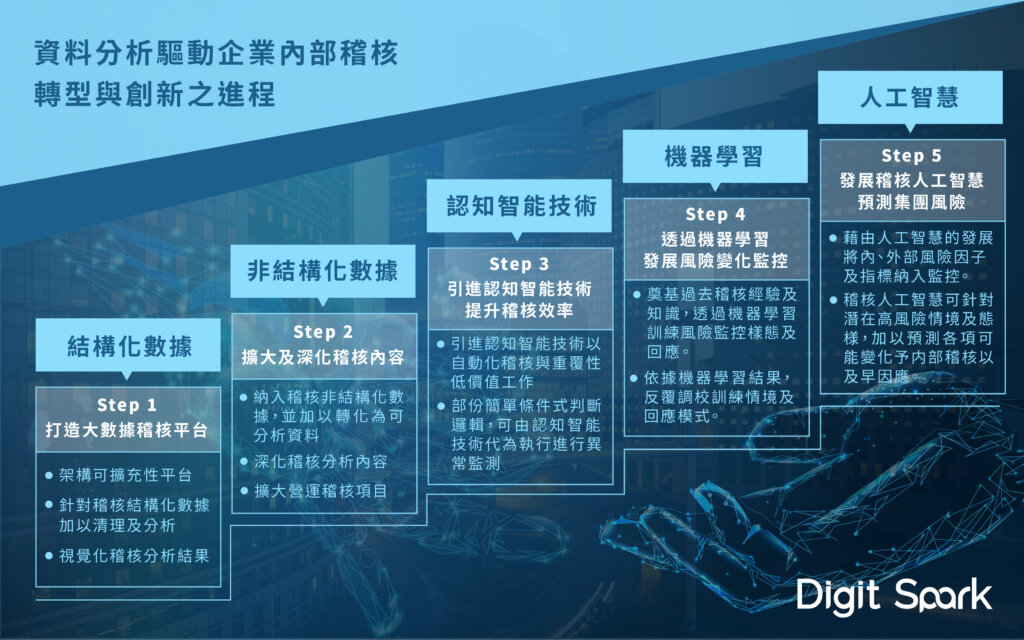
“Remote auditing” uses data analysis to compile the aforementioned production line and supply chain information into big data. This data is then organized using visualization tools, creating guided dashboards that allow for multi-dimensional viewing of different factors. This enables managers to immediately understand the status of each supply chain segment and make real-time resource allocation and schedule changes. Furthermore, an AI-powered risk analysis platform is established, along with “Key Risk Indicators.” AI detects orders with high risk values and immediately reports any abnormal orders to management, allowing for decision-making and handling before production and shipment.
2. Supply chain regionalization, with short chains replacing long chains:
Similar to the idea that “each small team is independent and capable of fully sprinting towards its own business,” cost reduction has always been an advantage of globalized supply chains. However, the pandemic has frequently caused factories and import/export operations in various countries to shut down without warning, leading to sudden disruptions in corporate production chains.
A stable supply chain is the cornerstone of a company’s long-term survival. Currently, an increasing number of multinational corporations, such as pharmaceutical and semiconductor component manufacturers, are reforming their production chains by shortening them, regionalizing them, or returning production to their home countries, and expanding from “single-point production of a single item” to ” multi-point production of multiple items .” For example, Kanto Denka’s South Korean plant has begun producing special gases for semiconductor manufacturing, which were previously only produced in Japan, thus addressing export instability. By combining each regional supply chain with a “data auditing mechanism,” independent operation and cross-border scheduling capabilities can be ensured under the integrated monitoring of the parent company.
Establish digital curation, an intuitive channel for disseminating information.
“Digital content curation,” also known as digital curation , differs from general exhibition curation. The primary core of digital curation is: “to enable viewers in the online world to smoothly and intuitively obtain useful information immediately.” Secondly, it goes a step further, “to present viewers with more relevant information that meets their needs from various channels through information extension.”
[Purpose of Digital Curation]
While providing real-time online information to the public is the surface level of a company, we can extend this to a deeper level by using professional digital curation to build public trust in our corporate values —what marketing calls the “customer value proposition.” Why do people believe the information on the BBC and Discovery Channel is true, or why do they prioritize Intel processors when buying a computer? Because consumers (i.e., viewers) believe that the information, products, and services offered by their company’s brand have exceptional value and authority; thus, they resonate with it and are willing to support the company’s product strategies or initiatives.
How to establish a digital curatorial system?
In practical applications, businesses can use their digitally established company websites and social media accounts as the starting point to build a systematic, multi-channel, and interactive resource network. The Digti Spark Group also boasts a professional website development team, a content creation think tank, a cross-border advertising team, and social media marketing consultants to guide clients in executing digital curations and building consumer connections.
1. The first step in technical operation is to focus on the company’s official website:
A smooth and intuitive website interface is fundamental: Does the website’s link configuration and text content guide visitors correctly, allowing them to quickly find the information they want? Every business should regularly conduct website health checks. The front-end should eliminate outdated, complex, hard-to-find information and slow-loading pages. It must be practical, user-friendly, and aesthetically pleasing, encouraging users to spend time on the site. The back-end needs to be crawled and data tracked to monitor the browsing activity of each page and internal/external link; for example, the number of visitors and page dwell time, analyzing what “our visitors” are most concerned about at that moment? Are they encountering obstacles during their browsing journey? Continuous optimization is essential, always ensuring a high-quality user experience for the business.
2. Target the readership and disseminate information:
In marketing terms, this means identifying the target audience (TA). Through tracking mechanisms embedded in the company’s website and media channels, user profiling can be performed on existing audiences, and AI-powered algorithms can be used to expand reach to more potential customers. For the audience, we should connect every channel through which information is delivered—websites, social media, media resources, partner platforms, continuous advertising, the product itself, etc.—creating a spiderweb-like network of connections. A company’s audience needs to be cultivated; the more people understand the company, the higher its value in society and the market naturally becomes.
3. Content management: Giving value to information:
We can refer to the digital curation principle proposed by renowned media figure, Mr. He Feipeng: Curation = Content + Context + Comment + Conclusion. Curating involves giving a message context, offering perspectives, and stating a conclusion . Messages shared by companies in the online world that only present a single event, such as advertising in a product ad, “Our company uses rainforest-friendly products,” have relatively weak resonance.
From a content management perspective, businesses can share promotional videos showcasing their operations and production processes across various “message channels,” including websites, social media, online and offline events, products, and advertisements, to reinforce a “rainforest-friendly” image. They can also conduct SEO content marketing, sharing engaging articles or other forms of content from different angles across these channels. The source material must be rich, credible, and able to express diverse perspectives that resonate with various groups, while maintaining quality sufficient to establish a strong corporate image. For messages that need to be repeatedly conveyed, we should transform rather than imitate, incorporating personal ideas and style into the re-creation. Furthermore, different message channels attract different audiences; understanding “their language” for direct communication is another skill in itself.
4. Technology helps create more ways to connect with people:
Applying the “Scenario Marketing” concept from Marketing 5.0 to digital curation; for example, with the current popularity of AR and VR, more and more brands are using virtual reality for product displays and sales. The immersive experience of VR can also be combined with the “content management” mentioned earlier. For instance, by “allowing people to personally experience a world without rainforests,” companies can promote their commitment to rainforest conservation, and games and apps can be designed to incorporate corporate philosophy and new promotional plans. In addition, to build long-term relationships with viewers, the concepts of Customer Relationship Management (CRM) and User-Generated Content (UGC) can be used to encourage interaction among viewers and build their sense of belonging to the company.
Summary of viewpoints
“Digital innovation,” like “digitalization” 20 years ago, is an irreversible trend. However, it’s human nature to find it extremely difficult to drive change when a team feels everything is perfect. For example, Sondern, founder of the German cloud-based e-commerce company Minubo, shared the bottleneck his company encountered when implementing business intelligence (BI) solutions: “Customers were unwilling to accept an execution method completely different from their existing systems; we pushed them too far out of their comfort zone.”
However, current comforts will not lead to lasting success. Even the most renowned and well-established global companies are constantly paying attention to new trends and breaking out of habitual patterns. Regardless of size or industry, companies should actively drive self-innovation and establish a digital and data-driven mindset in order to stand firm in the environment and achieve sustainable growth.
<APEC SME Trends Monitoring Report, Issue 32, reprinted here>

Digit Spark, part of the Zhenhao Internet Media Group, integrates its six sub-brands offering data application services to provide enterprises with comprehensive and precise optimization services across five key areas: “Industry Customer Targeting,” “Performance Optimization Strategies,” “Digital Tool Integration,” “Online Voice Cultivation,” and “Brand Value Promotion.” It drives brand success through data technology.