Create a virtuous cycle of “Data Marketing ∞ Digital Marketing” to guide consumers to follow the brand.
Most B2C companies on the market are digitally scaled, but they may not necessarily have the ability to “dataficate”.
These two concepts are often confused by the public. Many of the brands that IBA has consulted have already achieved good results in digital marketing; however, they still face bottlenecks. In this regard, IBA would suggest breaking through by “building data marketing”.
What is data marketing? What are its benefits that make it worthwhile for companies to endure the pain of transformation? We interviewed Ellie, a data integration marketing consultant at IBA (Integrated Marketing Analytics), who has coached over 200 companies, to explain the value of data marketing and how companies can get started with it.
Marketing “Digitalization” vs. “Data-Driven”
Are “data marketing” and “digital marketing” different?
Data marketing and digital marketing are complementary. Broadly speaking, data marketing can uncover consumer intent, helping to formulate plans and anticipate their effects. Digital marketing, on the other hand, uses the internet to increase and simplify the ways in which businesses can communicate with consumers. However, for businesses, or those simply focusing on their overall marketing strategy, “digital” marketing should first take shape, be implemented, and achieve initial results (good or bad) before establishing data-driven approaches and integrating both technologies.
Why? Because “datafication” requires a large amount of data as a foundation , much like the observation and recording of lab rats. If a company has no records of the effectiveness of past plans, no quarterly performance analysis of its products in the market, what can it analyze and predict by implementing data tools?
Therefore, when IBA first meets a client, we always start by understanding how the client currently conducts business. What is the level of digitalization and data-driven approach their marketing? Only then do we analyze our coaching strategy. After all, corporate resources are limited. To improve operational and sales performance, it’s essential to clarify what efforts the company and its brand products should make, the priority of resource allocation, and the stop-loss point for resource investment.
Further Reading: <A Brief Discussion on Digital Marketing & Data Marketing>
Data marketing, using B2C retail as an example, is easier to understand: Brands collect data that is beneficial to them, hidden in the data left by consumers browsing the internet, and can make advantageous decisions when planning online and offline marketing strategies.
Common data marketing techniques include tracking and comparing which exposure platforms a “Product A” ad is placed on, which platforms have more clicks, and which sites have more visitors but fewer conversions. After professional marketing consultants analyze this data, they can determine which advertising channels are suitable for pure exposure for “Product A” and which are suitable for push notifications to shopping pages , thus achieving the most effective opportunity cost.
What are the benefits of combining “digitalization” and “datafication” for corporate brands?
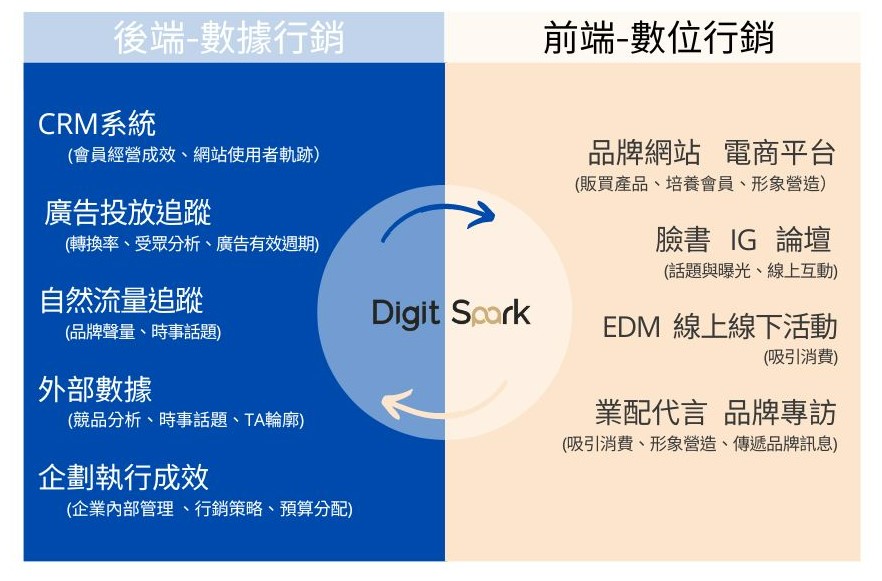
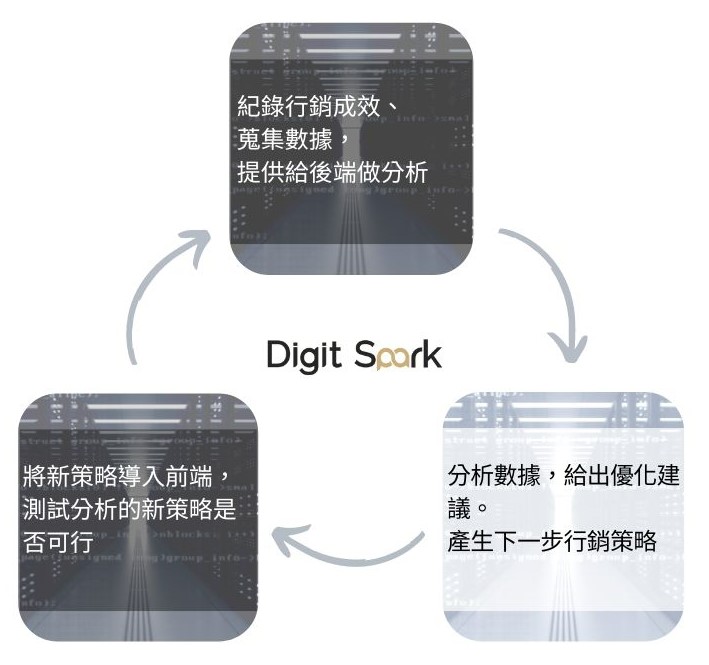
Data can serve as a weapon for brands to scout out competitors and analyze the market. Through data analysis, we can identify the “points” of product and brand differentiation , which can then be used as selling points to communicate with consumers. Data marketing is like a strategist sitting in a fortress, keeping a close eye on the market from all sides while observing the battle situation of their own troops on different battlefields. They cross-reference market information and corporate information, formulate plans, and hand them over to the “digital marketing” department on the front lines of the consumer market for execution and testing.

*Please note that neither of these two aspects is more important than the other . While it’s true that businesses prioritize revenue and cost-benefit ratios monthly and quarterly, data analysis can help identify blind spots and optimize brand strategies to achieve short-term goals. However, business operators also need to stay abreast of market trends, anticipate future developments, and then apply these insights to current operational and R&D policies to build the company’s strength.
Digital marketing acts as the vanguard in the market, encompassing a vast array of channels including e-commerce platforms, social media, advertising, and online events. It directly engages with consumers through various channels, capturing their dynamics, understanding their preferences, and identifying the messages they respond to. In achieving marketing goals, it simultaneously validates the effectiveness of data marketing strategies, providing data analytics for optimization… creating a positive, iterative cycle.
How can corporate brands move towards data-driven marketing?
What should companies new to data marketing pay attention to?
-
Ensure internal consistency of understanding
Over the years, working with businesses of all sizes, we’ve observed a phenomenon: in many companies, those truly knowledgeable about digital and data are not necessarily on the front lines of marketing, interacting with consumers and clients . This creates an information gap. When IBA (Information Business Partner) guides businesses on digitalization, it helps clients understand data concepts and analyzes the current state of data application within their specific industry and market. When the entire company shares a unified understanding of digitalization and data , implementing interactive digital and data-driven marketing strategies becomes much more effective and efficient.
-
Focusing on its own brand and products as the core of information
Those new to data marketing and big data trends are prone to a common misconception: the more data they have, the more secure they are! They feel they can’t let any information slip through their fingers! But we should select truly important information for reference, rather than being overwhelmed by it.
What information is truly important? You can use “My Brand, My Products” as the central logic to collect this information:
- What keywords will consumers use to connect to my brand’s products based on my brand’s online SOV (Self-Viewing) presence?
- By digging into my brand’s past customers, what is Persona like?
- What feedback have our brand’s consumers given us regarding our products in the online and physical world?
- What are the unique features of my brand compared to my main competitors?
Of these points, the one where it’s easiest to fall into a mental trap is [point 4] . Analyzing competitors is definitely important; however, you can’t just do what others are doing! Suppose a popular toy model company discovers the online activity patterns of its competitors: “Company A hired 5 YouTubers to promote unboxing League of Legends licensed products,” “Company D placed ads on a well-known podcast,” “Company B launched a LINE mobile store,” and so on. There are countless marketing methods. Does that mean I have to do everything they do so that I don’t miss out on opportunities?
No. Random, headless marketing will only lead to a waste of resources . We should utilize data tools to strengthen our analysis of points [1, 2, 3], understanding how we interact with consumers, what interaction methods our consumers respond to most enthusiastically, etc., to identify the most effective marketing channels for us, and what our unique selling points are in the competitive market, in order to enhance our marketing efforts.
Data tools are used to gather intelligence in order to differentiate a brand, not to follow the crowd.
-
If you only pursue immediate results, long-term marketing costs will only increase.
Data marketing takes many forms, but business people are most often concerned with metrics like ad placement analysis and fan page reach. However, data marketing can do much more, even influencing a company’s overall operational strategy ; for example, establishing quantifiable goals and refining departmental processes.
IBA guides businesses in implementing data-driven marketing by telling them, based on the interaction history between the brand and consumers (as shown in the “medical aesthetics clinic” example below), “what to do first and what to invest in upfront costs before pursuing data tools to generate revenue . “
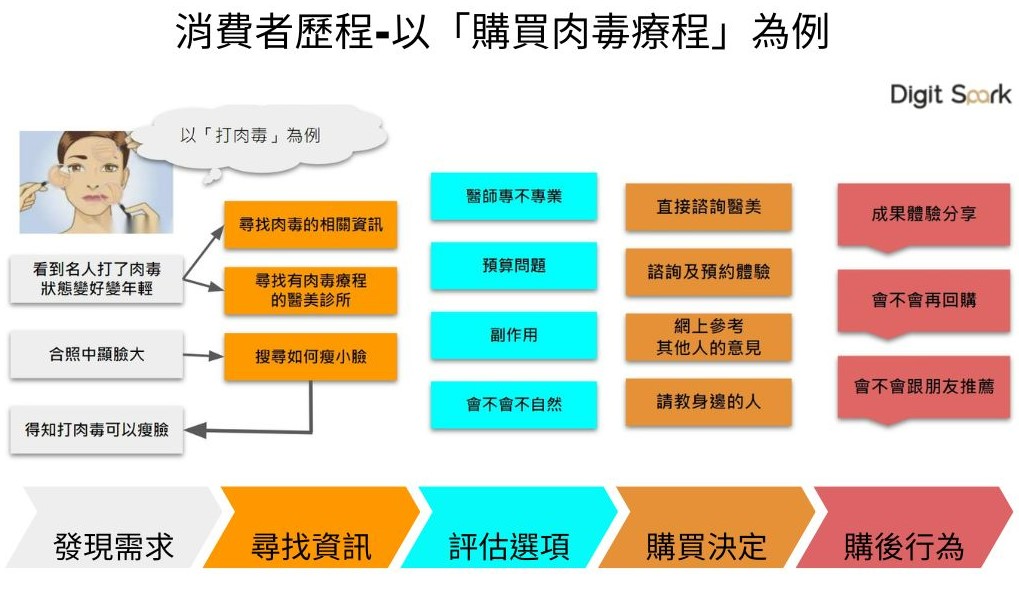
In the diagram above, what makes clinics profitable isn’t just the “purchase decision” stage, but the entire process; data marketing is integrated into each of these five stages in various ways. Before pursuing profits, businesses should first use data to understand consumers, guiding them step-by-step through the information they disseminate online to get to know their brand , gradually leading them down the rabbit hole.
If you only pursue immediate benefits, such as increasing advertising revenue by 20% in one month, it may not be a problem for the first time. However, over time, the advertising costs required to achieve the same conversion rate each month will jump by 2, 3, or even 5 times, and then you will start losing money.
Businesses leverage digital and data-driven marketing to pave the way for the future.
IBA’s customer acquisition data marketing expertise includes the following data marketing methods:
- Market analysis determines brand positioning
- Brand Audience Profile Analysis
- Website tracking setup
- SEO Content Marketing
- Brand search volume analysis
- Community voice enhancement tools
- GDN advertising strategy planning…etc.
The strength of IBA consultants lies in the fact that these methods are not rigidly applied to one specific task; consultants select different strategies to interact and apply based on the brand’s current situation and real-time market observations, customizing a data marketing implementation model that is unique to each enterprise brand.
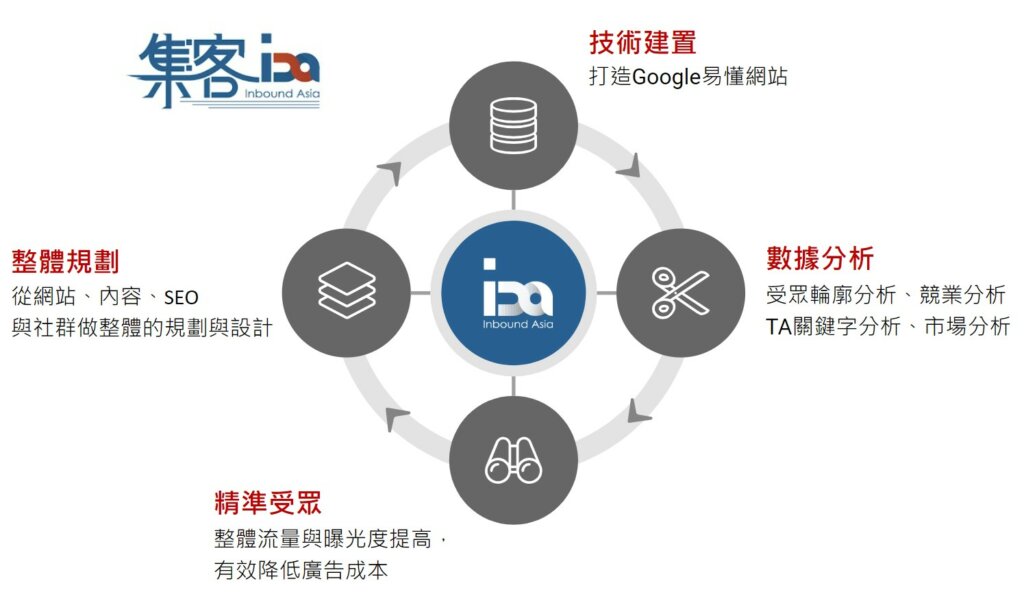
As the saying goes, tools are inanimate, but people are adaptable. Every marketing tool and strategy has its advantages and disadvantages; the key is whether it matches the brand’s conditions. Whether a company is optimizing digital marketing, implementing data-driven marketing, or integrating digital data, it should focus on “establishing accurate self-awareness” and “taking a long-term view.”
IBA’s data integration and marketing capabilities can help businesses analyze and anchor their brands, gain a complete understanding of “everything about me and my consumers,” and help them create the most suitable marketing strategy blueprint.

Thanks to
Ellie Tsai / Marketing Brand Director of Jike Data
Serving over 200 companies across more than 12 industries. Specializing in building industry marketing strategies, brand management, cross-platform content marketing, and data integration and analysis, we help companies create their own marketing funnels and establish a stable operational foundation.
Further Reading:
“A Brief Discussion on Digital Marketing & Data Marketing”
“Intent Targeting” is becoming a Google trend; how can marketing strategies be developed to get closer to consumers?
Digit Spark, part of the Zhenhao Internet Media Group, integrates its six sub-brands offering data application services to provide enterprises with comprehensive and precise optimization services across five key areas: “Industry Customer Targeting,” “Performance Optimization Strategies,” “Digital Tool Integration,” “Online Voice Cultivation,” and “Brand Value Promotion.” It drives brand success through data technology.