AI Martech is driving the digitalization of healthcare facilities! Analyzing its applications and challenges.
#SmartHealthcare #SmartCare #Martech #DigitalClinics
The digitalization of medical clinics is a current and future trend. The adoption of digital tools helps healthcare professionals reduce pre- and post-consultation preparation, accurately grasp each patient’s physical condition and treatment status, and alleviate a significant administrative burden . Furthermore, for the general public, digitalized clinics can provide patients with more convenient and efficient ways to access information, including personal disease tracking, treatment knowledge, and care reminders. Thirdly, the digitalization of medical services also brings benefits to society as a whole; it can facilitate the smooth implementation of the national health insurance’s tiered healthcare system and reduce the waste of medical resources.
It sounds like there are many benefits to digitizing hospitals, but how should a beginner do it?
Clinics should incorporate AI Martech and promote digitalization according to their own needs.
For hospitals to implement digitalization, adopting AI Martech is a relatively direct and quick approach. While AI Martech excels in enterprise marketing and operations management, its applications extend far beyond these areas. It can also be applied to patient data management, diagnostic assistance, and promoting friendly doctor-patient communication. For example, in administrative services, clinics using automated customer service robots to handle basic public inquiries is one application of AI Martech.
By learning how to use AI Martech, clinics can more easily grasp patients’ detailed health conditions, medical and care needs, and allow robots to assist staff with many basic tasks. Importantly, before embarking on digital transformation, clinics should first consider: ” Why does our clinic need to transform? What benefits do we hope to bring to our staff and patients? ” For example, is the primary goal to solve the problem of filing large volumes of medical records? Or is real-time patient monitoring placing too heavy a burden on nurses, requiring robots to assist?
Before a clinic undergoes a transformation, it should consider factors such as its digital needs, the digital literacy level of its staff, the clinic’s usual patient communication methods, average patient flow, and database complexity, to select the most suitable AI Martech project for implementation. We will explain some commonly used implementation projects in the next section:
Further Reading:
What is AI Martech marketing technology?

AI Martech’s Applications and Advantages in Healthcare and Clinics:
I. Electronic Medical Record System:
Once the National Health Insurance card is inserted into the computer, the clinic can access the patient’s past medical records, medication records, and images, and simultaneously add the patient’s medical record to the National Health Insurance card. This is the well-known electronic medical record, which makes it easier for doctors to track the patient’s condition, provide more planned treatment, and provide detailed information when referring patients to different doctors. Modern electronic medical records usually also include the number of visits and follow-up visits, making it easier for administrative counter services to help people register and make appointments.
Furthermore, since 2019, the Ministry of Health and Welfare has implemented the “Electronic Medical Record Exchange Center” program, allowing not only medical staff to access patients’ medical records, but also the general public to obtain their own medical records from the past six months at medical institutions, with the patient’s consent and the doctor’s authorization, through their National Health Insurance IC card and the doctor’s medical certificate IC card. This initiative aims to enhance public awareness of their own health conditions and improve health consciousness, while also reducing the cognitive gap in doctor-patient communication, making medical visits smoother.
Further Reading:
- Ministry of Health and Welfare Electronic Medical Record Exchange Center
- The biggest legislative overhaul in 17 years: the new electronic medical record law brings about fundamental changes in four key areas.

II. Appointment and Queue Management System and Administrative Management:
Through the appointment system, patients who are not seeking initial treatment can schedule appointments remotely. If the appointment time needs to be changed temporarily, it can be handled immediately and a record can be kept for both the doctor and the patient. Moreover, the appointment-based AI Martech can remind patients of their upcoming schedules in advance to avoid forgetting. In addition, if the appointment is integrated with the hospital’s registration system, it can remind patients outside the hospital, “Come when your number is almost up!”, reducing waiting time and freeing up more space in the hospital .
To understand this in the simplest way, consider the example of clinics allowing patients to book appointments via LINE. The advantage is that LINE is a widely used app, so clinics don’t need to spend time educating consumers . By integrating Martech into the LINE system and combining it with the clinic’s administrative management, significant daily costs can be saved compared to tracking traditional paper medical records and follow-up visit logs. Before opening each day, clinics can immediately view information on patients visiting at any given time, including out-of-pocket expenses and medication availability. This allows for seamless workflow management, including appointment reminders, patient services, administrative billing, surveys, and basic medical consultations.
Further Reading:
III. Remote consultations and remote collaboration between clinics:
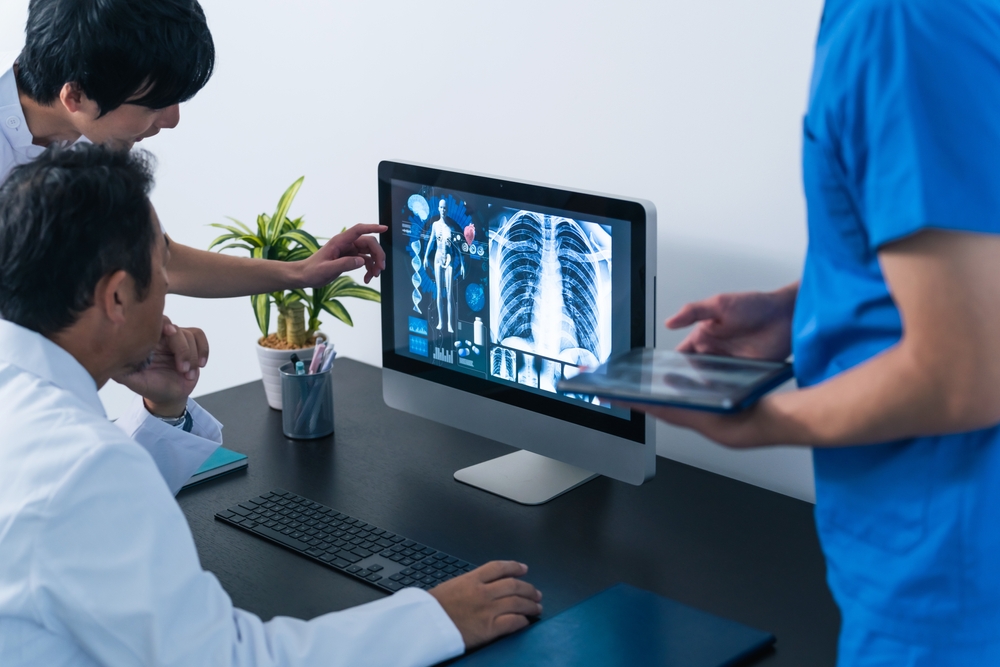
Before the COVID-19 pandemic, telemedicine was considered a solution for a few cases, but it is now widely used in many clinics. Beyond the pandemic, the collaborative innovation of information technology and healthcare services in Taiwan has broken down geographical and mobility barriers, improving healthcare in remote areas and optimizing the daily healthcare experience, providing equally professional services to patients with transportation or mobility difficulties.
Furthermore, with the innovation of medical technology and medical regulations, remote consultations are not only occurring between doctors and patients, but also between clinics . Using telemedicine for referrals, collaborative treatments, and remote wound care not only reduces the need for patients to travel, but more importantly, it makes up for the shortage of medical personnel by adopting solutions of mutual support and mutual employment to take care of the general public ( e.g., the Safe Yunlin e-Hospital Joint Prevention ).
Telemedicine is typically used for simpler or more direct medical services, such as for colds, skin allergies and rashes, suspected diagnoses, etc. Doctors can also issue electronic prescriptions, which are then sent to the nearest pharmacy for medication pickup or home delivery. Telemedicine can be considered one of the most tangible forms of hospital digitization for patients , allowing digital technology to significantly change lives.
Further Reading:
- The effectiveness of telemedicine during the pandemic: a look at cases across Taiwan | Call a Pharmacist
- The telemedicine model is developing in multiple ways, and three typical practices are gradually taking shape.
IV. Data Platform Optimization Diagnosis and Risk Assessment:
Currently, Taiwan and other countries have AI Martech systems that integrate medical and medical research to form data platforms. These platforms collect data such as blood pressure values, heart rate management, and physiological information measurements, and then provide valuable information to doctors through automated analysis tools to accelerate diagnosis and treatment decisions.
The ideal future model is one where, by integrating and cross-analyzing patients’ personal health data and practical data on medical devices and medications, hospitals can more easily provide personalized treatment prescriptions based on individual patient differences ; and by cross-analyzing physical values and treatment courses, they can predict patients’ health risks . (Example: The Taipei Veterans General Hospital team collaborated with Dell on an AI data platform , integrating 110 million real-time parameters to train an AI for heart failure risk warning.)
Such large-scale projects are generally only feasible for large, integrated hospitals, and are unlikely to occur in smaller clinics. However, the patient data and prescription results collected can still benefit smaller clinics in serving their patients. For example, after surgery, patients may only need to visit local clinics for regular follow-up care, or when their condition warrants a referral to a regional hospital, the AI data originally from the large hospital can provide doctors with valuable information. Local clinics can also apply for AI data sharing to optimize their own disease research and analysis; help frontline medical staff improve diagnostic and treatment methods more effectively; provide patients with more verifiable risk assessments; and optimize doctor-patient communication.
Further Reading:

What challenges will hospitals face in digitizing their operations?
Of course, digitization has its advantages, but it also brings corresponding risks. Especially during the initial adaptation period of introducing Martech, clinics need to overcome challenges such as information gaps and human-machine training . In particular, when dealing with a large amount of patient personal data and health information, how to maintain data privacy and security while ensuring smooth use, and how to ensure data quality and accuracy at all times to avoid misdiagnosis; in addition, the application of AI Martech requires the integration of different technologies and systems , including electronic medical record systems, appointment systems, numerical analysis tools, etc. Clinics and analysis centers also need a lot of training to fully utilize the data and enable different systems to work together to achieve maximum benefits.
To overcome the challenges of implementing AI Martech in hospitals, thorough pre-implementation human-machine training is crucial. Before implementing AI Martech, hospitals should have experts assess the interoperability and integration between different systems to ensure that new digital tools can seamlessly collaborate and flow data with existing systems. Especially in handling medical records, robust data security measures are needed, including encryption, de-identification, and secure storage systems to prevent data leaks and unauthorized access. Some hospitals establish dedicated digital teams to handle data integration, connectivity, and analysis, providing support to frontline healthcare workers.
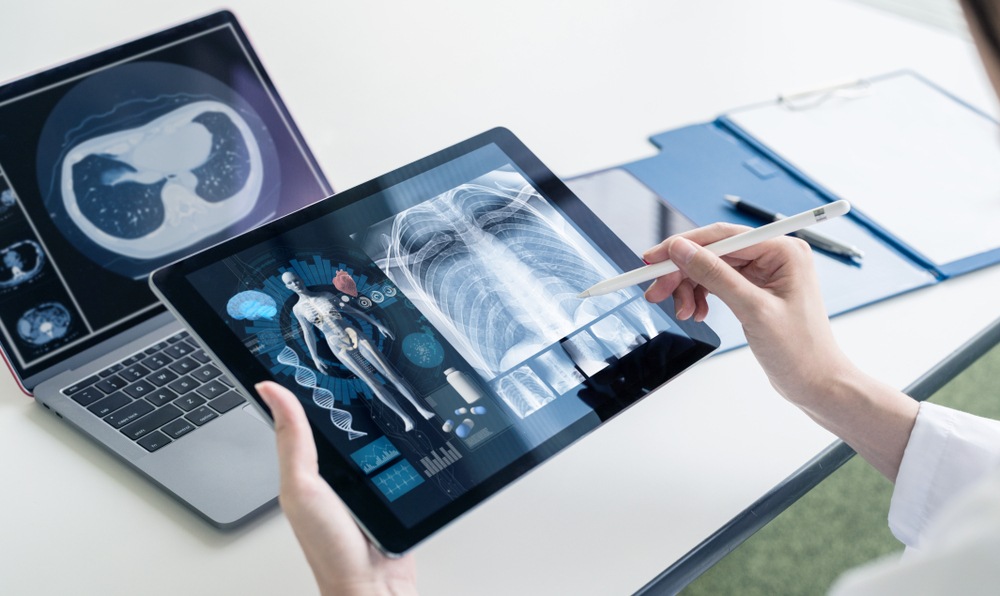
Human-machine training requires specific training plans to be developed by medical centers, research hospitals, and medical universities, tailored to the different roles and responsibilities. For example, physicians use AI Martech for image diagnosis and numerical analysis to make treatment decisions; occupational therapists need to utilize electronic medical records for record tracking and treatment effectiveness evaluation, as well as use telemedicine software to continuously monitor patient recovery; and administrative staff need to learn how to integrate appointment systems, customer service systems, and administrative management. These are based on different professional needs, with appropriate training content and formats determined accordingly. Currently, there are many digital healthcare-related courses offered by research institutions , medical centers , and universities both domestically and internationally , which can be used as a reference for practitioners.
Conclusion:
Healthcare digital transformation and hospital digitization should be demand-driven , not merely a pursuit of digital trends. Maintaining a clear demand-oriented mindset is crucial for accurately assessing service optimization methods and selecting appropriate digital tools and technologies for implementation. This includes simplifying pre-visit procedures, enhancing doctor-patient communication, increasing patient engagement, and providing more detailed health education information. The core goal of digital transformation is to simplify the process for healthcare professionals, not to increase their adaptation burden . Healthcare digital transformation only has value if the chosen digital tools and strategies achieve these goals.
Further Reading:
- Benefits of medical digital tools: Apps improve consultation efficiency and reduce doctor-patient disputes
- The Value of Data in the Era of Smart Healthcare: Accelerating Innovation and Progress in the Healthcare Industry
- A new era of human-machine collaboration in smart healthcare: accurate and rapid clinical assisted diagnosis.
Digit Spark leverages data science and combines it with business marketing logic to help businesses create digital content and service processes that are closer to the consumer market. At the same time, it utilizes AI to revitalize brand operations, helping to comprehensively improve a company’s digitalization, datafication, and brand performance.