How AI is changing consumer behavior, part 3: The more market information available, the lower consumer loyalty.
App stores, ad placement algorithms, online subscription services, AI-generated user guides… these are all products of AI development within the realm of commercial activities. In marketing, AI makes it easier for consumers to encounter similar choices. For example, if I’m looking at a certain product and Siri overhears my conversation with a friend, prompting me to pick up my phone and scroll through Instagram, my feed will show 3 or 4 similar products…
In the above scenario, when consumers are shopping and searching for products, they may have initially started by looking at Brand A’s website, but with a casual swipe, they will be presented with similar ads by the algorithm and discover “another brand’s product that is better than I expected!” Their attention to Brand A will quickly disappear.
Even though consumers are prone to changing their minds, brands still need to prioritize maintaining customer loyalty.
This presents a challenge for brands: “Maintaining consumer brand loyalty is becoming increasingly difficult .” Even streaming giants like Netflix, Disney+, and Hulu have subscribers who choose their preferred shows based on availability, highlighting the intense competition among brands.
Even though consumers change their minds as quickly as flipping through a book, it remains crucial for brands to maintain good customer relationships and build a strong brand image to retain customer loyalty . After all, the chances of getting an existing customer to make a repeat purchase are still much higher than acquiring a new customer (as strangers are more likely to lose attention while comparing products). Moreover, many consumer goods, such as food, health supplements, and electronics, have weathered the loyalty wars and are now able to steadily and efficiently increase revenue, widening the gap with competitors, such as I-Mei, Glucose, and Dyson. The importance of brand loyalty was highlighted in the 2020 Harvard Business Review , and now, with consumers receiving increasingly more information daily from social media and advertising, maintaining customer loyalty is more challenging than ever before.
Three Strategies: Leveraging Marketing & Data Integration to Strengthen Member Loyalty
Retaining existing customers is more difficult for B2C brands than for B2B brands. Furthermore, commonly used sales strategies such as low prices, bundled offers, and member days are already highly competitive, which can feel like excessive noise and intrusion for some consumers. Brands should develop alternative marketing strategies to complement price wars, aiming to simultaneously enhance brand value and strengthen customer loyalty .
-
To create a more three-dimensional brand persona as the foundation for marketing storytelling.
Establishing a brand image and personality is the foundation of brand marketing. Transforming the brand’s “persona” into elements such as CIS, advertising slogans, audio-visual materials, language, and behavior can effectively communicate and interact with the audience, making the brand persona more vivid and three-dimensional, thus transforming “attracting consumers with products” into “attracting consumers with brand persona”.
▼Nike’s classic brand building strategy. To convey keywords like “boldness,” “daring,” and “action” to consumers, these are too abstract and lack direct connection to the product, making them difficult for consumers to remember. The classic slogan, “Just do it,” is used for conversion. This image is very clear and distinct, and can be extended and utilized in various marketing campaigns and storytelling.

A distinct and well-defined brand persona can not only quickly attract consumers and successfully disseminate marketing information, but also greatly benefit the product development team, business team, and marketing team. This makes it easier for them to accurately focus on the interconnected product design direction, business communication, and marketing exposure plan, allowing the brand to maintain its competitive edge in the market and preventing the team from going astray due to their individual roles .
-
Partnering with diverse platforms to overcome the consumer confidence gap.
Google Consumer Insights indicates that consumers are bombarded with information daily, much of which is inaccurate or misleading, making it difficult for them to trust brand messages. For example, in India and Southeast Asia, 81% of surveyed consumers cited overwhelming and confusing brand information as the main reason for their hesitation and eventual decision to abandon a purchase. Furthermore, in the Asia-Pacific region, over 70% of consumers expressed concern about the possibility of misleading or deceptive brand messaging when shopping.
Just as actors can use their well-known works to endorse their abilities, B2C brands can endorse their brands through awards, exhibitions, social initiatives, and exposure on authoritative third-party platforms . Google Consumer Insights believes that when brands are exposed on trusted platforms with high vetting standards, such as Books.com.tw and Eslite Online, a “trust transfer” effect can occur, making consumers perceive these brands as more credible.
This strategy is particularly impactful for small and medium-sized enterprises (SMEs) across various industries that are not well-known large manufacturers. While listing on platforms may not generate enough profit to cover the platform’s commission, it can help increase brand exposure and build long-term, stable brand awareness. A suggested marketing plan could be: simultaneously leverage the traffic and consumer trust of major platforms while developing your own brand e-commerce platform and app to deeply engage with your membership base; use platforms to acquire new customers and use your own brand channels to retain existing and new customers through transactions. For advice on how to plan and allocate marketing costs and profits, please consult with a brand e-commerce operations expert (Growth Strategy Growth Performance Integration Consultant) to discuss this further!

-
Let consumers clearly experience the benefits of “data collection”.
People are bombarded with information every day, and their patience is dwindling. Brands should properly plan data integration and use cross-platform interfaces to link member information, shopping records, order tracking, discount codes, and other functions, so that consumers can get the services they want with minimal patience.
James Lei, a measurement and analytics product expert at Google Greater China , analyzed that consumers are no longer opposed to having their data collected, but rather want to know how their data is collected and how it is used.
In other words, for businesses and brands today, educating consumers to understand “My data has been collected by the company!” as “My membership information is linked to the brand platform, so I don’t need to remember a bunch of passwords anymore; I can operate it without any worries ” will be easier than before. Brand platforms refer to various channels such as the brand’s own website, online shopping platforms, and partnered app POS systems. Furthermore, if there are sister brands or multiple brands under a parent group, data sharing and collaboration can create greater synergy and provide consumers with more convenience.
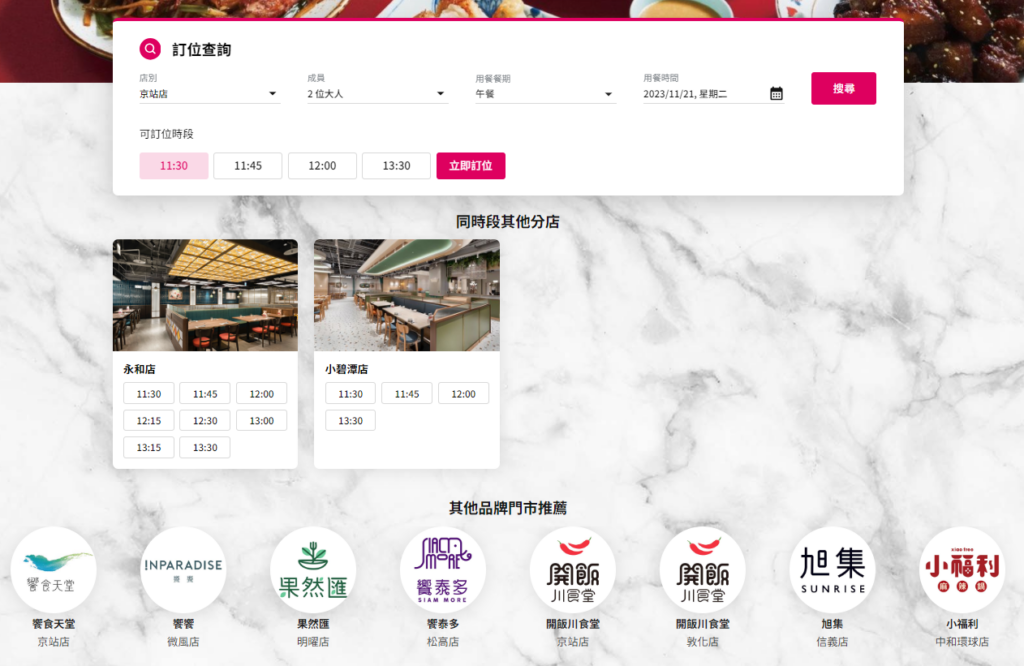
▼ For example, the Xiangbin Group unifies the reservation system of all its restaurants, achieving the effects of “sharing of consumer member data” and “personalized restaurant recommendations”; for consumers, if they cannot book Restaurant A during the expected time period, they can be recommended to choose Restaurant B nearby with available seats.
Beyond connecting and sharing data across various channels, brands should enhance personalized product recommendations and provide consumers with more benefits from becoming loyal members. These benefits shouldn’t be tied to a single brand, but rather, like credit card reward points , transform spending on a single brand into diverse advantages to meet other aspects of life. This requires collaboration with multiple brands and data sharing. In this way, multiple brands can work together to capture a significant portion of members’ daily spending.
Further Reading: Why Collect My Data? The Benefits of Data Communication Between Consumers and Businesses
Conclusion
What kind of brands can retain consumers? One type is a landmark brand that allows consumers to fulfill their self-identity through purchase (such as BMW and Tesla). Another type is a brand that is considerate enough to provide consumers with multiple benefits in minimal time, such as simultaneously satisfying their time, energy, and emotional needs. Few brands can reach the level of the first type of super-giant, but most brands can gradually become the second type through hard work.
As we’ve emphasized before, when marketing products, brands must not only cater to consumers’ tastes but also their lifestyles . This means brands must continuously monitor changes in consumers’ lifestyles and psychological needs, adjusting product, service, and marketing partnership strategies accordingly; providing excellent and diversified CRM services, and giving consumers complete control over service choices (for example, Brand A members can choose which partner brand to use their reward points on); this effectively enhances the brand’s value in consumers’ minds and in their lives, solidifying member loyalty that combines emotional and financial benefits .
Further Reading:
- 2023 GML: New Brand and Retail Strategies! Winning Consumer Trust with AI Technology
- 2023 GML: How Businesses Can Leverage Google AI Technology to Achieve Higher Profits
- How can AI win back “slipped up” consumers? Five new rules for the retail industry in 2022.
Digit Spark leverages data science and combines it with business marketing logic to help businesses create digital content and service processes that are closer to the consumer market. At the same time, it utilizes AI to revitalize brand operations, helping to comprehensively improve a company’s digitalization, datafication, and brand performance.