Transactions are hidden in chats! How does the tourism industry operate “word-of-mouth marketing”?
There are many long holidays in 2023, and for the tourism industry, long holidays, summer and winter vacations, and festivals are all peak periods! Travel agencies, hotels and accommodations and other businesses often try to seize business opportunities by actively launching new programs and advertising to attract consumers. In addition, when consumers are planning what trips to take and which hotels to book, what “key factors” have the greatest impact on their decisions?
The answer is ” others’ experiences and evaluations” ; in other words, “word-of-mouth marketing” influences consumer decisions.
Before planning a trip, most people are used to doing their homework online, seeing how others have traveled, how good the hotel facilities are, etc. This information, if viewed on social media platforms that consumers frequently use, includes shared experiences and feedback from others , such as:
“Plan A at this hotel is great. My room was decorated in a Muji style with floor-to-ceiling windows offering a beautiful view. Waking up in the morning was very relaxing, and the breakfast selection was plentiful!”
Because netizens and industry professionals have different perspectives , such statements appearing on travel forums are more likely to be believed by readers than self-promotion by industry insiders. Today we’ll discuss how travel industry professionals can leverage word-of-mouth marketing to increase their marketing power! By using others’ testimonials, they can promote their carefully designed services, thereby enhancing their ” customer attraction ” and ” brand image .”
Before engaging in word-of-mouth marketing, you should first lay the groundwork with content and engaging topics.
How can tourism marketing generate consumers’ desire to “go to ○○ tourist attractions, how to play, and experience ○○○ itinerary”? Consumers will first learn about a trip through some channel/event , such as travel blog sharing, movies and TV shows, or social media, and then have the idea of observing and may further actively search for related information.
The topics discussed in film and television dramas have a strong appeal to travel consumers. Japan has always been a popular travel destination for Taiwanese people, and the premiere of the Japanese drama “First Love” at the end of 2022 led to a surge in the number of tourists visiting Hokkaido. Online searches for information about Hokkaido attractions also skyrocketed, indicating that Tokyo and Osaka were no longer the primary destinations for Taiwanese travelers. (The 2017 hit drama “Tokyo Girl’s Guide” had a similar effect.)
▼ It’s common for movies, TV shows, and tourist attractions to become trending topics online, prompting astute tourism operators to seize the opportunity to launch corresponding content marketing (left) and product service plans (right).
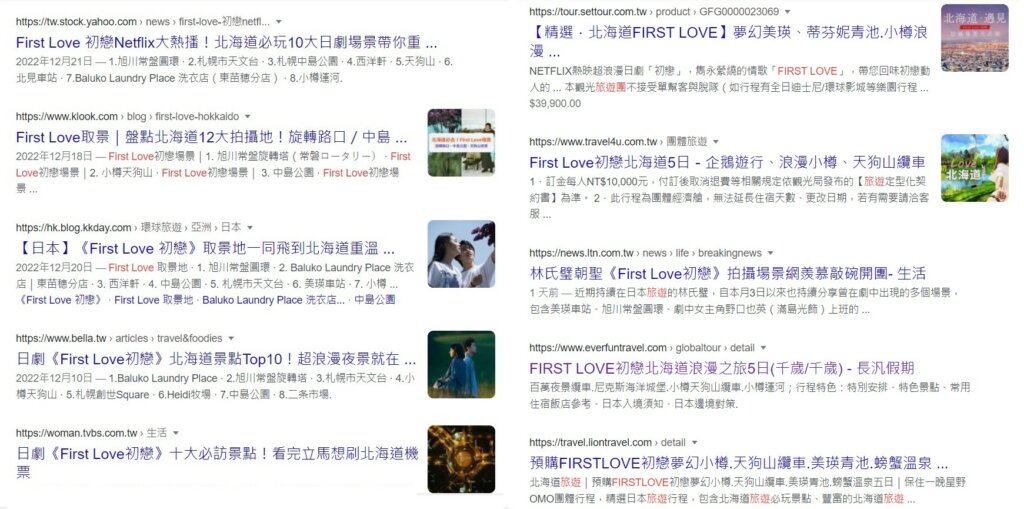 Image source: Google
During the aforementioned phase, we can see that after the drama became a hit, the internet was immediately filled with articles and videos introducing various attractions in Hokkaido, famous spots in “First Love,” travel guides, and so on. Whether this content was deliberately arranged by the operators or prompted by mainstream trends to encourage bloggers to write articles, it can be used by tourism operators as content marketing . When promoting Hokkaido tours, they can leverage this to attract consumers who want to go to Hokkaido more and more.
The combined marketing appeal of “sharing” and “interaction”
After the marketing campaign in the previous paragraph has just begun to gain traction, travel agencies can start observing the “timing,” “location,” and “topic” of incorporating the “Hokkaido tourism” topic and our company’s travel packages into word-of-mouth marketing.
The internet is a giant chat room, with all sorts of topics happening every day. In fact, word-of-mouth marketing has already permeated our lives. The easiest way to quickly understand what word-of-mouth marketing is is to browse Dcard and PTT (Taiwanese online forums). For example, in the Hokkaido travel section, you can see many netizens discussing various attractions, travel plans, and actual experiences after a drama becomes popular. ▼
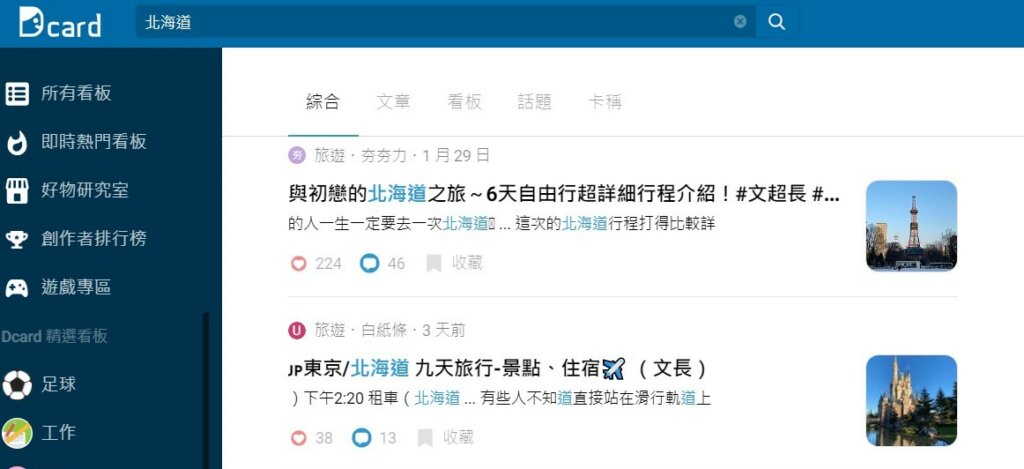 Image source: Dcard
Businesses like travel agencies, which directly serve the general public and primarily engage in B2C marketing, need to generate topics that resonate with consumers’ lives. For example, travel-related, beauty-related, business-related, and regional sections are all “hot spots” for word-of-mouth marketing.
Compared to advertisements, the information shared by netizens in posting, replying, and posting with pictures gives readers a more personal and relatable feeling, like ” a real person is chatting with me .” This encourages readers to immerse themselves in the conversation and actively participate. For example, when sharing Hokkaido travel tips, netizens actively inquire about ski lessons, convenience store information, and so on. This back-and-forth interaction is very common. Within the limits of avoiding overly obvious sponsored content or being offensive, businesses can use this to share service information in a more persuasive way than with advertisements .
The delicate balance between “sponsored content” and “online interaction” tests the operator’s sensitivity to topics, writing skills, and empathy.
◆ For a more detailed understanding of the overall framework of “word-of-mouth marketing”, please refer to this article.
Word-of-mouth marketing drives brand awareness across different topics and marketing stages.
To effectively manage word-of-mouth marketing, businesses need to stay informed about a vast amount of information. Fortunately, most topics and issues now circulate online, allowing us to easily utilize Martech tools such as ” public opinion monitoring systems ” and ” hot keyword analysis systems ,” including Largit Data , Openview , and Google Trends , to track daily and weekly online discussions related to our products. For example, how do consumers planning a trip to Hokkaido rate the various travel services available, and which attractions or details generate particularly high levels of discussion?
Online topics related to brand marketing mainly gather and ferment in three places: ” social media “, ” forums “, and ” Google comments “. Astute operators will find topic keywords from these channels, observe and test the trend, and then join the topic by leaving comments, such as “I went to ○○○ ramen shop when I went to Hokkaido before the pandemic. The salt and soy sauce ramen was delicious! I wonder if it is still open…” or “I asked ●● travel agency to handle my flight and hotel package. Since it was my first time going abroad, I didn’t know how to use it, and the customer service helped me with it on the same day.” Based on the observed reactions of netizens, they can design suitable posts.
Today we’ll use a simpler example of “palindromes.” Taking a Hokkaido travel itinerary as an example, by observing different discussion threads, we can summarize “different stages of demand” and design responses accordingly, for example:
-
In the current discussion phase, it’s either something to observe or something to express one’s feelings.
When you see comments like “I really want to go to Hokkaido after watching ‘First Love’!” or “Is the pasta in Hokkaido better?”, these online comments mainly focus on the content of the drama and scenes from it. In these situations, it’s not advisable to immediately jump into “travel introductions” when replying. Instead, you can mention a location featured in the drama, other filming locations in Sapporo, etc., to continue the conversation.
-
Interest in tourist attractions > Theatrical topics; potential future trip to Hokkaido.
Posts and discussion threads like “Go skiing in Hokkaido, see the night view at Tenguyama, and experience the atmosphere of ‘First Love'” are likely from people who are considering or have a budget for traveling abroad but haven’t decided where to go yet, or who want to go to Hokkaido but are still thinking about it. Sharing photos of the night view from Tenguyama, experiences of fun places in Sapporo, and places visited during in-depth travel are all good options. From a travel agency’s perspective, this is also a good time to share snippets of their own itineraries, but be careful not to paste the whole thing, otherwise it will be obvious advertising.
-
I‘ve decided to go to Hokkaido and am doing my research.
“Going skiing in Hokkaido during my annual leave! 5 days of skiing, so exciting!” “Which credit card is the most cost-effective to use in Japan?” These kinds of discussion threads clearly indicate that the poster is already going and are suitable for sharing practical travel-related information. For example, hotel operators and travel product sellers can build their reputation here, and even Japanese businesses can post in Taiwanese forums.
▼The product capitalized on the Hokkaido tourism trend and was featured in forum posts.
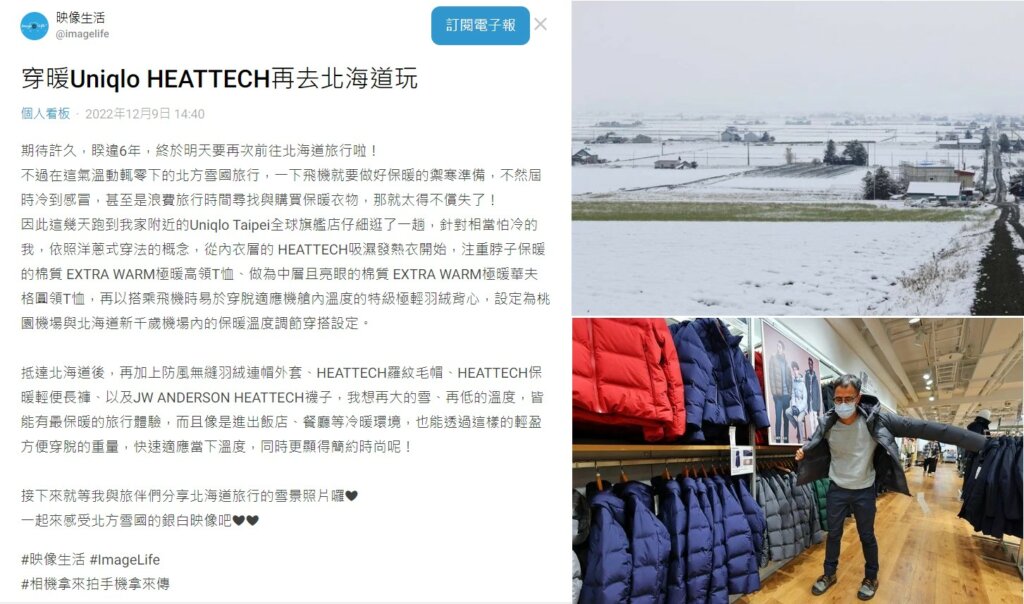 Image source: Dcard
How to conduct word-of-mouth marketing that promotes “peace of mind and stability”?
Word-of-mouth marketing isn’t just about chasing fleeting viral success. While sudden fame is certainly desirable, we must prioritize long-term, stable benefits. These benefits extend beyond simply boosting sales; they also include enhancing brand image . In practice, we should focus on key aspects such as: the persuasiveness of our statements, their ability to sustainably influence future readers, and their avoidance of creating a negative perception of the brand. Furthermore, to ensure readers have a genuine experience rather than perceiving it as advertising, the “posters (accounts)” in word-of-mouth marketing should be real people who actively manage their content and regularly post. This will significantly increase their persuasiveness.
At the same time, posts and replies should avoid the intention of “inciting emotions.” While emotionally charged posts (whether positive or negative) are more likely to stir readers’ emotions and generate a higher response rate, they also put the brand in the spotlight, potentially leading to doubts about authenticity, incitement of conflict, or misinterpretation. If such a situation occurs, the brand’s public relations personnel responsible for media monitoring will need to expend several times the effort to quell the storm, which is counterproductive.
Regardless of the marketing strategy employed, the fundamental requirement is that businesses possess genuine competence and can provide excellent service to consumers to build a valuable and reputable corporate reputation. Word-of-mouth marketing masters the techniques of ” triggering topics ” and ” transforming products into discussions ,” leveraging the rapid and boundless reach of the internet to deeply integrate into consumers’ lives and gain public trust. If you have any thoughts on word-of-mouth marketing, or are interested in “professional public relations operations for word-of-mouth marketing,” feel free to leave your information on the <Digital PR> website and chat with us!
Further Reading:
- Why is public relations and marketing so important? Mastering public relations strategies and monitoring public opinion are key to building a strong brand presence.
- Three key aspects of online marketing for the tourism industry during the summer peak season: word-of-mouth, influencers, and social media.
- How to manage online reputation? 3 tips to effectively increase brand exposure and discussion.
Digit Spark, part of the Zhenhao Internet Media Group, integrates its six sub-brands offering data application services to provide enterprises with comprehensive and precise optimization services across five key areas: “Industry Customer Targeting,” “Performance Optimization Strategies,” “Digital Tool Integration,” “Online Voice Cultivation,” and “Brand Value Promotion.” It drives brand success through data technology.