Learn word-of-mouth and community management, and create your loyal fan economy with Line.

“Okay! I’ll message you on LINE later!”
How many times a day do you hear this phrase? It’s not just LINE, which we use every day; we also constantly check trending topics on social media and see what our friends are discussing, making people we haven’t seen in a while feel like they’re still around. At this point, how could a savvy business mind miss the business opportunities this phenomenon presents?
But how do you engage with them? Some might instinctively think, “Just run LINE ads!” However, when we’re consumers, overwhelming advertising is often just annoying, making us unwilling to connect with the brand . In reality, besides advertising, consumers trust word-of-mouth even more. Think about it: in the weekly movie charts, aren’t movies with “I heard this one is super good, it’s all the rage on PTT (Taiwanese online forum)” more appealing? When buying clothes, wouldn’t a friend’s recommendation, “This brand’s material is so good, the neckline won’t loosen even after two years of washing!” give you a better impression of the brand?
Leverage the power of social media to let consumers come to you directly.
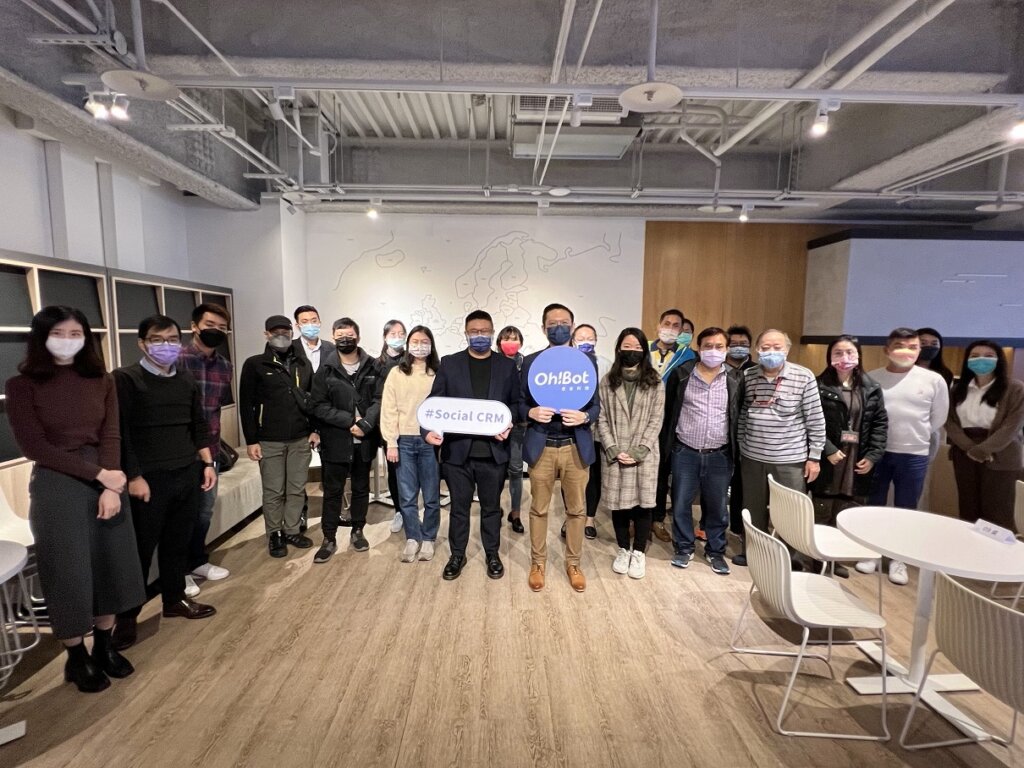
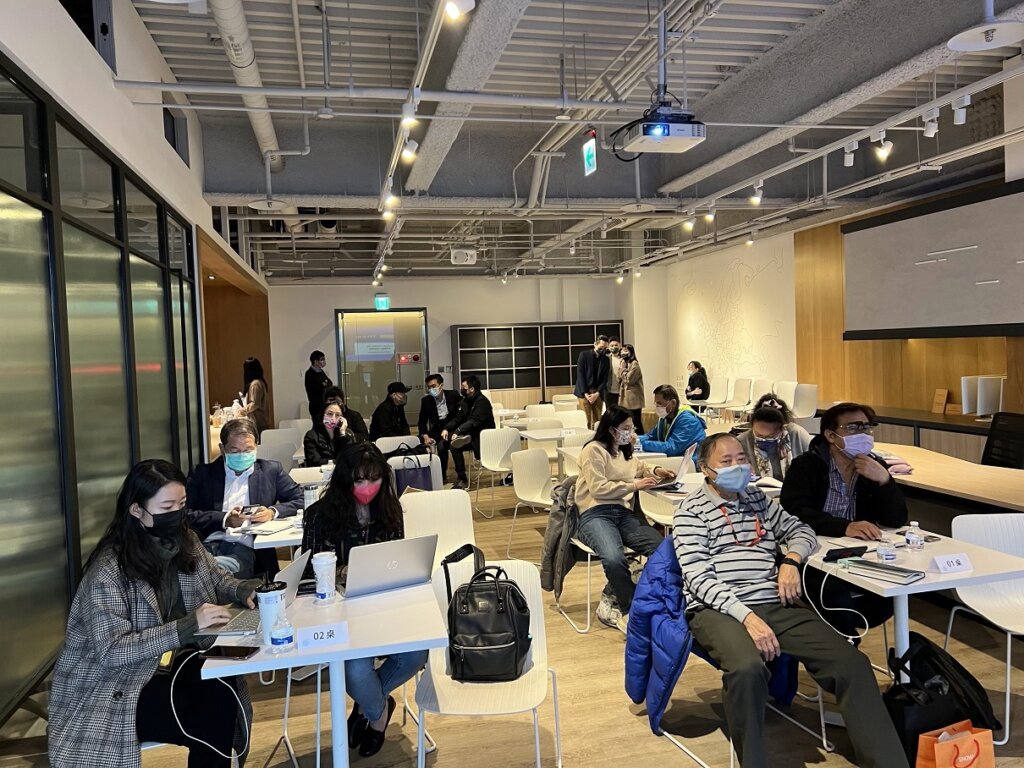
This Martech Alchemy Marketing Workshop targets the consumer psychology described above; it plans for small and medium-sized enterprises and small business owners how to leverage the weight of “word-of-mouth” in consumers’ minds to not only boost product sales, but also capture customers’ hearts and turn them into loyal customers, retaining them in the long term, and then having old customers bring in new customers, creating a chain effect that becomes more and more widespread and stable.
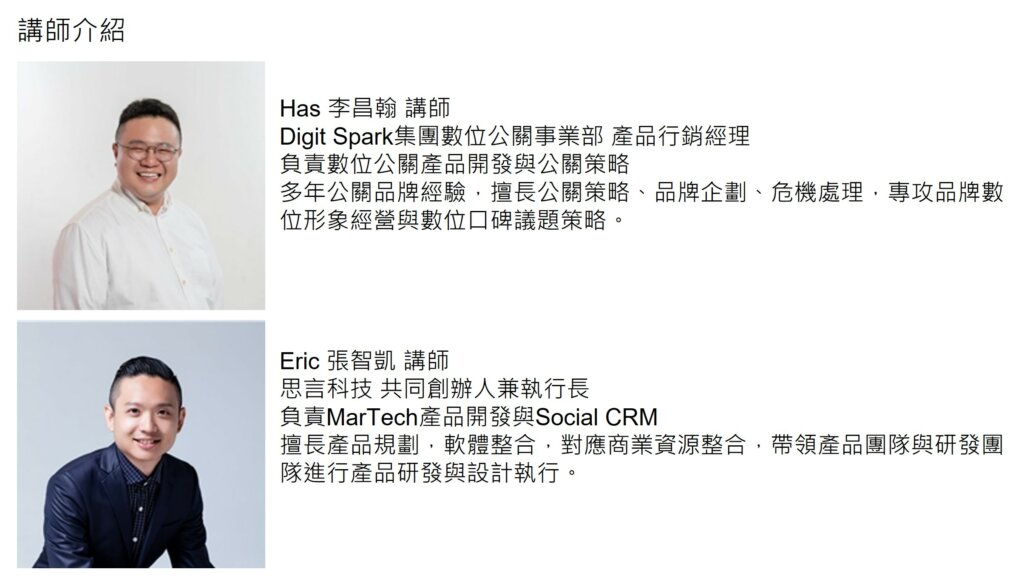
In the course, Teacher Has first explained a concept: when consumers are looking for their ideal products, their online exploration process is often winding and complicated (meaning they browse around and compare prices from many different vendors). What we need to do is to help consumers reduce the amount of browsing and directly add your product to their shopping list.
Teacher Has then raised the second key point, a concept that must be clearly understood in brand management: Brand awareness ≠ Brand trust. A brand’s widespread recognition is not the deciding factor for consumers’ purchase decisions. If word-of-mouth marketing can build trust in product quality, then even with a higher unit price, a stable sales rate can be maintained; and customers can be attracted without even engaging in price wars.
There are generally three main ways to cultivate “word-of-mouth”: media, search, and social media. Media refers to spending money on advertising or interviews to gain exposure; search can be simply understood as dominating Google search results with high-quality content; and if small businesses want to leverage consumers’ networks to attract followers, then “social media word-of-mouth” marketing, which is the focus of this course, is suitable .
Managing community reputation can be divided into two parts:
Creating buzz on social media (LINE is a type of social media platform) attracts new members and fosters deeper engagement among existing members, solidifying loyalty and encouraging them to recruit more. Creating buzz involves generating high-profile topics on forums and social media. Besides posting, the subsequent responses from users are crucial. Utilize the SOV (Social Media Viewing ) tool to understand what messages resonate most with your customers and tailor your content accordingly, creating posts that don’t feel overtly promotional or sponsored . For example, subtly introducing travel and study abroad information about wanting to challenge yourself is more effective than directly posting advertisements for these activities on social media.
LINE Community Circles: Connecting people for shopping.
Next, regarding membership management, Eric shared his experience: Large brands tend to develop their own apps, allowing consumers to easily place orders, receive event information, and access exclusive member discount codes. This helps retain existing members on their platform, preventing them from being distracted by other merchants on shopping platforms. However, for small businesses and individual studios that lack the resources to develop and manage their own apps, establishing a LINE community can achieve the same effect. The key is to create a dedicated member space, strengthening connections between consumers and merchants, and among consumers themselves, within this “community .” Simultaneously, it’s essential to compile member preferences, birthdays, etc., and send appropriate, thoughtful notifications to make them feel welcome.
Furthermore, if you want to leverage existing members to attract new ones, you can use “fan-boosting modules” derived from LINE, employing methods like raffles, discounts, and buy-one-get-one-free offers to entice unfamiliar consumers to try products. Starbucks’ buy-one-get-one-free offer to friends is a prime example of this. To retain friends as members, you need to make existing members feel that referring new friends is beneficial, and new friends feel that becoming a member is valuable .
Members are a brand’s most important asset, and the quantity and quality of these assets are key to a company’s revenue. Therefore, by carefully cultivating members, making them feel exclusive and cared for, and providing them with benefits, a loyal fan economy will naturally follow! There’s no need for price wars or advertising wars; winning over consumers starts from the heart!
Digit Spark, part of the Zhenhao Internet Media Group, integrates its six sub-brands offering data application services to provide enterprises with comprehensive and precise optimization services across five key areas: “Industry Customer Targeting,” “Performance Optimization Strategies,” “Digital Tool Integration,” “Online Voice Cultivation,” and “Brand Value Promotion.” It drives brand success through data technology.