How a Skincare E-Commerce Brand Created High Profits: Using Integrated Marketing Strategy and Data Thinking to Boost Traffic and Conversion Rates
Cooperation story: “IBA Data-Driven Marketing” × MIT Skincare E-Commerce Brand
The brand’s core belief is “let the product speak,” and integrated marketing communicates that sincerity
In this success case, the client is a rising Taiwanese skincare brand whose philosophy is: “Provide natural, clean, department-store-level results at painless prices.” They emphasize transparent ingredients and clinical testing, and promote the idea of “building healthy skin before doing skincare.” Instead of investing heavily in ads and celebrity endorsements, the brand focuses on KOC collaborations to drive first-time purchases, and then relies on word-of-mouth referrals where existing customers bring in new ones.
However, in the fiercely competitive skincare market, it isn’t easy to push sales volume higher, and their long-term sales performance indeed reflected these challenges. Still, the client was determined to stick to their original belief: rely on solid product quality and build long-term, trusting relationships with each customer. Under this principle, “IBA Data-Driven Marketing” (referred to below as IBA) worked with them to find a path that balances both business performance and brand image.
One major advantage of this client is that they already have strong in-house digital marketing knowledge and e-commerce experience, and are very open to data-driven marketing methods. This allowed the phased goals and corresponding action plans that IBA proposed to be synced and implemented quickly.

Brand strengths
- The company already has solid knowledge of data technology and marketing logic.
- Products enjoy a strong reputation compared with other brands in the same price range.
- Rich digital assets: plenty of social proof, testimonials, and KOC endorsements.
IBA’s integrated marketing plan
After analyzing the brand’s products, consumer research, and competing products, IBA proposed three strategies to be carried out in parallel:
- Optimize e-commerce operations and reorganize all exposure channels
- Expand SEO content to grow organic traffic
- Design a membership engagement plan to increase repeat purchases

IBA analyzes the brand’s e-commerce status and proposes effective sales strategies using data
Before the collaboration, the client mainly sold via their official site, while also listing products on Shopee, Little Three (小三美日), COSMED and other marketplaces. Their exposure channels included: organic search, Google ads, Facebook fan page ads, IG Story ads, and promotion campaigns on e-commerce platforms.
IBA collected the data from all sales backends and exposure backends and performed “marketing channel attribution” analysis. This yielded insights such as:
- Conversion rates of the official site vs. each platform
- Customer drop-off at each step of the shopping flow
- Performance of always-on ads
- Performance of promotion campaigns during special events
- Brand reviews and reputation across different online channels
>> Want to know how IBA dissects e-commerce backends in detail? Leave a message on the IBA site.
Is “just selling more on more platforms” enough? E-commerce backends reveal real consumer decisions
New e-commerce owners often only look at product upload pages and customer service functions. In the eyes of professional marketing consultants, however, the backend contains a lot of information about what consumers really think. For example, by looking at the “A product repurchase stats” report, IBA can tell, over a period of time:
- Sales ratio of large vs. small sizes of product A
- Which platforms do customers prefer when buying product A?
- How effective are different product bundle combinations that include product A?
- How do seasons and holidays affect A’s sales volume?
- Is a certain A-product ad still worth running? If yes, how much budget should be added? If not, what should replace it?
- If an A-product ad performs well on platform X, is it suitable to roll out on other channels?
Digging into the shopping flow to find highly attractive sales approaches
On top of the earlier analysis, IBA also guided the brand owner to zoom in on individual ads and individual channels, exploring how consumers react at each shopping stage:
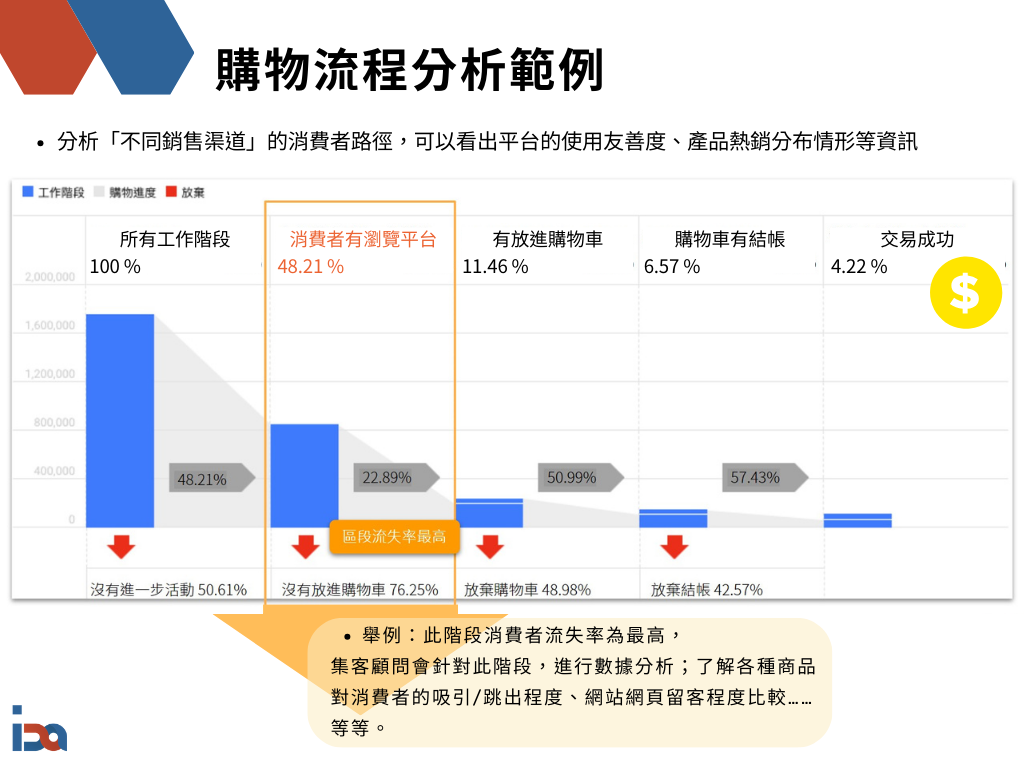
IBA and the client used cross-analysis from both a “product-centric” view and a “channel-centric” view to review every sales initiative. From there, they developed new products and new promotion / discount methods aligned with consumer expectations, creating a win-win for the brand and its customers.

Combining “human habits” & “crawler logic” to build high-traffic SEO
The brand already had a website and a few SEO articles centered around key ingredients such as hyaluronic acid and other acids. IBA suggested that as the brand grows and product lines expand, their digital content must also keep up:
Learning from online user behavior: how should the website expand in response?
They moved from a purely sales-oriented website to one that mirrors how consumers search and compare skincare. This meant adding different content sections, parent–child pages, and tags to build a rich, informative website:
Analysis 1: How do potential customers search online?
- By function: e.g., facial anti-wrinkle, oil-control
- By ingredient: e.g., a “oils” category page listing rosehip oil, marula oil, etc.
- By everyday concerns: e.g., “What to do about seasonal skin sensitivity?”
Analysis 2: What do ready-to-buy customers expect to find on the site?
- Usage instructions and combination tips: FAQs, blogger reviews, user diaries
- Customer service: returns & exchanges, trial guarantees, contact info
- Brand assurance: testing data, certificates from the Ministry of Health and Welfare, etc.

>> Want to know the benefits of gaining more exposure in Google search? Come chat with us.
IBA’s understanding of Google crawling logic boosts branded search visibility
IBA studied the brand’s word-of-mouth, hero product lines, ingredients, and customer profiles, then planned 12 primary keyword groups and wrote SEO articles around them to build a presence in search engines. At the same time, they refined the website’s backend structure and formatting and added structured data to important content. This helped the site gain more traffic and higher rankings.
So what is structured data? Take “fruit acid uses” as an example: whenever someone searches for this topic, Google can show Q&A-style snippets that directly answer the query — and at the same time prominently display the brand’s information and raise its authority:

>> Further reading: What is FAQ structured data and how can it secure more space in search results?
After understanding customer intent, design repurchase and cross-selling campaigns that win hearts
To increase repurchase rates, besides the earlier strategies, IBA also suggested multiple campaign types such as limited-time offers, “existing customers bring new customers,” and members’ day promotions. Skincare products are consumables that customers repurchase every few months, so repeated purchases are easier to drive compared with products like study-abroad services or cars and houses. With that in mind, IBA tested various promotion mechanics and bundles, then used data to compare results and identify schemes the brand could continue to use long-term.
Use data to decide campaign content and timing — that’s how you get high ROI
Although campaigns look similar from the outside, IBA tailors high-ROI plans based on each brand’s e-commerce performance. Factors include:
- Campaign content: e.g., “bestseller + new product bundle” to promote new items, or “same product different sizes” bundles for frequent travelers.
- Target audience: first-time buyers, birthday customers, moms, people who joined specific past events, etc.
- Campaign period and channel: wide-reach promos during big shopping festivals vs. exclusive KOC discount codes — which works better? On big platforms / holidays, which events drive the most traffic back to the brand? For KOC collaborations, how should discount codes be designed to be attractive?
Suitable campaign styles and KPIs vary by brand and product. When consultants design campaigns, they define the event objective, expected performance metrics, and rules for follow-ups or cutting losses. This reveals which campaigns have long-term potential and which ones deliver strong one-time ROI and are worth repeating.
Our observations
This cooperation went very smoothly. Besides IBA’s extensive execution experience, the client’s high level of digital maturity and eagerness to adopt data-driven methods played a huge role. Combined with their solid brand image, every new strategy quickly generated market feedback, giving us concrete data for review and ongoing optimization.
If a brand only does one thing at a time — for example, only SEO or only member day campaigns — even strong short-term results remain isolated “points”, and the long-term impact is limited. When multiple marketing strategies are used together, they complement each other — some focus on exposure, others on retaining members — and form a complete marketing web. As a result, each individual initiative becomes more powerful, and traffic, conversions, and reputation grow steadily over time.
When IBA supports corporate brands, we often take a “multi-channel, multi-method” approach, pursuing 1 + 1 > 2 overall brand outcomes rather than only chasing pretty short-term numbers. In this case, even without spending heavily on celebrity endorsements or extreme price cuts, the client successfully stood out in the highly competitive online beauty market and became a well-known brand with strong market share. By sharing this experience, we hope to help other companies in the beauty and e-commerce sectors embrace effective, data-driven marketing strategies.