Understanding Data Marketing: How to Select the Right Data to Achieve Marketing Goals
The essence of data marketing lies in understanding and analyzing data.
In the era of big data, companies and brands that have undergone digital transformation are now moving towards the next step of ” data transformation .” Data marketing is just one application of data transformation, and it can provide a wealth of reference materials and indicators for various marketing strategies such as developing new business opportunities, planning events, and increasing brand awareness.
Data generates meaning through a combination of subjective selection, objective data, and human analysis.
The data itself is objective numbers, but “what data to collect” is a matter of human choice . Numbers or indicators have different meanings depending on the perspective from which they are viewed.
When a brand sets a new marketing goal, such as “[planning e-commerce activities for the whole year]”, we can start by breaking down this big goal into many smaller objectives by asking questions such as: How many events will be held? What will be the scale of the events? What might the content include? What are the expected sales results? By dissecting the goal and focusing on the questions again and again, the brand can gradually figure out “what data I need to collect” for effective data marketing .
Don’t expect that “having one type of data is enough!” Marketing plans require the support of multiple data sources.
Achieving data-driven marketing requires analyzing multiple sources of data from various sources, cross-referencing causal relationships, and other relevant information to help brands formulate marketing strategies. Below are some examples of commonly used data:
1. Brand Data: Historical Review
Taking this “planning next year’s e-commerce activities” as an example, to analyze how to plan a project for the entire year, it’s crucial to first review the brand’s past sales performance on an annual basis, rather than just looking at the effectiveness of each individual event. First, understand the brand’s historical sales model and select potentially useful metrics for detailed analysis ; for example: the timeliness and frequency of member discount activities, and how to combine them to maximize cost-effectiveness? What are the differences in how different shopping festivals stimulate various products? How long does it typically take for a new product to launch and achieve stable sales? What are the sales fluctuations of various products during different periods? …and so on.
Judging solely from last year’s figures and concluding that “Product A was a hot seller and sold out last year, so we need to increase production this year!” is too hasty. It fails to consider whether “something special happened last year that caused Product A to sell out, and whether the same situation will occur this year.” Brands conducting historical research should obtain data from at least three years for a more objective perspective. For newly established brands, in addition to observing the strategies of similar competitors and proactively exploring various marketing possibilities to accumulate experience and data during the initial startup phase, they can also consult professional marketing consultants who guide brand growth. These consultants can provide practical experience and effective advice based on the brand’s industry characteristics, service offerings, and product content.
First-hand data on data marketing: on-site observation
In marketing, whose thoughts are most important? Consumers, of course. Businesses research market trends and analyze sales to better understand consumers . The most indicative data comes from the direct sales experience of physical store staff and online sales order and customer service records. This data reflects consumer feedback on the product itself, brand service processes (online and physical), and sales strategies (promotional activities, etc.) in both individual sales and long-term accumulated sales performance.
Besides “performance”, what other data can be collected and observed on the sales side?
- Daily (short-term) sales figures, sales and return statistics, customer traffic and conversion rate
- When implementing marketing strategy decisions from the planning stage, which part is the smoothest to execute? Which part is the most difficult? Why?
- How do consumers behave before buying? How long do they take to consider whether to buy or not? What are the key factors in making a decision?
- Consumer demographics, and the preferences and purchasing intentions of different consumer groups.
The above examples are for “physical sales.” What if it’s online sales and you can’t see the consumer’s face? In fact, almost all B2C brands nowadays adopt an online + physical sales model. Online sales can actually allow brands to obtain similar and larger amounts of data more conveniently . As long as we understand which information exposure channels to use online and which data capture mechanisms to set up, we can obtain meaningful data through multiple performance monitoring and adjustments .

In addition to closing deals, another key aspect of sales is obtaining information from consumers to continuously brainstorm whether the brand needs to add, eliminate, or adjust analytical metrics in order to create products and marketing strategies that increasingly meet consumer needs.
Further Reading:
Utilizing data analytics for precision marketing
Understanding consumers: Good Martech helps you stand out in the consumer journey.
3. Market Data: Market Observation and Social Analysis
This is something that a single company would find difficult to achieve on its own. For example ▽
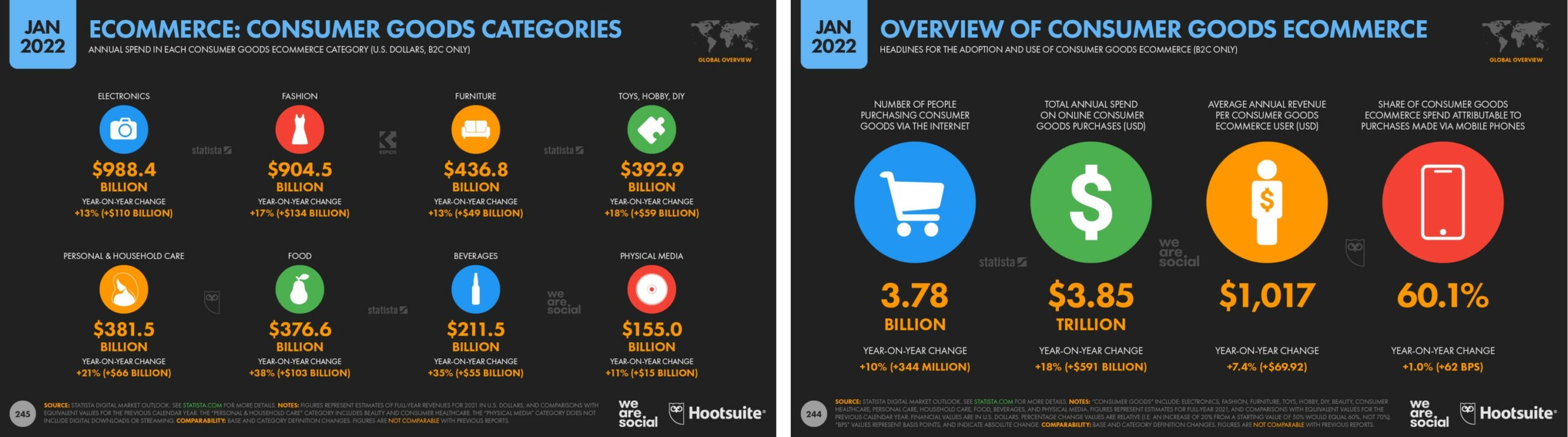 (Image source: Datareportal: Digital 2022 global overview report )
To gather market information for a specific industry, companies can purchase data from market research firms, access publicly available information websites of domestic and foreign governments, databases of customs import and export systems, trend publications published by economic and trade research institutions, etc., to obtain relatively general and comprehensive business insights that can serve as a useful reference for the company’s future goals. However, when it comes to further developing and breaking down large goals into smaller, more concrete objectives, business operators need more detailed and practically experience-oriented data to support decision-making .
Companies can also use Martech data analytics tools to obtain data, but this requires internal experts who are both highly skilled in data analysis and knowledgeable in sales execution; cultivating and retaining such experts is not easy. Therefore, companies typically seek to collaborate with external data consultants and marketing strategy consultants; this is a low-cost and quick way to acquire immediate capabilities that integrate data analysis and marketing strategy .
How marketing experts select “useful data”
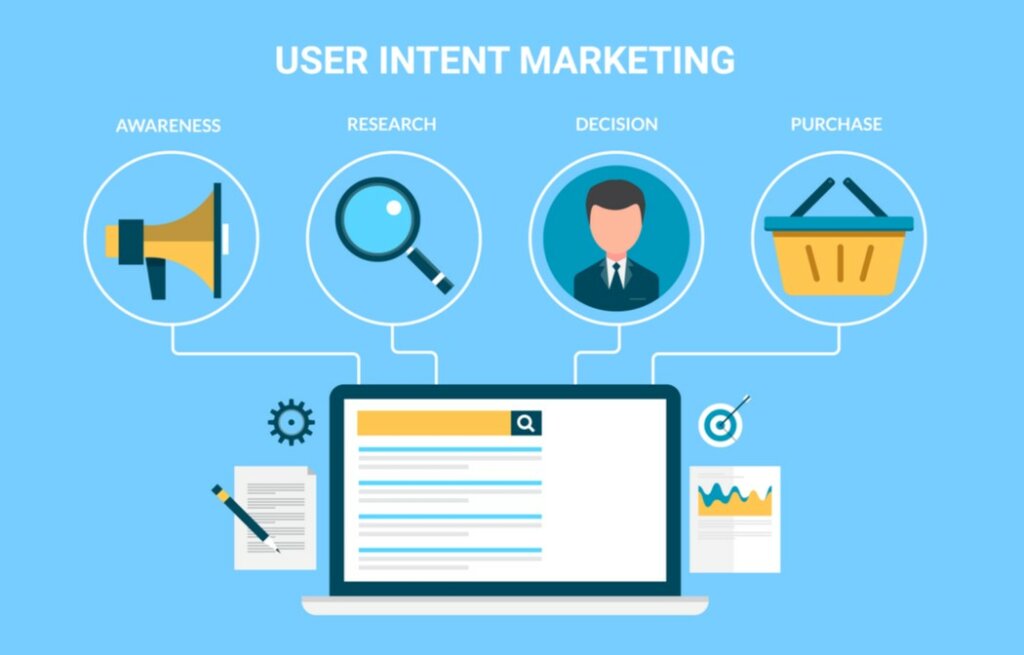
Marketing experts study the people lurking in the online world, anchoring “potential customers who may be the brand” as their target audience, and try to obtain their online search intentions to help the brand understand its vast potential customer base .
On the other hand, marketing experts also use technologies such as “SOV volume survey”, “hot keywords”, “search hotspot analysis”, and “public opinion monitoring” to analyze the current market situation and competitive landscape for brands.
After extensive data collection and analysis, experts can provide the following information to businesses:
- What are people from different potential customer groups discussing?
- What else might someone who is interested in “Product A” be interested in?
- The level of attention garnered when different in-depth topics/popular issues within the industry are raised.
- My brand’s online presence, visibility, and brand favorability.
- The voice of similar competing products in the consumer world
- What changes are taking place in the consumer market as society evolves?
- What other factors influence consumers behind my brand’s performance?
Conclusion: Selecting suitable data to serve humanity.
To quote Dr. Hyun-Na Cha, author of “The Technology of Using Data,” ” Using data to do things for humanity, ultimately it is humanity that determines the future direction. ” Empowering marketing with data is one way to effectively do things for humanity; gaining appropriate insights from data and then taking action to change the brand and even further influence market trends is the goal of many companies to achieve success.
The Digit Spark Group comprises various brands offering marketing consulting services and Martech data tools; we tailor our approach to meet the specific needs of each client’s brand, identifying suitable objectives and implementing them step by step.
“Extracting valuable data for brands” is one of our specialties. As data marketing consultants with years of experience researching “applying data to marketing,” we can quickly help brands connect the meaning behind large amounts of intersecting data and leverage its value . Feel free to chat with us. If you’d like to learn more about how data marketing can be applied to brand strategy, you can also refer to Digit Spark’s consulting brand, “Inbound Data Marketing ,” for more information.
Further Reading:
A Brief Discussion on Digital Marketing & Data Marketing
Use data to create the core brand curve and extend enterprise value.
Digit Spark, part of the Zhenhao Internet Media Group, integrates its six sub-brands offering data application services to provide enterprises with comprehensive and precise optimization services across five key areas: “Industry Customer Targeting,” “Performance Optimization Strategies,” “Digital Tool Integration,” “Online Voice Cultivation,” and “Brand Value Promotion.” It drives brand success through data technology.