[Understanding Marketers] How to tell a good story in public relations? The art of connecting with and empathizing with consumers.
What’s the difference between public relations and marketing?
Some companies have marketing departments that also handle public relations, burning the candle at both ends; but true public relations is not like marketing, which is aimed at pursuing performance; public relations refers to “building and maintaining public relations” .
Public relations professionals are a group of storytellers who “tell good stories.” What we do for brands includes media exposure, driving discussion on various topics, and creating positive word-of-mouth discussions. The core goal behind all of this is “trust between the brand and its people . “
This time, we interviewed Euniece, a consultant at Digital PR, a sub-brand of the Digit Spark Group known as the “Brand Favorability Building Expert.” She guided us through questions such as: “How do consumers perceive the power of public relations?”, “How do professional PR professionals build relationships?”, and “How can brands communicate in a way that resonates deeply with consumers?”
First, we know that “marketing” and “public relations” are two different professions.
So, what different experiences do “marketing” and “public relations” bring to the general public?
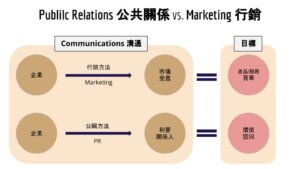
When a company engages in marketing and public relations, the marketing approach is to promote itself; the public relations approach is to “get others to recommend themselves . “
For consumers, if they can gather information about a brand’s strengths and weaknesses and the characteristics of its products from third parties, such as online “2022 Gym Membership Card Reviews” or “XX YouTuber Makeup Showcase ,” their impressions will be more convincing than the brand’s own advertising.
The combination of marketing and public relations can effectively shorten consumers’ hesitation time when considering which product to buy, persuade them to purchase, and turn them into members.
To illustrate with a real-life example, let’s say I’m an online user “looking for suitable contact lenses”:
→I have a need. I saw [Brand A] in a marketing advertisement, but I’m not sure how well Brand A works.
Next, I searched online and in forums for related topics such as “water content comparison of contact lenses” and “recommendation of contact lenses and magnifying lenses”. I found a total of 5 or 6 brands of products. Among them, the products of brand A and brand B seemed to be good, and the netizens’ reviews were all above 4.5 stars.
I then checked the official websites of A and B and found that A’s website had promotional offers; however, B’s website had detailed information on astigmatism lenses, as well as recommendations and reviews from many contact lens users. In the end, even though I don’t have astigmatism, I chose [Brand B]. From the product page and user reviews, I felt that Brand B was dedicated to lens quality; moreover, it offered more choices, so if I need special lenses in the future, I won’t have to look for a new brand.
In our daily lives, when comparing products online or buying cosmetics, this often happens, right? I saw A’s ad first, but ended up buying B. For brands, this is the difference between A and B in terms of “marketing and public relations.”
In the example above, actions like “searching online, 4.5 stars, and user recommendations” are public relations efforts that use “others’ words” to highlight the benefits of different contact lenses; this then prompts “me” to search for products on Brand B’s official website. If B hadn’t made these public relations efforts, I wouldn’t have clicked on B’s website.
In fact, it’s not just about selling products that requires public relations. Any entity that needs to “promote an attractive and positive image,” whether it’s a company, a public event, or an issue that needs to be noticed by the public, can leverage the power of public relations to establish good information connections and build trust in people’s hearts.
Second, to establish a “deep connection with the public,”
how does Digital PR help brands plan, decide what content to expose, and generate positive online buzz?
Our team goes through several basic processes from taking on a new client to closing the project:
SOV volume analysis (depending on the situation)
If a client has long-term special needs, we will decide whether to monitor the “SOV volume” of the client on the internet after communication.
By gathering information from various popular news channels, forums, websites, and media, we can identify relevant comments about the client’s brand and let them know: “How does the general public perceive me? What am I like in the eyes of consumers?” We can also determine “Which channels are generating the most discussion about me, and what are they discussing? Which direction should our public relations efforts take to maximize their effectiveness?”
The most obvious benefit of SOV (Self-Improving Advertising) is that it helps client brands avoid pitfalls . For example, if a brand positions itself to sell to 25-year-olds, but its actual consumers are mostly 35, then it can consider: should future advertising focus on workplace themes to resonate more? What are the reviews of the brand’s products on the PTT forum? Should the exposure content be adjusted based on these reviews?
Define cooperation goals
Before collaborating with Digital PR, clients already have a “key topic” and a “target audience” in mind; for example, when a new gym opens, they want to promote courses taught by female instructors in order to attract more female customers.
Based on this, we further use our experience and data to plan more detailed objectives with our clients, such as: which type of women are we targeting? What issues and perspectives will resonate with them? How can we plan an effective public relations strategy based on the budget? How can we maintain the momentum of the topic? … We analyze the client’s vision in a practical way, breaking it down into “what to do,” “when to do it,” “where to do it,” and “follow-up maintenance.”
Find a place to squeeze in
Building goodwill involves three main platforms in the online world: media, social media communities, and forums. In addition to analyzing the client’s current topic, we also consider whether the client has previously focused on certain areas and what the feedback has been to determine where we should focus our efforts this time.
Based on our experience, different channels have their own characteristics. Determining which channel to focus on based on the nature of the issue is more effective than spreading resources evenly . For example, maintaining a company’s reputation by releasing authoritative news and initiating discussions in forums will produce different results.
Bringing up a topic and sparking discussion
Digital PR has a creative dream factory: our content team. Based on a well-planned segmentation of people, things, and events, we create content that sparks discussion and generates buzz.
Content includes articles, quick guides, videos, and replies . For example: “It’s difficult for students in dormitories to slowly condition their hair using shared showers. Are there any easy hair care methods you can recommend?”
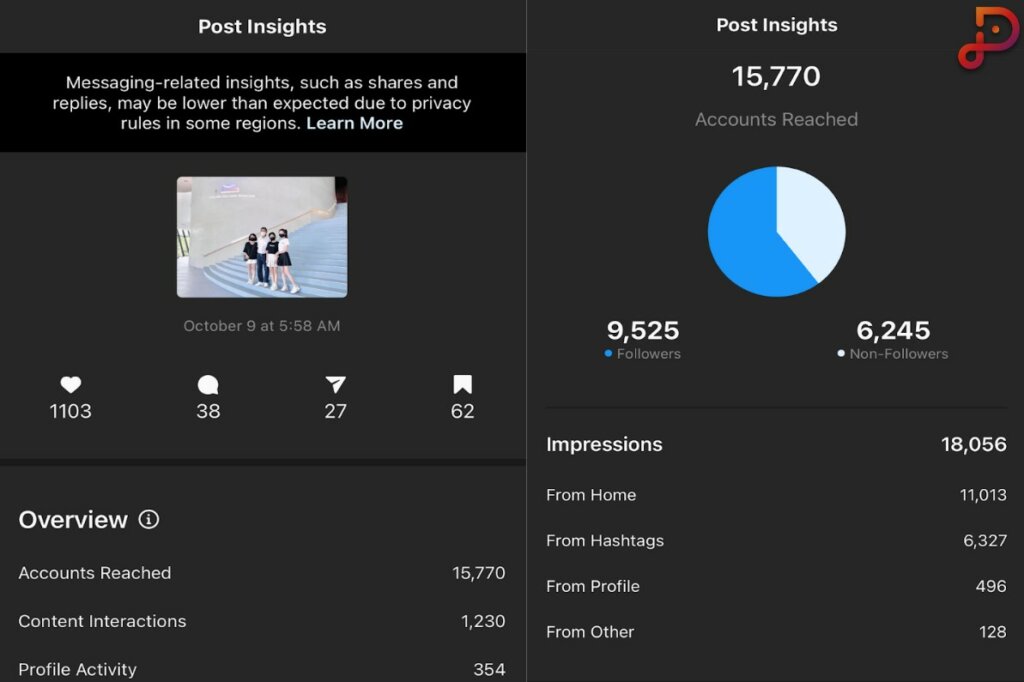
In addition, many of our client collaborations involve KOCs and KOLs , the biggest advantage of which is the influencer’s traffic; but in addition to the number of followers, we value the influencer’s persona and style, the way the account is presented, such as how to take photos, how to write with genuine emotion, the completeness of the information shared, how to build intimacy with fans through posts, etc.; we carefully select suitable influencers to collaborate on press releases and post images and text.
For us, influencers are a channel; what we really need to engage with are “their fans” and “the potential users they reach.” Whether this collaborative channel can help our clients leave a positive impression on the influencer’s fans is the key factor in our evaluation.
Follow-up tracking
After completing a series of public relations actions, we will compile an analysis report based on the topic reach, number of interactions, and content of interactions observed during the operation. This allows clients to evaluate the results from different perspectives and also serves as a future data base.
- Objective: Were the project objectives achieved? If so, what were the reasons?
- TA: Was the target TA I hit this time clearly defined? Did the TA I initially planned match the TA I actually hit?
- Strategy: What strategies were effective in this project? What were the key elements? Is there potential for continued application of these strategies?
- Looking ahead: Based on this project, what ideas can be optimized or should be discarded in the future?
It’s important to note here that a significant portion of the effectiveness of exposure manipulation is “invisible.” For example, when you create a topic on a forum, only a handful of people might respond, but you’re unaware of the vast number of lurking users who are “watching without replying.” PTT and Dcard don’t provide browsing data either. You can’t compare this to the conversion rates that marketing strives for.
Third, with “product placement” and “sponsored content” everywhere,
how can digital PR prevent the public from feeling resistant to PR operations when they see the content?
Even if people receive information using mobile phones or computers, they still hope that when they see content, the person speaking to them is a real person behind the screen.
This leans more towards the psychological aspect of interpersonal communication; our consultants have accumulated extensive experience in “putting themselves in others’ shoes” and expanded upon the ideas provided by our database, enriching the content and dissemination channels. There are countless creative ideas in public relations; here are a few commonly used ones to share.
The key to success lies in understanding “what the public wants to see” and “where do everyday pleasures come from?”
When disseminating brand information, the biggest mistake we make is using phrases like “it’s obviously a product placement!” In copywriting, brand information is subtly embedded within the “topic,” carefully packaged to avoid immediately grabbing attention and drawing attention away . Common examples in magazines like *Women’s Omega* and *Elle* include: “Perfumes for the 12 Zodiac Signs” or “Psychological Test: Which Planetary Type Are You?” These are effective ways to introduce a brand to readers. By using relatable topics to build rapport, the brand then highlights the benefits it offers. This engaging approach encourages readers to share with friends.
Current events are something we need to keep fresh in our daily lives.
This is similar to marketing. The benefits of linking brand copywriting with current events, besides generating buzz, are that it’s also a great tool for connecting the brand with its audience; the posts feel like chatting with friends, sharing everyday gossip and trivial matters, rather than “forcefully cramming information into my life.”
Further Reading: Check out the viral PX Mart Ghost Festival ad – there’s a “ghost” behind it all!
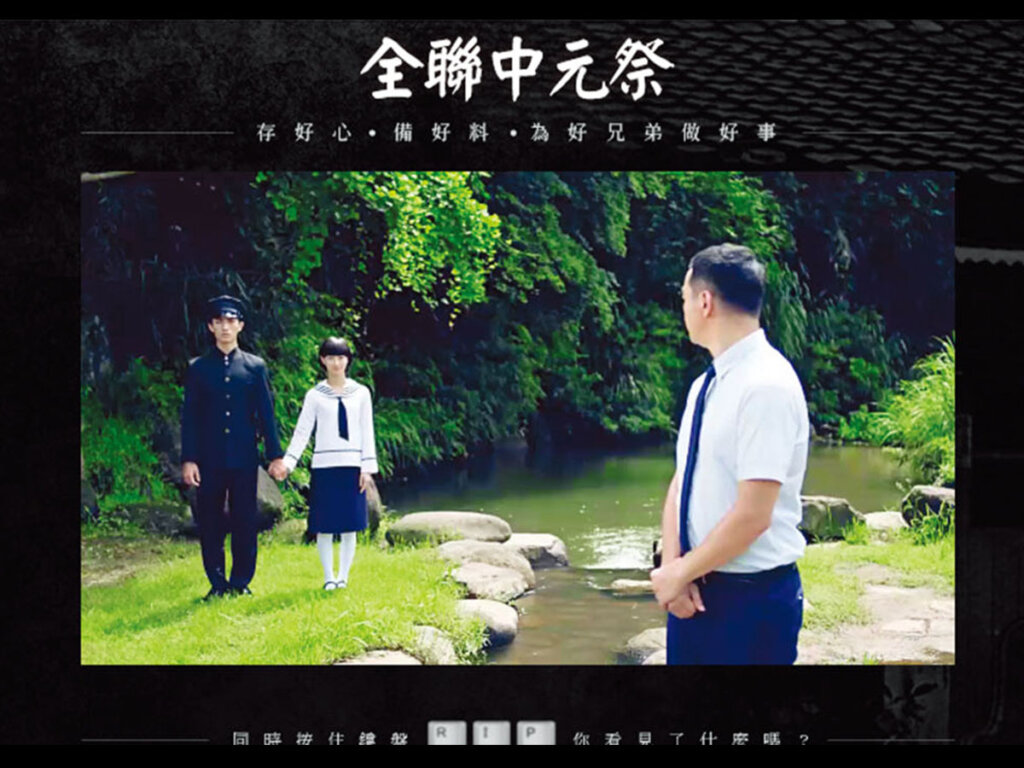

Only fair and objective evaluation can make a literary award convincing.
As mentioned earlier, articles like “2022 Gym Membership Review” and “XX YouTuber’s Makeup Showcase” are the first articles people often look for when searching for information. Brands can certainly build reputation through these kinds of reviews, but when we in public relations promote brands, we must ” speak only what we are capable of .” Only a review article has credibility, and only then can consumer trust be sustained.
How to strike a balance between “promoting the brand” and “the persuasiveness of the evaluation” is a test of our digital PR execution capabilities.
If we compare foundations A and B, simply praising foundation A in all the reviews makes people wonder, “Is it really that good…?” If we want to give foundation A exposure, I can combine “product characteristics of A” and “review points that the public cares about” to make 10 evaluations, including scent, refreshing feel, less likely to cause redness or allergies, coverage, adherence, etc.
Product A doesn’t need to win in every aspect, because that’s simply impossible; what we need to do is highlight A’s strengths through the evaluation. If A’s product characteristics are “refreshing and hypoallergenic,” then as long as A wins in areas related to these characteristics, it can reach “consumers who need hypoallergenic products” in “trustworthy review articles . “
Conclusion
“One thing in my experience as a PR executive reminds clients in particular: brands do PR with the long-term view .”
Public relations builds a good reputation for a brand, cultivating “invisible benefits” that help the brand go the distance. A large part of the effectiveness of PR work cannot be quantified by “visible sales figures”; for example, the vast influx of lurkers on discussion forums, the offline discussion traffic generated by KOLs, and the perceptions consumers have of the brand in their daily lives. These may not be immediately reflected in sales figures, but that doesn’t mean they are unimportant.
A good reputation is essential to retaining stakeholders who will value you . Customers are just one example; investors, partners, employees, and even the general public are all stakeholders of a brand. Public relations helps a brand build positive relationships, earns market trust, and enables marketing to perform well and maintain a stable foothold.

Acknowledgements: Euniece Lin, Integrated Digital PR Consultant at Digital PR
Previously worked at a 4A agency, serving large brand clients such as well-known wine merchants, cosmetics groups, and maternity and baby product companies. Specializes in integrated brand planning and utilizes digital thinking to create limitless possibilities for brands. Currently serves clients in multiple industries including finance, education, healthcare, e-commerce, tourism, and skincare/beauty.
Further Reading:
[Understanding Marketers] How to Drive Buzz with “Data-Driven PR”? Technology Creates the Highest Cost-Effective Exposure:
A Super-Efficient Marketing Seminar Part 1: Focusing on Brand Planning and STP;
A Super-Efficient Marketing Seminar Part 2: Leveraging Third-Party Influence
Digit Spark, part of the Zhenhao Internet Media Group, integrates its six sub-brands offering data application services to provide enterprises with comprehensive and precise optimization services across five key areas: “Industry Customer Targeting,” “Performance Optimization Strategies,” “Digital Tool Integration,” “Online Voice Cultivation,” and “Brand Value Promotion.” It drives brand success through data technology.