#Tag New Search: “Social Media & Short Video” Marketing Trends and the Consumer Psychology Behind Them
It’s not just Gen Z consumers who are enthusiastically using social media and short videos on these platforms; this trend has extended to consumers of all ages, changing their lifestyles. The diverse user groups of platforms like TikTok, Xiaohongshu, and Instagram Reels have prompted brands to be more proactive in their content marketing, creating videos tailored to various demographics and product themes. For example, Reels videos have evolved from showcasing fashion, travel, dance, or challenges to now including videos on selling houses, parenting tips, and more, covering virtually every aspect of life.
In the era of social media, although “using search engines” is still the first instinct for most people when looking for information, people are more willing to be “fed” by the video and audio content of social media apps when searching for everyday topics, time-killing, life information, and social topics. Or they directly use TikTok and Instagram as search engines and enter #hashtags as keywords . These intuitive behaviors are becoming more and more common, such as searching for recommendations for izakayas and cafes with unlimited hours in Taipei.
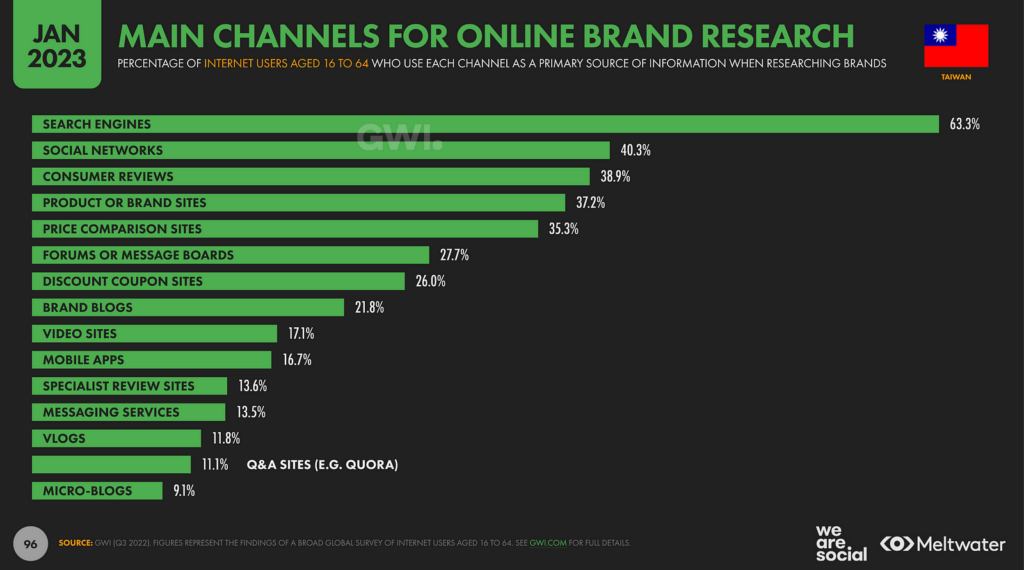
▼ According to DATAREPORTAL’s “Digital 2023: Taiwan” statistics, when Taiwanese consumers search for brand information, the number one channel they use is search engines, and the second is social media (accounting for 40.3%).
To cater to consumer trends, various B2C brands are experimenting with using short videos on social media to showcase their marketing efforts, such as advertising exposure, boosting sales, and enhancing member interaction . They are also researching and incorporating numerous hashtags into their content. This not only allows for a rapid expansion of their audience reach, but also allows viewers to easily gain insights from comments and likes. If the comments section sparks active discussion and answers consumer questions, it can significantly boost conversion rates and sales.
Consumers’ motivations for sticking to social media: self-image
Consumers (especially Generation Z) frequent social media primarily for three reasons: building social networks, establishing a persona to gain self-identity, and obtaining a quick sense of happiness . People also interact with brands’ social media platforms to complete their “self-image” and “find emotional resonance.” This interaction is not limited to consuming brand products; by tagging friends in the comments section of posts and replying to discussions with strangers, they demonstrate their understanding of the information in the posts, showcase their taste, and gain a sense of belonging by “connecting with like-minded people.”
Further Reading:
- How to communicate with Generation Z consumers? A potential consumer group that brands and stores absolutely cannot ignore.
- Is TikTok no longer just a social media platform? Has it surpassed Google to become the top search engine for Generation Z? How should brands respond?
Brand community content should meet both “emotional needs” and “social exposure needs”.
When creating social media videos, brands must not only focus on engaging themes and visual appeal, but also cater to the emotional and social needs of their audience . Managing social media is not just about communicating with consumers and disseminating product and promotional information; it also requires providing a unique and “exclusive” space to attract diverse consumers to socialize and express themselves. This strengthens brand loyalty and leverages user-generated content (UGC) marketing , encouraging consumers to actively declare, “I’m following this topic!” thereby boosting brand discussion and sales/usage.
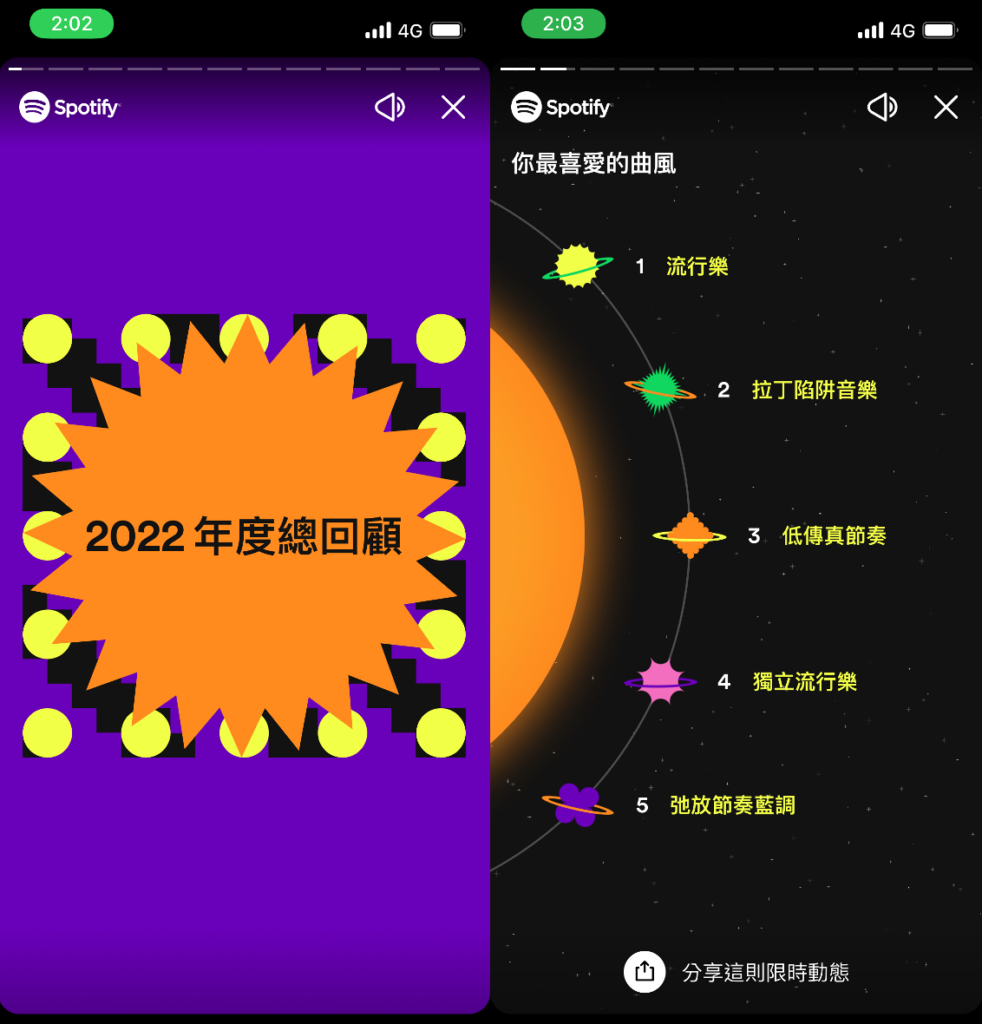
▼ Case Study: Spotify’s “Year in Review” UGC marketing campaign allows members to showcase their taste, find like-minded music lovers, and also stimulates other consumers’ FOMO (fear of missing out), leading to a surge in Spotify registrations or searches for new songs.
Using social media videos to fuel consumers’ desire to buy.
What kind of content do you scroll through daily in your social media circles? Cat cafe unboxing videos, prank challenges for your friends, weekly outfit transformation tips… these all strive to evoke the audience’s “emotions” and “feelings ,” which are effective catalysts for stimulating consumer desire —a common form of “emotional marketing .” Combining this with social media videos can amplify the effect, especially when consumers are seeking “self-affirmation and happiness” through social interaction; they are more easily influenced by emotional marketing. Below are some basic emotional marketing methods we suggest for capturing attention :
-
Triggering the interaction of other senses besides sight and hearing
The design of audiovisual content not only tests the quality of the story itself, but also requires capturing attention within a short span of less than 10 seconds, making viewers want to continue watching. It’s possible to effectively use visual and auditory elements to evoke associations with the other five senses: sound, smell, taste, and touch. For example, a close-up of the steaming hot coffee paired with a cabin in the forest can evoke images of sweetness in the mouth and a rich aroma of coffee mixed with the fragrance of trees…
This is a short video advertisement for mountaineering and camping equipment. It doesn’t focus on “directly explaining the features and functions of the product,” but rather creates an atmosphere that evokes pleasant daydreams of “camping in the mountains and enjoying a cup of rich coffee in the forest,” satisfying the five senses with imagination and attracting viewers to continue watching the advertisement.

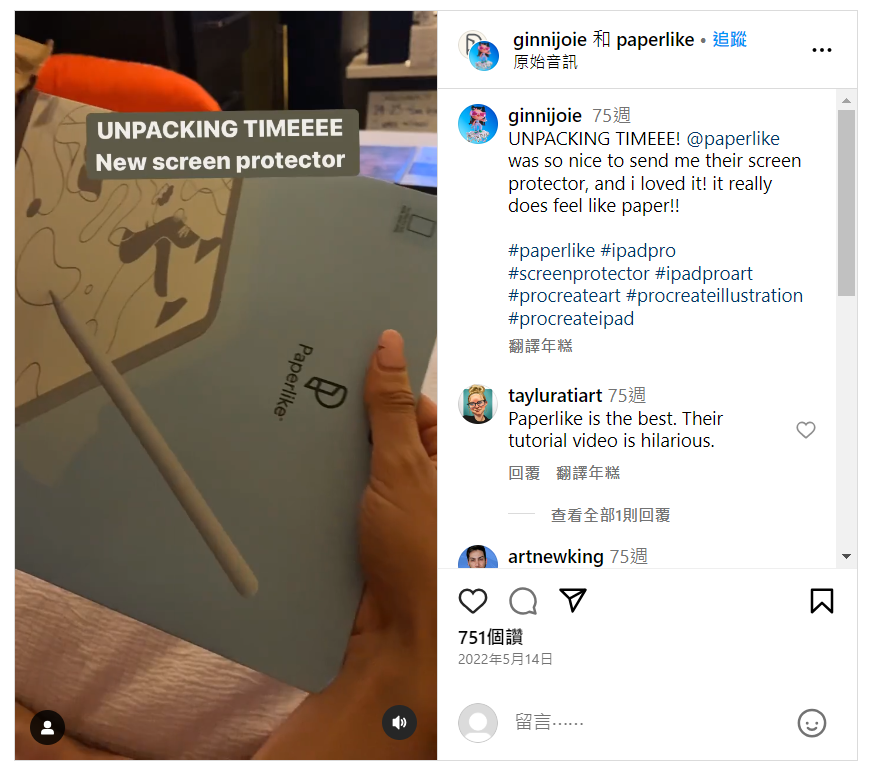
▼ In the unboxing video of the screen protector brand Paperlike , ASMR techniques are used to prompt viewers to imagine the texture of the screen protector , such as handwriting texture or sandpaper texture.
-
Gain attention through interactivity and intimacy
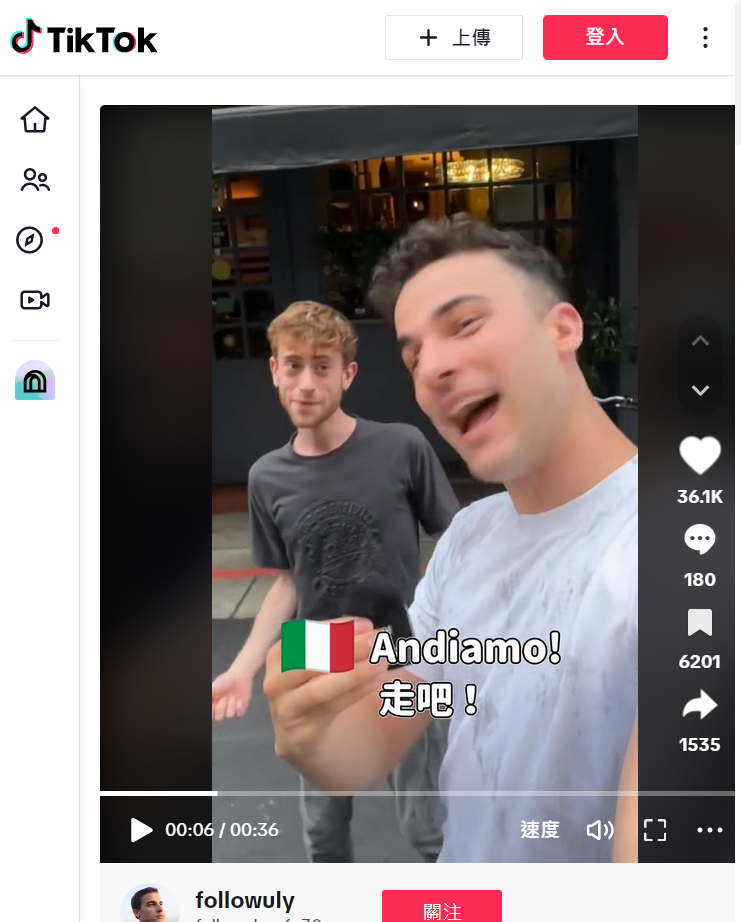
“How do Taiwanese people pronounce authentic British accents? Let me challenge you!” “Where can two Italians in Taipei get authentic pizza ravioli?” These are quick, easy questions that break the ice and emphasize the interactive feeling of “I’m talking to you ,” establishing an immediate connection with the audience. This helps build brand affinity, making the audience feel like they’re on the same wavelength and responding. For restaurants attracting customers, online courses attracting students, and everyday consumer goods and clothing driving sales… in these affordable, daily consumer goods transactions, brands using interactive and approachable strategies have proven highly effective in boosting brand exposure and traffic.
-
Beyond promotional information, people want to see “persuasive sharing”.
For consumer goods brand advertisements, videos that constantly emphasize “discounts and limited-time offers” are not very attractive to video viewers. Brands would be more effective by combining a strategy of “using engaging videos to drive traffic to social media/websites, and then using promotional information to further encourage purchases and conversions . “
What constitutes a “persuasive” sharing? Take unboxing videos as an example. The appearance and packaging of a product are only momentary to consumers; they don’t need to take up too much screen time. The video can focus more on various “life scenarios” of using the product, how to integrate it into one’s home/office space, and how to functionally combine it with other household items, etc. It should be more about putting yourself in the audience’s shoes and talking about “how you can use this product effectively if you buy it, and what changes it will bring to your life ,” rather than focusing on “how cool and amazing this product is! So you should buy it,” which doesn’t establish a connection with the audience’s needs.
Further Reading:
Further reading on short video marketing optimization techniques:
Conclusion
The trend of short videos on social media has changed people’s social and search habits, and this trend is expected to continue. Various commercial brands and individual influencers have the opportunity to gain a lot of exposure through short videos.
We strongly suggest that B2C brands, in particular, should find ways to connect with consumers through short social media videos. By starting from the audience’s perspective, delving into their daily lives, themes of interest, and emotional needs, and extending this understanding to the production angles and methods of their advertising videos, brands can build closer relationships and audience engagement through a deeper community-based approach. This can help brands stand out in the consumer market and on social media platforms, achieving successful brand promotion.
Further Reading:
- White Paper on Generation Z Consumption Power
- Word-of-mouth marketing risks: How should brands handle negative reviews? Is a 5.0 rating always necessary?
- Digital 2023: Taiwan DataReportal – Global Digital Insights
Digit Spark leverages data science and combines it with business marketing logic to help businesses create digital content and service processes that are closer to the consumer market. At the same time, it utilizes AI to revitalize brand operations, helping to comprehensively improve a company’s digitalization, datafication, and brand performance.