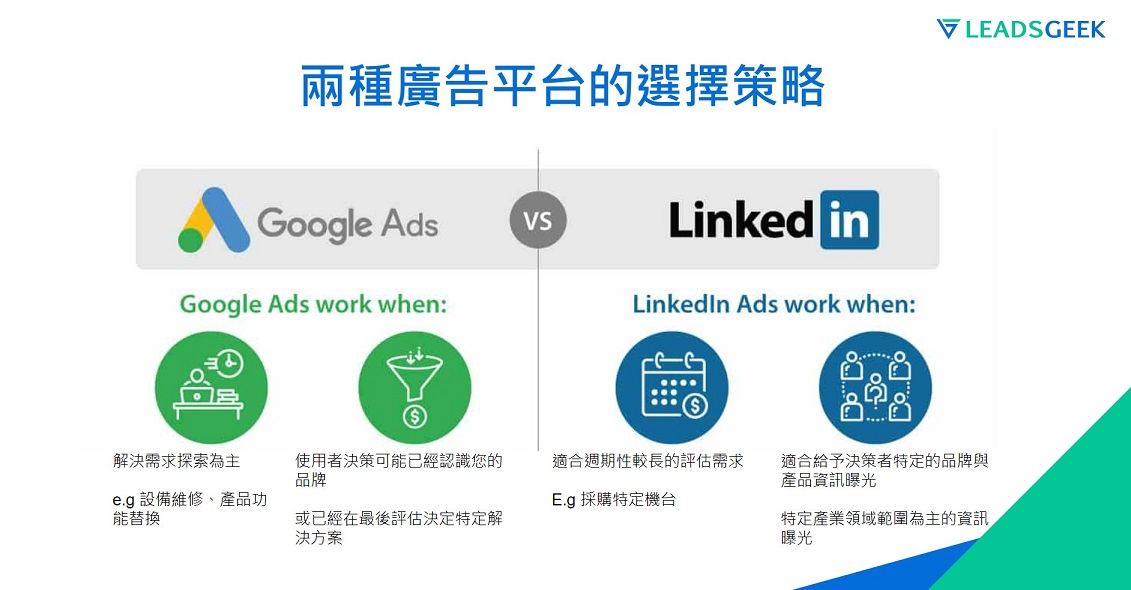
Analyzing the meaning of data to accurately depict B2B Personas
Unlike B2C Personas, B2B corporate procurement is decided by a small group of people within the company. When describing B2B Personas, the most important subjects to study are not the users of the product, but the company’s decision-makers.
“Understand your customers!” Knowing yourself and your enemy is definitely the first sentence of marketing; it is also why brands need to develop “Personas”. By creating specific personas, brands have a group of trustworthy and highly accurate audience models to refer to when developing products and formulating marketing plans.
Creating Personas that align with the brand’s true target audience (TA) in the traditional way requires marketers to invest significant time and effort in market research, drafting numerous potential TA profiles, and meticulously observing their online and offline activity patterns, identifying triggers that lead them to stop and ultimately make a purchase. This process of constructing Personas is extremely time-consuming and…
Personas are constantly evolving with market trends, especially as the consumer journey largely shifts online, increasing both the speed and magnitude of these changes. Therefore, in modern marketing, we utilize Martech data technology to collect and analyze vast amounts of online user data, quickly and easily building brand TA Personas.
Differences between B2B and B2C Personas
If a marketer says they find it easier to create a B2C brand TA (Target Audience) profile than a B2B one, the reason lies in the “people”: after all, a marketer needs to thoroughly understand who their target customers are before they can begin to compile the online user data they might need. B2C’s target customers are the general public. Even though different products and brands have different orientations and target TAs, they still fall within the scope of “the people we can usually imagine, observe, and learn from.”
But B2B is different. B2B marketing targets businesses; the “business” personas can seem abstract and vague at first glance. A company is a collection of people, and people are diverse; besides reading the company website and browsing online information, what other methods can make people fully visualize “business customers”? In particular, B2B marketing cannot just target one customer. When it is necessary to expand the customer base and create multiple TA personas, finding the commonalities and differences among these customers becomes even more daunting.
B2B Personas are not complicated; you just need to grasp the “critical few.”
In fact, when conducting persona studies in B2B, we can still use “people” as a guide. Unlike B2C, where individuals make purchasing decisions, B2B corporate procurement is decided by a small group of people within the company. To secure corporate procurement orders, the most important research focus shouldn’t be on the product users, but rather on the company’s decision-makers. Think about it: which company’s attendance system do we use every day? Is it decided by the employees who clock in every day? Or was it decided by the boss when the company was established? Finance, HR, and engineers may offer suggestions, but ultimately, it’s the person who spends the money who makes the final decision.

To identify this crucial “small group of people,” we can simply divide them into:
- (Most important) Those who spend money : bosses, shareholders, CEOs, etc.
- (Secondary Importance) Personnel responsible for managing “how the company uses the purchased products” : HR, general affairs, and cybersecurity personnel responsible for education and training, etc.
- Product users who influence company decisions: a small number of management staff
- Non-internal stakeholders who have an impact on the company’s development: consultants, competitors, etc.
Next, through perspective-taking, we will generate basic TA behaviors (Personas):
- Basic information about the customer, including their location, age group, and purchase motivation.
- Through what channels does the TA receive product information?
- What kind of information display can attract them to stop and look?
- How does a TA assess which information is worth noting and is valuable?
- How can a TA assess whether product content is helpful to a business?
- When making a purchase, how does the buyer choose among similar products (competitors)?
- Other variables
Data combined with Personas makes information meaningful.
From Personas, we can understand which “key points” our target audience will visit during their online consumer journey, serving as a reference map for tracking and observing their behavior:
- Decide on the location of data tracking points for your website and community, and what observation and evaluation items to include.
- Parameter settings for background analytics tools (such as GA) and UTM implementation
- In addition, it’s necessary to track which trending keywords are being searched in the market.
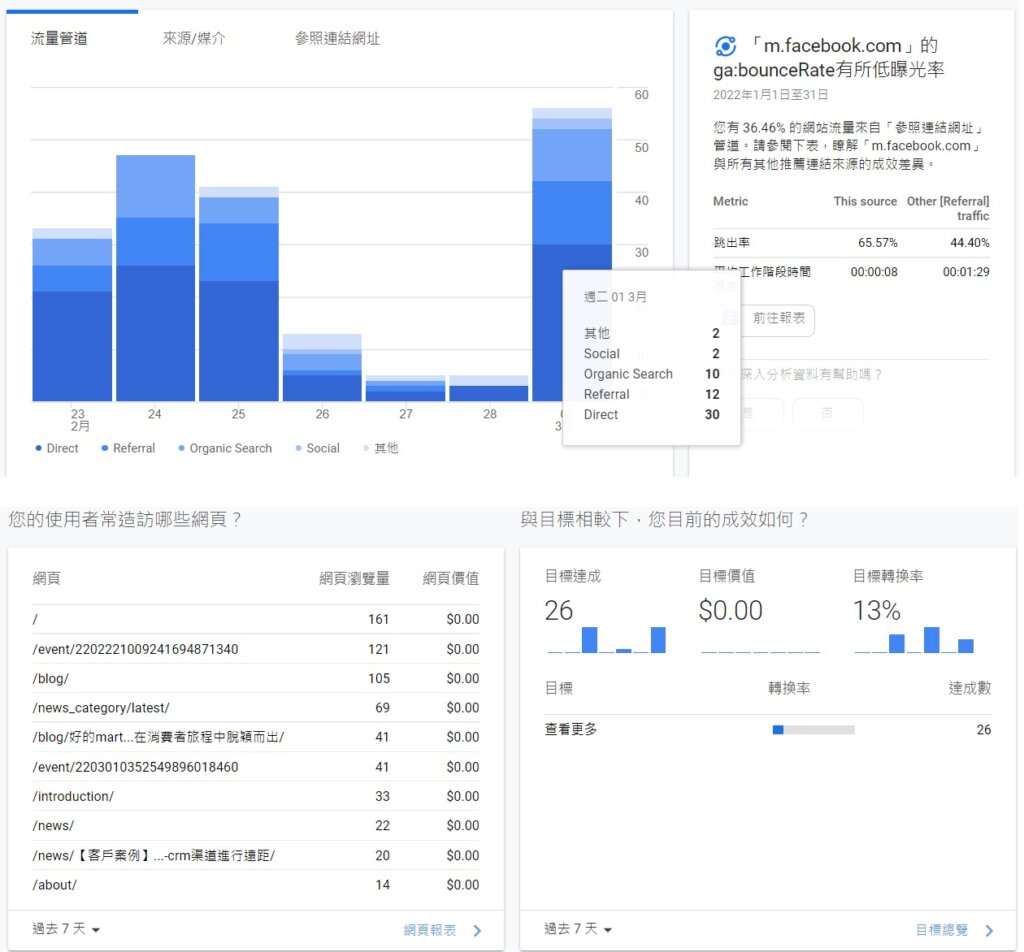
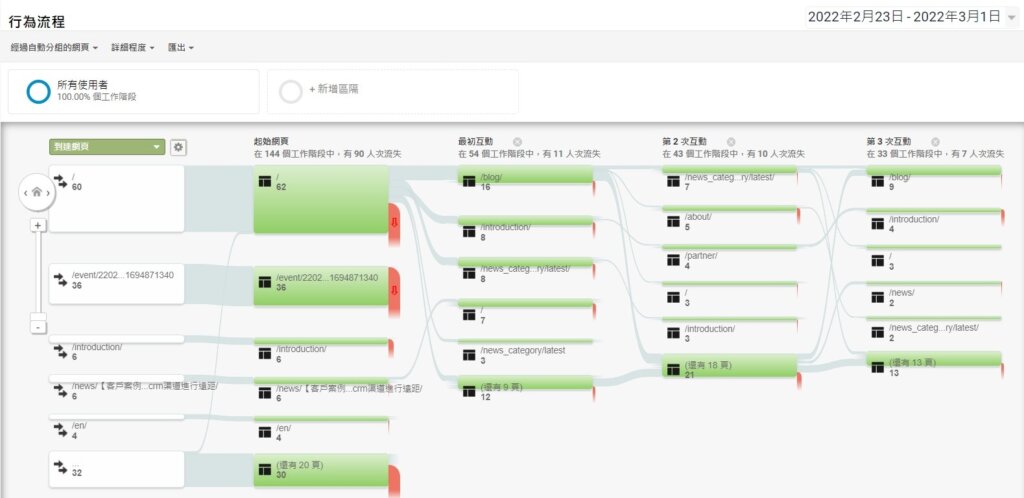
Taking GA, the most commonly used tool in website backends, as an example, when setting up a website and configuring data tracking points, it is a basic skill to first place tracking points on the website entrance, subcategory pages, product descriptions, contact pages, blogs, etc.; combined with Personas, we can transform the obtained data into meaningful information .
For example, the effectiveness of the web pages mentioned above can be used to apply the following concepts to the Personas discussion to summarize effective TA observation and analysis results:
- Entry point and entry method → Through which channels do customers receive product information?
- High-traffic access points → What kind of information display can attract them to stop and stay?
- Decision points for visitors to split or change direction → How do visitors assess which information is worth noting and is valuable?
- Conversion point → How does the TA assess whether product content is helpful to the business?
- Stepping outside the website’s detour → What are the key reasons why this user lost interest in the website?
Whether B2B or B2C, implementing Personas and data tracking is not a one-time solution. It requires continuous website management and front-end brand marketing to repeatedly verify and calibrate the accuracy of both. This involves the extensive application of knowledge from technology, marketing, and consumer psychology. “Data” is the most convenient tool for gathering information, shortening the experimental process, and conducting real-time analysis. Digit Spark Group is a leader in the data field, using Martech to deeply understand decision-makers’ online presence and providing B2B companies with comprehensive strategic guidance for targeted marketing and understanding their target customers.
Digit Spark, part of the Zhenhao Internet Media Group, integrates its six sub-brands offering data application services to provide enterprises with comprehensive and precise optimization services across five key areas: “Industry Customer Targeting,” “Performance Optimization Strategies,” “Digital Tool Integration,” “Online Voice Cultivation,” and “Brand Value Promotion.” It drives brand success through data technology.