What are the impacts of generative AI on producers? And its benefits and impacts on various industries?
#GenerativeAI #ChatGPT #AIGenerativeEra
Chat GPT, which became an overnight sensation, is arguably the most relatable generative AI to the general public, causing a global sensation upon its release. Its success stems from its ease of use, virtually zero learning curve, and its ability to provide different responses repeatedly. It’s not only suitable for human work and academia but can also be integrated into everyday life.
The term “Generative AI” actually appeared as early as the 1960s. In popular applications, this technology was only used as an aid to chatbots and did not receive much attention. It wasn’t until 2014 that GAN technology became popular. Technologists made two different AI models (generator and discriminator) talk to each other and compete. This not only greatly improved the AI’s autonomous learning ability, but also, in the process of two or even more AIs interacting, the “content” generated by the AI autonomously increased and the topics covered became more diverse (regardless of the quality and accuracy).
How can AI work in enterprises? “Liberating” or “Replacing” Human Productivity?
The “Space Opera” incident in 2022 sparked global discussion and attention, with the biggest concern being: Has the era of AI replacing humans arrived? Illustrators and graphic designers were the first to be affected by the Space Opera, but it’s undeniable that AI can replace countless other types of work. Below, we cite some examples related to common job duties within companies:
-
AI interprets instructions and directly transforms human needs into finished products:
For example, Dall-E 2 automatically generates design illustrations and is open to copyright, allowing users to directly use them as product images, web page illustrations, and other terminal presentations to consumers; and the most common application now is Chat GPT: marketing editors input copywriting keywords and article style, and a large number of social media copy and online articles are automatically generated and published.
In addition, for programming, GitHub Copilot, developed in collaboration with OpenAI, and Copilot X, the latest AI launched this March, allow humans to directly express their needs through typing or voice input in AI chat . The AI can then read “I want to add OO functionality to the XX program, the specifications are…” and generate programs, code, instruction templates, etc., which can be directly applied to enterprise software.

-
Optimize collaborative workflows:
For example, when project development teams collaborate within software or game companies, various drafts and annotations for program testing and optimization can easily become disorganized due to everyone’s own work habits and scattered opinions. This can even lead to accidentally overwriting other people’s comments . However, modern generative AI can transform a large amount of messy “dirty data” into a systematically organized system within a minute , updating and maintaining the data in real time while preserving change logs.
-
Improve the effectiveness of product testing and debugging processes.
In large tech companies, there are usually teams dedicated to testing the software developed by the company. “Testing” means that the team needs to devise various scenarios that users will encounter. To put it simply, using a game analogy: testers need to play the game hundreds of times, explore every inch of the map, try out each mechanism in different triggering sequences, and test the results of each new feature working with other features… to ensure the game can be released. “Playing hundreds of times” doesn’t sound fun at all! If an AI assistant handles the basic map exploration, and a human handles the new mechanisms, the testing team can save a significant amount of time and effort.

Image source: Internet
Applications of Generative AI in various industries: e-commerce, education, and healthcare as examples
In the previous section, we mainly discussed how AI can assist or replace human labor in the technology and software development industries. What about other industries? Let’s look at how generative AI can be applied in several familiar sectors:
-
e-commerce
Can generative AI help e-commerce businesses sell products? Consumers’ experience with AI in e-commerce is likely mostly limited to customer service. However, generative AI can also handle behind-the-scenes work before businesses list products and implement promotional plans; for example, ” product description generation “: based on the product’s attributes, functions, and characteristics, it automatically generates attractive product descriptions, builds a 360° model of the product, and applies various usage scenarios, allowing consumers to have a concrete imagination. This not only increases the desire to buy but also allows consumers to actually understand “Is this product suitable for me?” (such as Adidas’ virtual shoe try-on). This encourages consumers to place orders more cautiously, effectively reducing e-commerce return rates and lowering return and exchange costs for businesses.
Generative AI can also generate “personalized recommendations” based on consumers’ browsing history, similar to the “targeting audience” emphasized in data marketing. In addition to pushing suitable products to the page, it can also answer consumers’ questions in real time to enhance sales .
In terms of operations, generative AI can also quickly analyze a large amount of consumer reviews and extract keywords. For example, statistics show that 40% of consumers leave comments with words like “material, texture, and feel,” which tells businesses that this is an issue that needs attention and allows them to analyze consumers’ specific needs. This helps e-commerce companies understand how to improve their products and services and develop more considerate customer complaint handling methods.
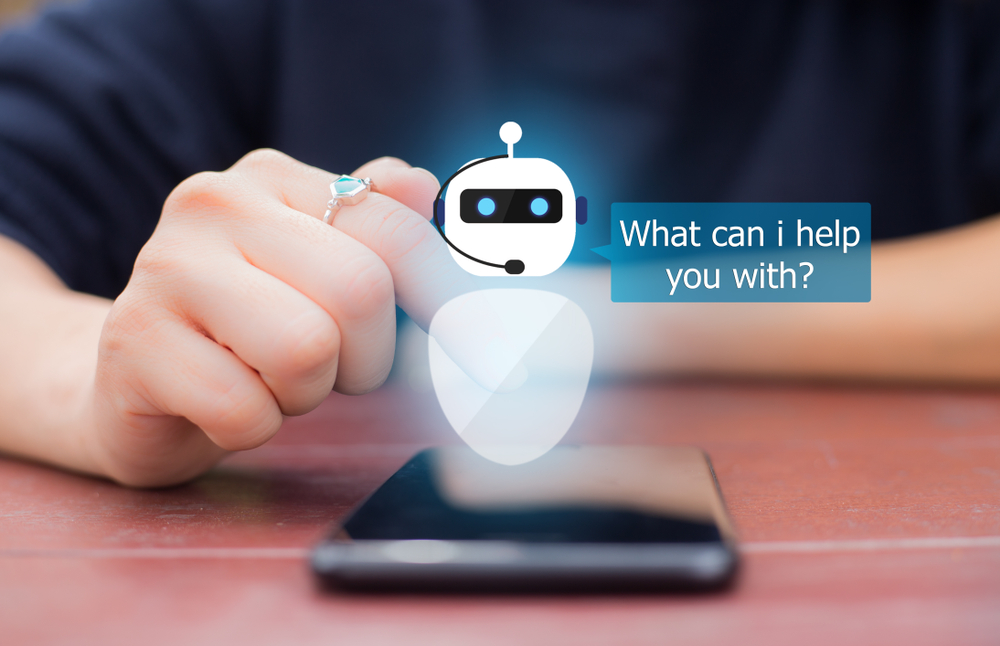
Image source: Internet
-
educate
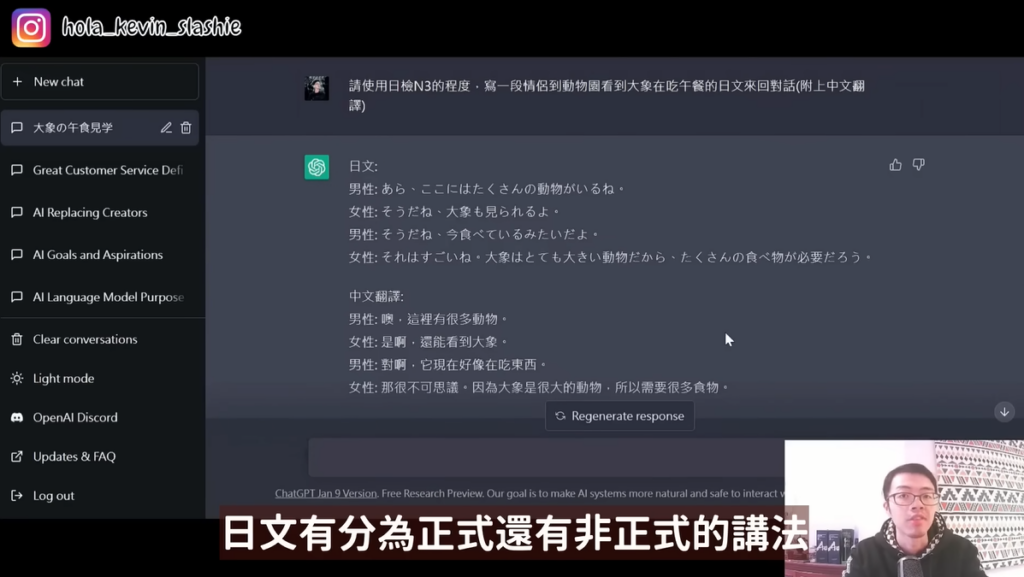
The education industry encompasses schools, tutoring, and continuing education courses. Each student is unique, and individualized learning relies heavily on teacher-student interaction. However, AI can access abundant knowledge resources at low cost . For example, when educational institutions provide online courses for students in remote areas, generative AI can further extend learning resources to suit students’ varying levels, providing supplementary knowledge, such as ChatGPT for learning English, as discussed in this article . Furthermore, “AI teachers” can provide assessments and answers, mitigating the problem of insufficient educators or teaching resources in remote areas.
Future educators need to consider: how to guide students to “identify what learning resources they want, how to plan and obtain those resources, how to clearly ask questions of AI, how to verify knowledge, etc.” This will enable students to integrate their own questions, develop learning plans, and possess sound independent thinking skills.
At the same time, AI combined with sensory experience simulations such as AR/VR can reduce the cost of “first-time exposure to new things” . For example, through real-world simulation experiences, children can have close contact with specific sports, and it can also be combined with games to help people discover their interests and potential in more ways.
What worries many educators most is that “students are using generative AI to do their homework.” However, in addition to using anti-plagiarism tools extensively to check student work, feedback on learning should not be limited to handwriting. The large-scale “intrusion” of generative AI is prompting educators to use more diverse methods in teaching assessments, such as oral reports, direct student interaction, and field investigations, to evaluate student performance . This also helps students develop more independent and flexible thinking and to transform theoretical knowledge into practical skills, rather than relying entirely on AI-generated content for decision-making.

Image source: Internet
-
Medical
In this article , we introduced the application of AI in the healthcare industry. AI can assist in conducting consultations and real-time monitoring of patients before and during treatment, and compile the patient’s monitoring data into a treatment report for medical staff to refer to.
Trained AI can serve as a communication bridge between medical professionals and the general public ; it can organize medical reports and patient symptoms to provide easy-to-read treatment instructions, rehabilitation, and prevention advice to patients, and, in conjunction with monitoring software such as Martech and mobile apps, ensure that patients follow instructions after returning home. Furthermore, chatbot-style generative AI can provide 24/7 real-time “chatting” or consultation, supporting patients’ mental health throughout the treatment process.
In the field of medical research, generative AI has a more decisive influence, quickly providing a wealth of academic data and helping researchers highlight and organize key points. At a more advanced level, some medical researchers are already using ChatGPT and LLMs models to write medical papers and successfully publish them in prestigious journals. Journals have also reported a significant increase in submissions in recent months. However, researchers should focus more on the research’s perspective, depth of content, and innovative angles. While AI can accelerate writing, academic papers ultimately prioritize quality.
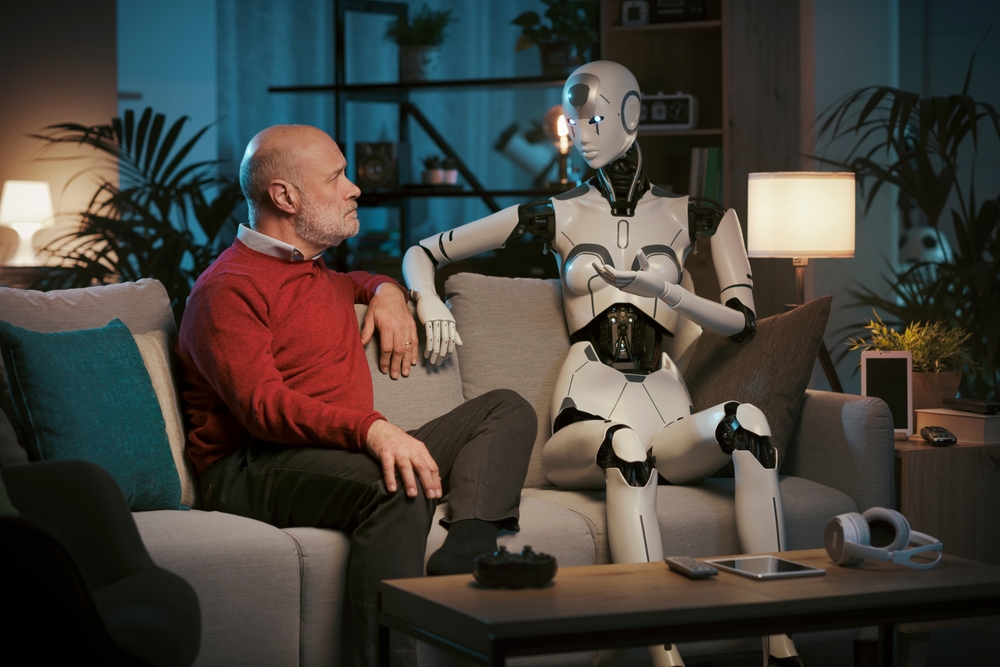
Image source: Internet
Will I be replaced? Humans should make good use of soft power to coexist with AI.
Although artificial intelligence has already permeated various industries and our daily lives, the explosive and rapid growth of generative AI technology is rare, which has shocked the world and forced people to ask: “Will I be replaced?”
However, humans possess the capacity for empathetic thinking, a quality that generative AI currently cannot surpass. Humans can perceive both the “practical problems” and “emotional needs” of others, and then make judgments that take both into account, something AI cannot do.
For example, for hospitalized patients, AI can compile the best medication and lifestyle guidelines for recovery based on the patient’s health index; however, it struggles to empathize with the patient’s psychological burden and consider whether the patient can maintain emotional stability and consistently follow these guidelines. Medical staff, as human beings, are better able to assess a patient’s physical and mental capabilities and provide gradual instructions. Furthermore, AI demonstrates completely different soft skills from humans, such as communication and negotiation abilities, relationship building skills, and empathy. We can view AI as a team assistant, but the final decision-making still rests with humans.
Furthermore, AI’s replacement of many technical jobs indirectly disrupts the existing habits and patterns of certain industries, forcing them to develop new logic and practices . For example, in education, as mentioned earlier, AI’s ability to “cheat” on homework indirectly necessitates changes in educational institutions, social admissions, and assessment mechanisms. These institutions must consider more diverse ways to interact with students and impart knowledge. For instance, using ” flipped classroom ” to test whether students have truly learned is a form of diversified assessment: allowing students to try teaching, integrating what they’ve learned in class, and then becoming “teachers” to others is one such approach.
In addition, it also influences consumer habits across various industries, such as information reception and communication, product comparison, and other behaviors; prompting producers and businesses to continuously improve themselves, step out of comfortable profit models, and consider more possibilities for serving consumers.
For businesses and producers, a deep understanding of AI technology, hands-on application, and coexistence with AI are now fundamental . Furthermore, organizations need to ensure they have sufficient talent to be aware of technological advancements and changes in the consumer market, and to provide recommendations for adjustments to adapt to the impact of AI. Only by embracing AI, viewing it as an opportunity rather than a threat, can humanity continue to find new positions in market competition.
References:
- “The Era of AI Generation” by Du Yu and Zhang Ziming
- Generative AI is a priority for experienced IT leaders.
- Write code with your mouth! GitHub and OpenAI launch Copilot X, an intelligent code assistant.
- Nine uses of generative artificial intelligence in healthcare
- Artificial intelligence is omnipotent, so why shouldn’t humans be replaced? Professor Huang Ming-hui proposes the key to humanity’s irreplaceability.
Digit Spark, part of Zhenhao Network Media Group, integrates data application services needed by enterprises in various aspects such as marketing and customer acquisition, opportunity development, and operational optimization; it leverages AI to connect business strategies and guide enterprises to optimize in all aspects.