Seize the pet business opportunity! What marketing methods align with the spending habits of pet owners?
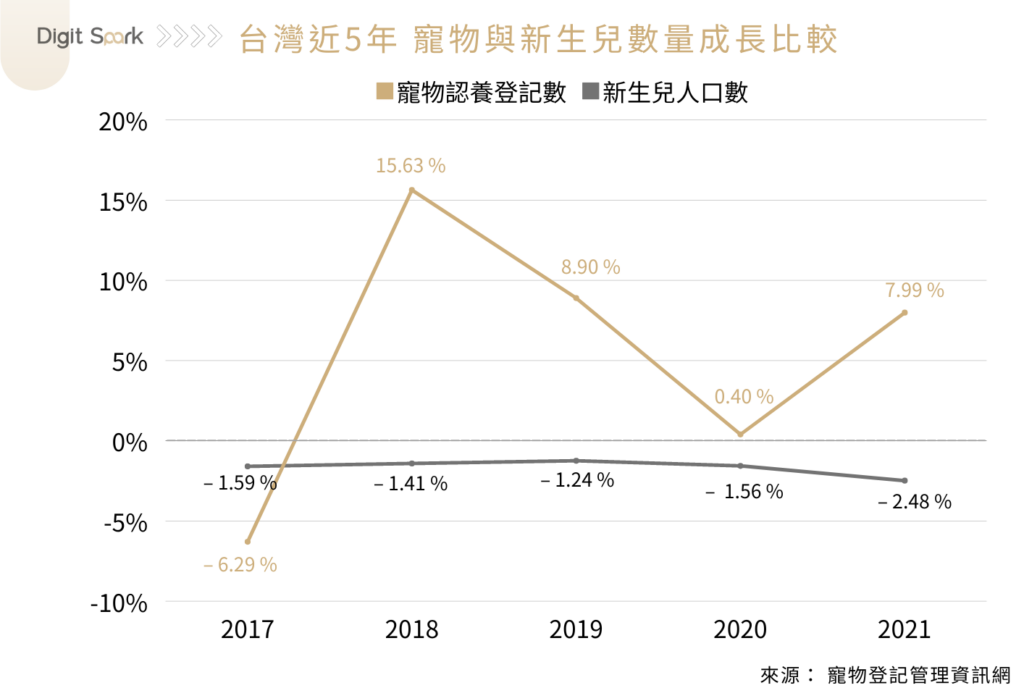
Pets are a major source of happiness for modern people. Most pet owners consider their furry friends as companions as important as humans, and the close bond between humans and animals is unprecedented. Furthermore, according to statistics from the Pet Registration and Management Information Network , the annual growth rate of pet adoptions has consistently exceeded the growth rate of newborns. From these two points, we can foresee that the “pet industry” not only has high purchasing power and unlimited potential in the consumer market, but also, based on the average lifespan of cats and dogs, will likely remain one of the industries with stable purchasing power over the next 10 years.
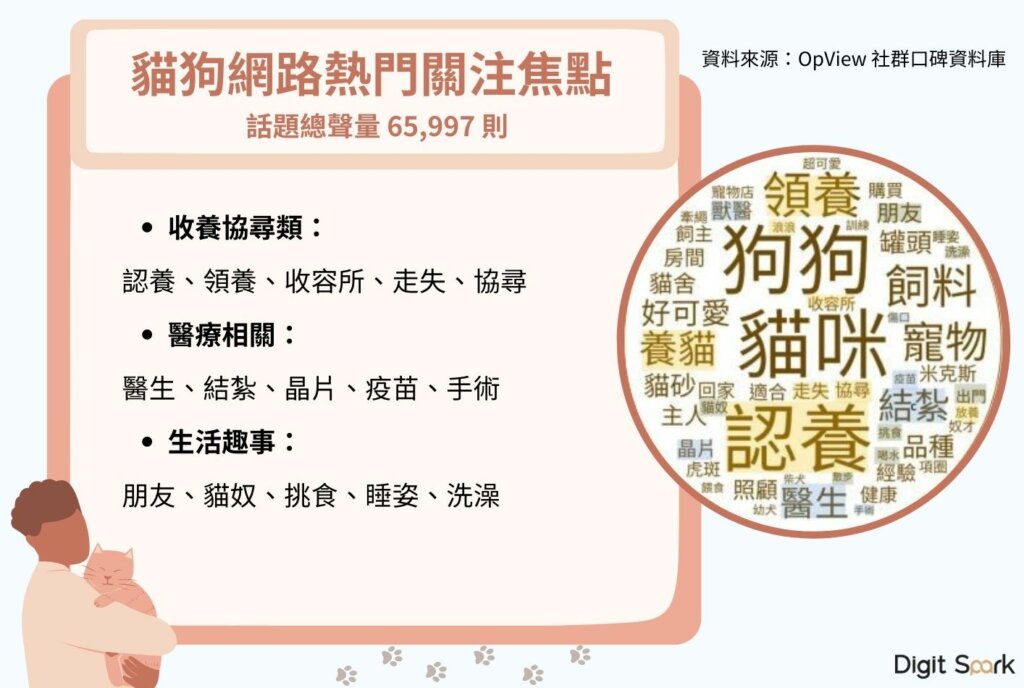
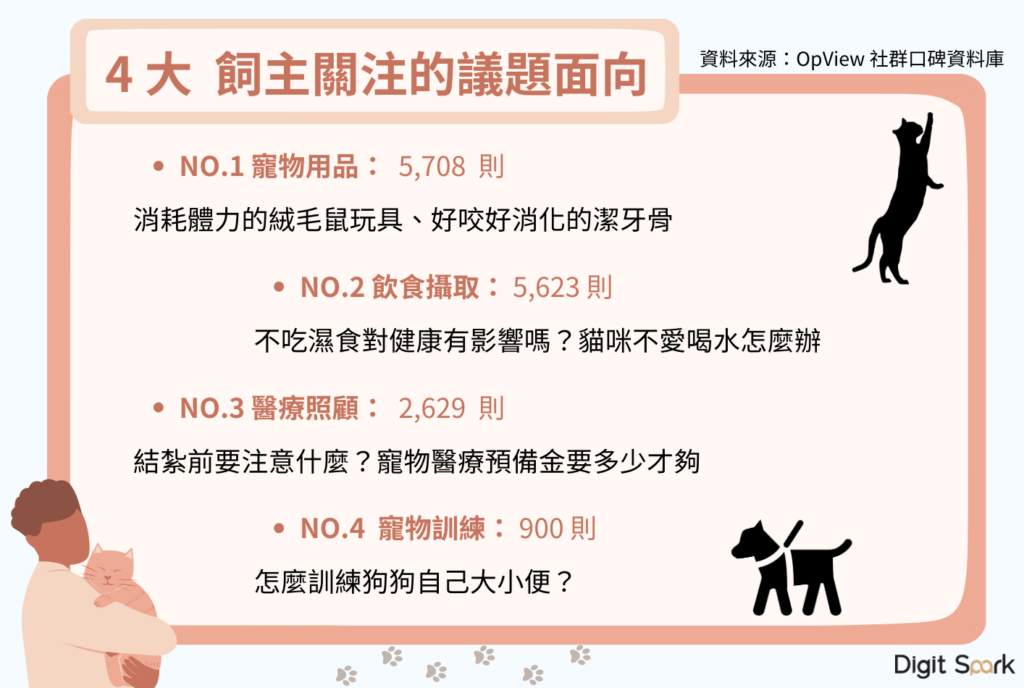
The market is flooded with pet supply and related service companies. Current market research shows that ” food and daily necessities ” account for the largest proportion in terms of the number of brands, the variety of products and services, and consumer spending, and also generate the most online discussion. In addition, pet owners are particularly concerned about ” pet healthcare ,” ” pet insurance ,” ” pet training ,” and ” going out with pets .” We can glean insights into pet owners’ needs and desires from these online discussions to uncover marketing opportunities for pet brands.
▼Analyzing online discussion volume reveals the volume of pet-related topics and business opportunities.
Source: OpView Community Reputation Database
The pet industry offers numerous business opportunities, with different consumers focusing on different products and services.
From observing online business volume, we can see “which needs are attracting attention.” But who is paying attention to these pet needs? If we say: “Of course, it’s pet owners and animal lovers,” that answer is too simplistic and doesn’t offer much help for brand marketing.
The Institute for Information Industry’s ( III) Industry Intelligence & Consulting Institute conducted a survey to analyze pet owners’ spending power and willingness to spend on different items when owning pets, as well as the basic consumer profiles for each item (pet medical care and grooming, entertainment and toys, food, household supplies, etc.). The results showed that the largest expenditures for the average pet owner were ” pet food and treats ” and ” medical care ,” with each item averaging approximately NT$8,500 per year.
A closer look at the statistics on pet owners’ personal spending and the age of the main consumer group reveals that the age group with the highest spending power and willingness in the pet market is over 50 years old , rather than younger people. This is because consumers in this stage generally have stable and good economic capabilities, with enough leeway to invest in their beloved pets, especially in expensive areas such as pet grooming, pet hotel accommodations, and pet healthcare. The second largest group in terms of overall spending power is the 31-35 age group, followed by the 26-30 age group.
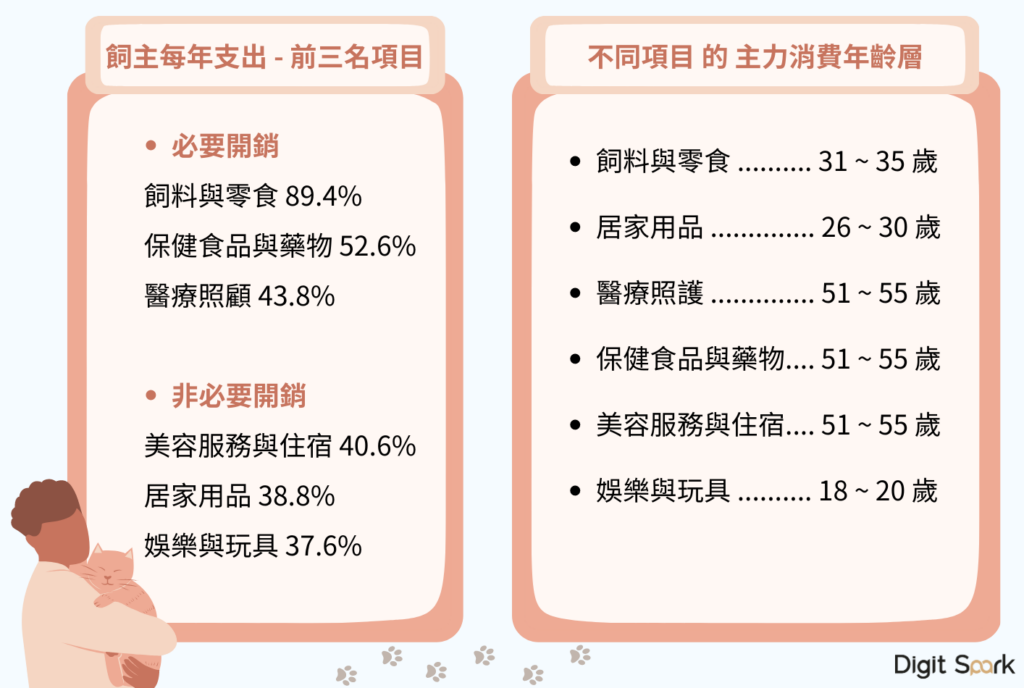 Image source: Digit Spark
The “Orange Generation” spends significantly more on pets than other age groups.
We found that among the above pet owner consumption trends, especially for service-type brands such as beauty salons, veterinary check-ups, and pet insurance, targeting pet owners “over 50 years old,” which Google calls the ” Orange Generation ,” is a good choice.
Today’s “Orange Generation” is no longer the elders of traditional perception. They use email, Internet Explorer, and Google Chrome every day in the workplace, and are accustomed to using mobile phones and video platforms such as YouTube in their daily lives. They also have high spending power, making them ideal customers for digital marketing by pet brands.
To persuade these consumers, brands often use methods such as sharing videos of cute animals, unboxing videos of pet products, etc. Where there are cute animals, there is traffic, but high traffic does not necessarily mean high conversion rates or a large number of visitors . Therefore, brands need to plan communication methods that are more in line with the lifestyles and thinking of these people to make marketing activities more persuasive.
Below, we will use “pet grooming salon” as an example to share how to grasp the preferences of “Orange Era pet owners” and turn them into loyal customers of the brand.
The physical services provided are highly valued and trusted by pet owners.
Especially during recent visits to the new salon, pet owners observe whether their own pets and other pets are comfortable interacting with the groomer and feel at ease during bathing and grooming to decide whether to continue working with the salon. This emphasizes the salon’s core strengths: the professional expertise of its groomers and veterinarians .
In marketing, we can amplify the expertise of professionals . For example, we can create short videos, Q&A summaries, and articles sharing pet care experiences by showcasing the daily work of salon groomers and veterinarians in performing regular cleaning, medication, and grooming for pets . Since pet owners are typically cautious in choosing trusted professionals, we can openly discuss the functions of salon professionals in a natural and relatable way, addressing owners’ concerns (e.g., “What should I do if my pet is shy?”, “How do groomers care for older cats?”). This provides owners with opportunities to “do their homework,” building a reliable and well-rounded image of the professionals.
After starting to manage content, salons can also strengthen word-of-mouth marketing , complementing the content and enhancing the trust of new consumers; for more information on word-of-mouth marketing, please refer to this article .
Adjust content and word-of-mouth marketing goals based on customer behavior.
With a marketing strategy in place, we need to target our core customer group: consumers over 50 years old who have ample living expenses and value pet care and grooming. We then need to adjust our marketing strategy accordingly.
Content marketing and word-of-mouth marketing strategies also include “exposure channels,” which generally include official websites, social media, forums, and so on. To ensure that the salon’s professionalism is “seen by the target audience and has persuasive power,” we must first research what channels these people usually use to receive information and adjust the readability and resonance of the exposed content . For the “core target audience” of pet owners, their commonly used information sources are channels such as Facebook, YouTube, and LINE .
Choosing the right communication channels is crucial for effectively attracting customers. If we believe that pet owners over 50 years old prioritize ” using LINE to share online content and join various groups to communicate with others ” in their lives, the marketing strategy might be: cultivate Facebook groups and fan pages with rich text, images, and videos to expose the salon’s content and endorse its professionalism; add careful management of customer service replies and word-of-mouth replies to drive discussion, allowing consumers to get used to interacting with the brand and building trust among pet owners; furthermore, marketing activities, such as free LINE stickers, can also be implemented to encourage viewers to actively share pet grooming content on LINE with their friends and in groups, generating customer traffic.
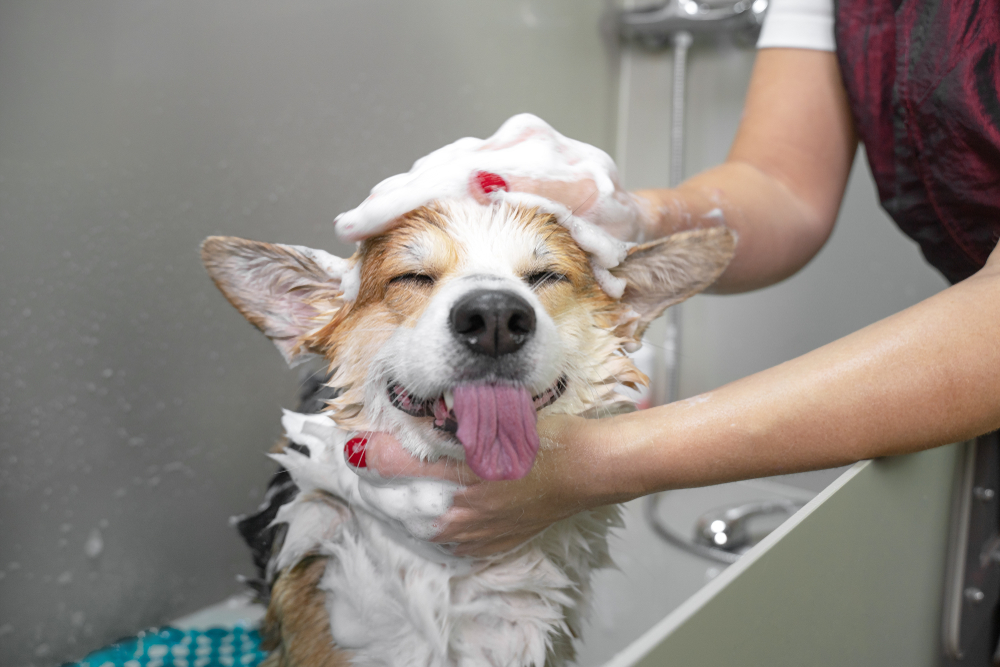 Image source: Internet
Pet grooming services have a fixed frequency of purchases and a high level of member stability.
Pet grooming, flea removal, and other services for pets are almost always performed regularly and in fixed quantities. The related supplies also need to be replaced regularly (these supplies are usually provided and sold by the salon). ” Fixed follow-up frequency ” is an advantage of the pet service industry, which means that as long as the salon can manage its membership well, it is easy to get a group of customers who have been paying for a long time. In contrast, e-commerce platforms that sell pet toys do not have the conditions for attracting customers in the long term.
Effective membership management and readily available live customer service to resolve owners’ questions and provide updates on their pets’ well-being are fundamental. Furthermore, we recommend that salons categorize pets by breed, age, and health status (e.g., long-haired cats need trimming every two months), labeling them with the services owners can expect in the future, proactively reminding owners to communicate with them, and providing relevant pet health advice. However, this doesn’t mean bombarding customers with excessive information or inconveniencing them; for example, owners of short-haired cats don’t need to be reminded to trim their cats every two months; salons should only proactively offer a comprehensive and attentive service when owners anticipate a need.
These services may seem simple, but in reality, pet owners need to invest a great deal of effort in understanding and remembering each customer they’ve served. Doing this manually would be a complex and enormous undertaking. Since we mentioned that Orange Generation pet owners spend a lot of time on LINE, owners can use LINE to add business accounts to contact customers and connect to Martech tools in the LINE backend. AI can record pet information and provide owners with prompts on which membership services to offer. This makes administration and operations management more convenient, and allows pet owners to feel valued and confident in entrusting their furry friends to grooming experts long-term.
 Image source: Internet
Conclusion
According to research by Fortune Business Insights , global pet-related consumer sales reached over 260 billion yuan in 2022 and are projected to grow to 350 billion yuan in the next five years. With such enormous potential, the future of pet brands looks very promising.
The next step for pet brands is to analyze the behavioral profiles of various pet owners before planning marketing campaigns, based on their product and service nature , functional orientation , and target consumer groups . This allows them to cater to these preferences and cultivate loyal customers. This is where digital marketing and data-driven marketing can play a valuable role. Welcome to the world of marketing with Digit Spark, bringing your pet brand closer to its owners.
Further Reading:
Further Reading:
- Illustrated Guide to the Two Major Battlefields of the Pet Economy – BusinessNext in the Digital Age
- How can pet grooming shops, veterinary hospitals, and pet supply retailers use Social CRM to care for their furry friends?
- Business Opportunities Among Middle-Aged and Elderly Consumers? 2022 YouTube Marketing Summit: Mastering New Business Opportunities in Video and Audio for Generation Z
Digit Spark’s subsidiary, TerreMed,
is a company focused on “pet big data,” providing pet owners, pet-related industry professionals, and veterinary hospitals with the latest industry insights and helping them explore more business opportunities.“To gain significant consumer attention in a fiercely competitive market, businesses need to understand pet owners and their furry friends better than anyone else—not only better than their competitors, but even better than the pet owners themselves.”
Welcome to follow “Thailand Medical” or contact us through the contact form below!