Leveraging the synergistic effects of AI and MarTech, Digit Spark: Clarifying the purpose and understanding the functions are prerequisites.
Thanks to Tech Island for the report, reporter Lin Yu-ru
With the rise of the internet age and technological advancements, Marketing Technology (MarTech) has become an essential area of marketing application that all businesses must understand and address. MarTech encompasses six major areas: data application, integrated management, advertising and promotion, content and user experience, social media and customer relationship management, and business and sales. How can businesses effectively utilize MarTech to address their specific needs?
Chung Tzu-ting, co-founder of Digit Spark and director of the Ranking search division, pointed out incisively that before introducing MarTech, it is essential to understand that “function” and “purpose” are different.
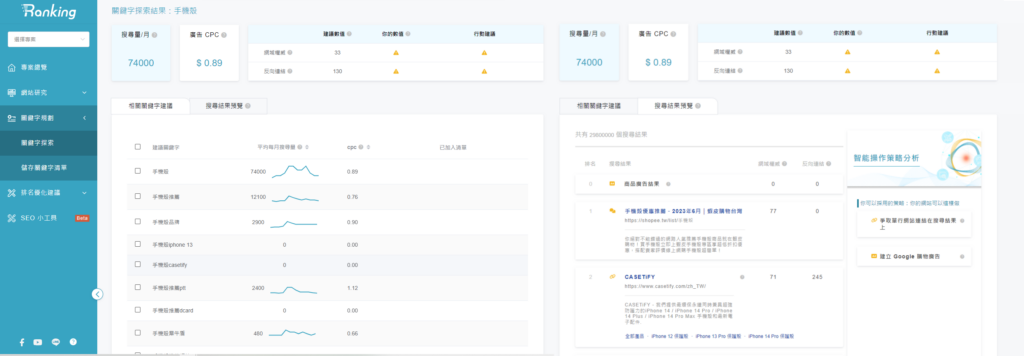
▼ Schematic diagram of product-related keyword generation and popularity analysis
Enterprises expect to reduce costs and increase efficiency
Chung Tzu-ting points out that before implementing MarTech, it’s crucial to distinguish between “function” and “purpose.” The first thing to define is the purpose of implementation, which is often difficult to answer definitively when asked around. Possible answers include cost reduction, efficiency improvement, minimizing manual processes, and error prevention. In an era of declining workforce, businesses are increasingly focused on cost reduction and efficiency improvement—reducing the time and risk spent developing teams while increasing ultimate business benefits.
Importing AI×MarTech: Prerequisite: Clear understanding of the desired outcome
If we clarify this core purpose, then the functions that AI can bring are: “replacing human output”, “data collection”, “assisting decision-making”, and “performance optimization”. The functions that MarTech systems can do are: “replacing physical processes”, “centralized management”, “performance control”, and “performance prediction”. As long as you clearly know what functions you want and what business benefits they can bring, then it is suitable to introduce AI×MarTech.
Precision and professionalism are hard for AI to replace
Chung Tzu-ting cited examples from an SEO perspective, noting that platform companies in industries like travel, education, and e-commerce retail often face pain points when generating large amounts of content. Data collection, organization, writing, and updating are all cumbersome. Through our AI copywriting team’s platform solutions and technical consulting services, clients can easily achieve higher rankings and traffic on Google search by writing valuable, irreplaceable content such as travel tips or key selection criteria for top-selling products. This also helps platform operators maintain essential SEO skills.
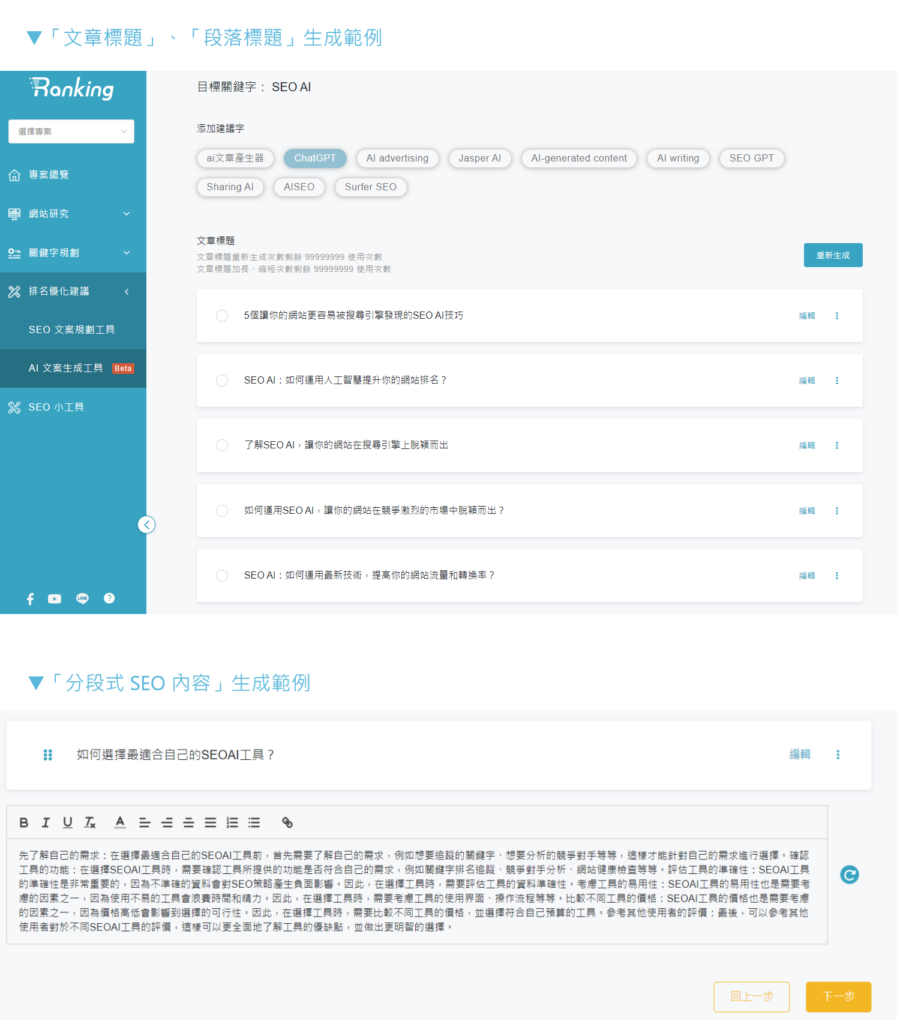
▼SEO Content Generation Examples
With the rise of AI technology in recent years, generative AI-generated text has become a hot topic in the marketing market. Some people even believe that with AI, there is no need for SEO companies, which is wrong.
Chung Tzu-ting emphasized that Google uses AI to determine “valuable content,” and content without value naturally won’t receive ranking rewards from Google. When applying AI to SEO, everyone should first recognize this key point. AI helps SEO experts leverage their expertise to the fullest, while also achieving greater efficiency and enabling more accurate SEO assessments by collecting massive amounts of search data.
Source of the report: