With the resurgence of overseas study trends, AI can help consultants and students find the best opportunities.
Since the end of 2021 and 2022, the trend of Taiwanese students studying abroad has gradually begun to rebound. According to statistics from the Ministry of Education and the American Institute in Taiwan, in addition to the increase in the number of students pursuing master’s, doctoral, and undergraduate degrees , the number of students applying for overseas high school programs has also grown. Moreover, in addition to the increase in numbers, we have also found that regions that students used to often choose for short-term language courses, such as the Philippines and Singapore, are now seeing a significant number of students applying for long-term certification and degree programs; the study abroad ecosystem is becoming increasingly diverse.
Springtime is the peak season for study abroad and study tour brands; with countries opening their borders and the study abroad and study tour business rebounding, now is the perfect time for study abroad consultants and students to actively engage in communication. Perhaps industries with a focus on “education and character development” aren’t usually intuitively associated with “marketing”;
In fact, study abroad consultants can also use AI tools to assist and improve their work efficiency when guiding students through the application process.
 Image sources: intake、OH!Study、BRITISH COUNCIL
AI’s information acquisition and filtering capabilities help to instantly grasp information about schools and departments.
Students using AI and big data to help determine their college application preferences has been a long-standing practice abroad. For example, prospective college students in the United States use CollegeVine to analyze their application strengths and financial capabilities. In Taiwan, however, the situation for students planning to study abroad is more complex, considering their student type (which can be understood as a “persona” in marketing terms), reasons for studying abroad (“intention”), chosen locations and schools/institutions (“needs”), application methods, and preparations (“service details”).
When study abroad consultants collaborate with students, they need to maintain long-term, close monitoring and provide individualized guidance and analysis. This is where AI tools can be invaluable. For example, professional consultants need to stay informed about “the admission preferences and entry trends of schools in various countries,” “the criteria emphasized in program review,” and “the future development potential of each department.” At trade fairs or during prospective students’ initial consultations, they can immediately provide helpful answers. Just like in brand marketing, where “first impressions” are crucial, a consultant’s ability to quickly offer professional insights greatly enhances their persuasiveness towards consumers.
With so many schools worldwide, it’s difficult for even the most brilliant person to remember them all. Just for a single subject, there are dozens of different options, regional rankings, tuition fees, and other combinations. AI can help consulting agencies collect and update information on schools and countries around the world on a daily basis, eliminating the need for manual monthly or quarterly data collection. It can also categorize countries and programs with different educational systems and design user-friendly subject/department search interfaces based on various indicators, allowing consultants to compile information for students’ reference at any time, significantly reducing the human cost of searching and memorizing.
Consultants focus their efforts on the “individual student” and collaborate with AI in a collaborative manner.
To ensure students successfully gain admission to their desired universities, study abroad consultants need to understand both the “schools” and the “students.” As mentioned earlier, AI can significantly assist in understanding the “schools”; while consultants can focus more on the “student as a whole.” Based on years of experience observing people, consultants can gain a deep understanding of the student’s “professional and everyday language skills,” “specific abilities and overall academic performance,” and “personality traits and problem-solving abilities” during one-on-one tutoring. This allows them to assess the suitability of the student for the country, program, place of residence, and even career prospects, and provide application advice.
Study abroad consultants often serve several students with different aspirations simultaneously. If, on average, each student selects two dream schools, three suitable schools, and one safety school, then a consultant has to be acquainted with several students and dozens of schools at the same time. With the assistance of AI tools, such as course selection suggestion systems, career path analysis, and professional aptitude analysis, both consultants and students can more easily distinguish the subtle differences between different choices when selecting application targets. Consultants, based on their understanding of the student, can cross-reference the characteristics of schools and departments summarized by AI to find the most suitable application targets for the student, thereby increasing their chances of admission.
 Image source: shutterstock
Resumes can’t rely solely on AI; consultants can help highlight a student’s unique individuality.
AI primarily generates articles using templates or existing online works, failing to effectively help students highlight their personal characteristics and capture professors’ interest when presenting their own experiences. Furthermore, since study abroad applications are mainly in English or other languages, AI software that doesn’t incorporate local expression habits and professional terminology is prone to errors and unclear meanings in the generated articles.
When students are preparing their resumes, CVs, and portfolios, AI can mainly assist them in the early stages of brainstorming and drafting by quickly providing a large number of similar resume examples and content templates for reference. It can also anchor key points related to the schools and departments they are applying to from their career experiences, helping them to have a concrete framework in mind and accelerating the production process.
After the initial draft of the application materials, it’s still necessary to rely on the professional third-party perspective of consultants for personalized adjustments and optimizations . This involves guiding students on how to tailor their resumes to the perspectives of the reviewers (evaluating professors); for example, selecting a specific event from their resume and adding more selected details, personal experiences, thoughts, and reflections to help weave a complete and compelling narrative. These are the tasks that truly enable the creation of successful application materials, and AI cannot replace the active thinking of a human being.
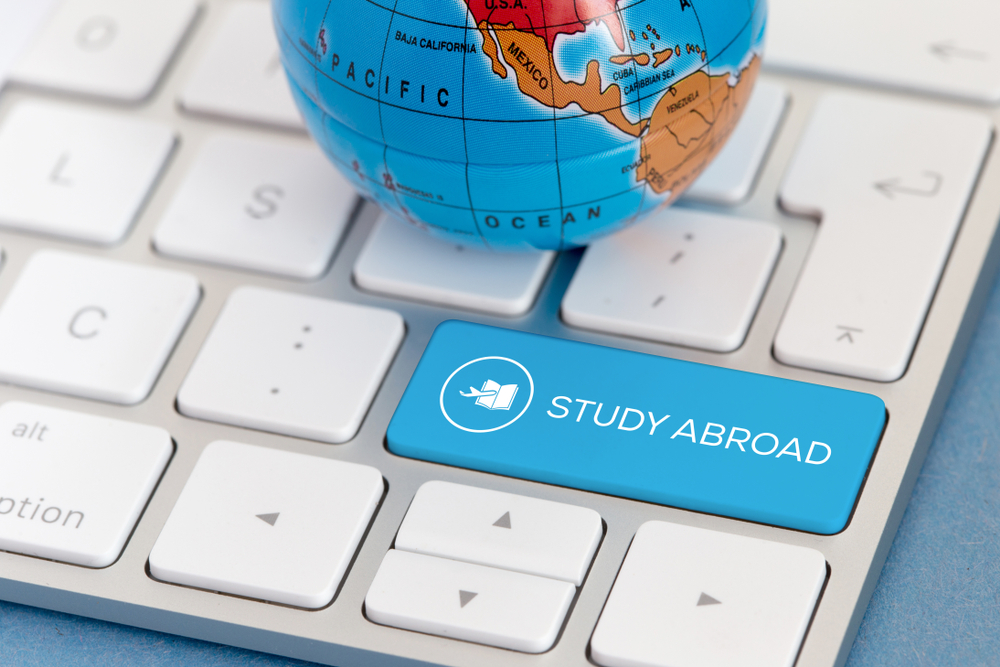 Image source: shutterstock
AI becomes an advisor and assistant, handling routine basic tasks or CRM-related matters.
Preparing for studying abroad is a massive undertaking. Consultants use their experience to help students complete the application process in a professional and effective manner. AI can provide consultants with information gathering and screening, or assist in the initial assessment of suitable application options for students, reducing the time required in the early stages of cooperation with students. As a result, consultants can devote more energy to in-depth solutions to students’ personal problems, such as coaching students on how to present themselves in interviews, communication skills with people overseas, and so on.
In addition, study abroad agencies can make greater use of CRM-oriented AI systems to efficiently integrate all student information, application progress, application questions, and so on. Moreover, “study abroad application guidance” can be considered a service with “high unit price, long service cycle, and long observation period before the deal is closed.” Before finalizing a cooperation agreement, students will have several consultations and comparisons. At this stage, using CRM AI to tag the student’s type, the strength of their study abroad motivation, and assess the probability of application success can also help consultants think about how to communicate with the student and find a customized service approach that suits them best.
Based on current observations, we believe that AI cannot completely replace the work of study abroad consultants or other types of consultants. Rather, it serves to assist and accelerate the process, making collaboration easier for both consultants and students. AI excels in handling basic technical tasks, while its problem-solving abilities—including adaptability, assessing strategies and opportunities, and navigating interpersonal communication—are irreplaceable by AI. Through this complementary approach, we believe AI can provide more detailed and sophisticated support services to students actively preparing for further studies.
Digit Spark, part of the Zhenhao Internet Media Group, integrates its data application service sub-brands to provide enterprises with comprehensive and precise optimization services across five key areas: “Industry Customer Targeting,” “Performance Optimization Strategies,” “Digital Tool Integration,” “Online Voice Cultivation,” and “Brand Value Promotion.” It drives brand success through data technology.